
3 Days in Alsace in Summer – There’s A Lot More Than The Christmas Market
Alsace in December gets all the glory. The half-timbered villages draped in lights, the mulled wine, the whole fairy-tale setup.
But visit in the summer, and you get the same storybook villages without the shoulder-to-shoulder crowds, with temperatures hovering around 25°C (77°F), vineyards in full bloom, and outdoor terraces open for business.
Three days covers the best of it.
Day 1: Colmar
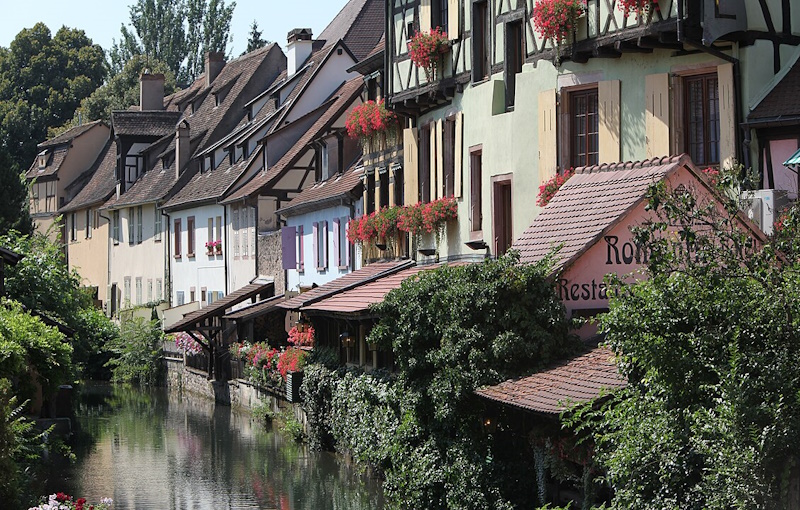
Start in Colmar. The old town looks like someone took a German village, ran it through a French filter, and forgot to stop.
Flower boxes everywhere. Canals threading between half-timbered buildings painted in shades of mustard and terracotta.
In the summer you can walk the whole thing without bumping into a tour group every ten steps.
Spend the morning on foot. The Petite Venise quarter, where the River Lauch curves past old tanners’ houses, takes about an hour to wander properly.
Then cross into the main square, swing by the Bartholdi Museum if you want to understand why a local sculptor ended up designing the Statue of Liberty, and find a winstub for lunch.
Order tarte flambée, then order it again.
If you’re visiting between late July and early August, the Foire aux Vins d’Alsace runs for ten days at the Parc des Expositions. Over 350 local winemakers show up, there are around 1,500 wines to taste, and the evening concerts draw big names.
It’s been running since 1948 and is truly the biggest summer event in the region.
For the night, Hotel Le Maréchal sits right on the canal in the Petite Venise area, in a building from 1565. Travelers keep coming back to the canal-facing rooms specifically: “the breakfast view along the canal is well worth the stay”.
Rooms are on the small side, but the location is difficult to beat.
Day 2: The Wine Route Villages
Rent a car for this one. The Route des Vins runs along the foothills of the Vosges from Strasbourg down to Colmar, connecting over 100 wine-producing villages.
You don’t need to hit all of them. Pick three or four and take your time.
Riquewihr is the one everyone mentions, and they’re right. The medieval walls are intact, the main street is pedestrianized, and there’s not a single building that looks like it belongs in the wrong century.
It’s listed as one of Les Plus Beaux Villages de France, and you’ll understand why in about five minutes.
Ribeauvillé is quieter and worth the detour. Three ruined castles sit on the ridge above the village. If you want to walk up to them, allow a couple of hours and wear real shoes.
Between villages, stop at any cave viticole that takes your fancy. Gewürztraminer and Riesling are the ones to ask for. Most estates will pour you a glass for a few euros if you show up during opening hours, no appointment needed.
Day 3: Haut-Koenigsbourg and Strasbourg
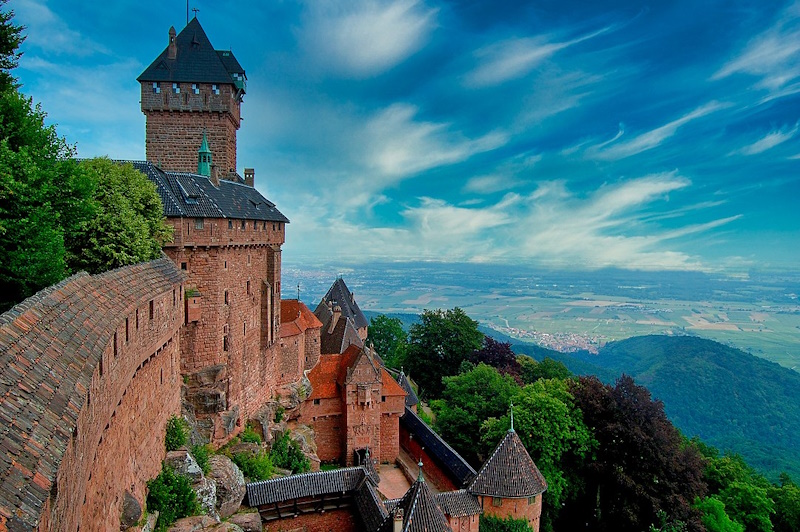
The Château du Haut-Koenigsbourg sits at 757 metres above the wine route, and the view from the ramparts covers the Alsace plain, the Rhine valley, and on a clear day, the Black Forest on the other side.
Nine centuries of contested ownership and one complete imperial restoration in the early 1900s. Admission is €12.
Arrive early. By noon the terraces fill up with tour groups and the whole experience becomes considerably less enjoyable.
Bring a jacket even in summer. The interior is noticeably cooler than outside.
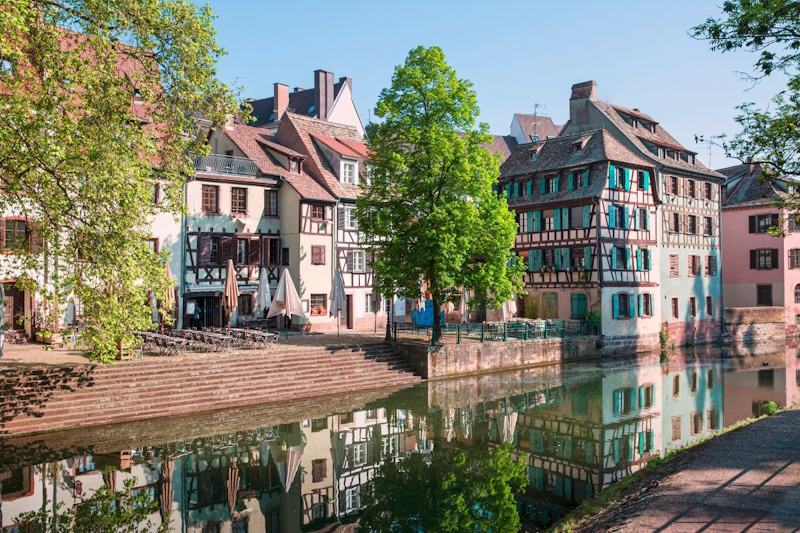
From there, head north to Strasbourg. The Petite France quarter, half-timbered houses and covered bridges where tanners used to work, is the obvious first stop.
Then the cathedral, which has been simultaneously awe-inspiring and under some form of scaffolding since the 13th century.
Stay for dinner. Choucroute garnie in a winstub near the cathedral: slow-cooked sauerkraut with sausages, pork belly, and potatoes. You’ll still be thinking about it at breakfast.
The Hôtel Cour du Corbeau in Strasbourg’s old town is a 16th-century former inn, now a proper hotel with rooms overlooking a courtyard.
Guests on TripAdvisor point to the quality of the renovation: “modern, bright, clean and quiet,” and a ten-minute walk from both the cathedral and Petite France.
Getting There and Around
Strasbourg has direct TGV connections from Paris in about 1 hour 50 minutes. Colmar is 30 minutes further south by regional train.
For the wine route villages, a rental car is the only practical option. Public transport between the small villages is limited, and trying to string together bus timetables across a day of tastings is its own kind of punishment.
Alsace is also one of France’s top cycling regions. The véloroutes between villages are well-marked and mostly flat, and e-bike rentals are easy to find in both cities.