
The Tapas Rules Barcelona Locals Refuse to Explain
You walked into a bar at 6pm. You asked for a menu. You ordered a Rioja with your patatas bravas.
Every local in the room spotted you in about four seconds.
That’s a “guiri.” Barcelona slang for a tourist who eats Spanish food without knowing how Spanish people eat it.
None of these rules are written anywhere. You’re supposed to figure them out on your own.
Go at the Right Time or Don’t Bother
Locals do tapas twice a day: roughly 1:30 to 3pm, or 8:30 to 10:30pm.
Those windows aren’t random. The food is freshest. The crowd is local. The bartenders are locked in.
Show up at 6pm and you get stale croquetas and a half-empty room. There’s a reason it’s empty.
“Tapas” on the Sign Is the Trap
Every bar in Barcelona serves tapas. The ones that plaster the word on their storefront are fishing for people who don’t know that.
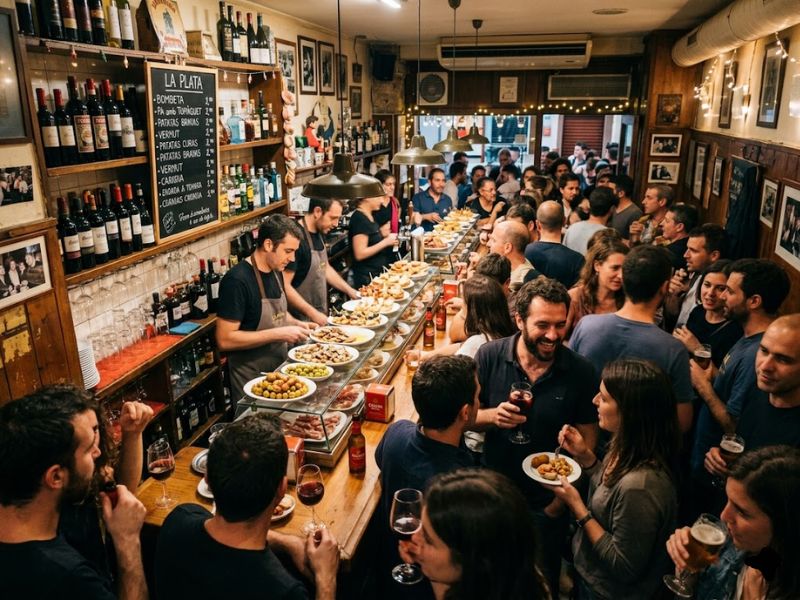
Walk past those. Walk toward the bar with no English signage and people spilling out the door. The crowd tells you everything. Packed means good. Empty means don’t.
You Are Not Sitting Down for Dinner
When Barcelona locals plan to meet for tapas, they say “quedamos para picar algo?” It translates roughly to: meet up to pick at something?
Not sit down. Not order a three-course meal.
You stand at the bar. You move to another bar. You bump into someone’s friend and end up at a third place.
Booking a table at a tapas bar is not a thing. Standing at the bar is the whole experience.
Order a Drink Before You Think About Food
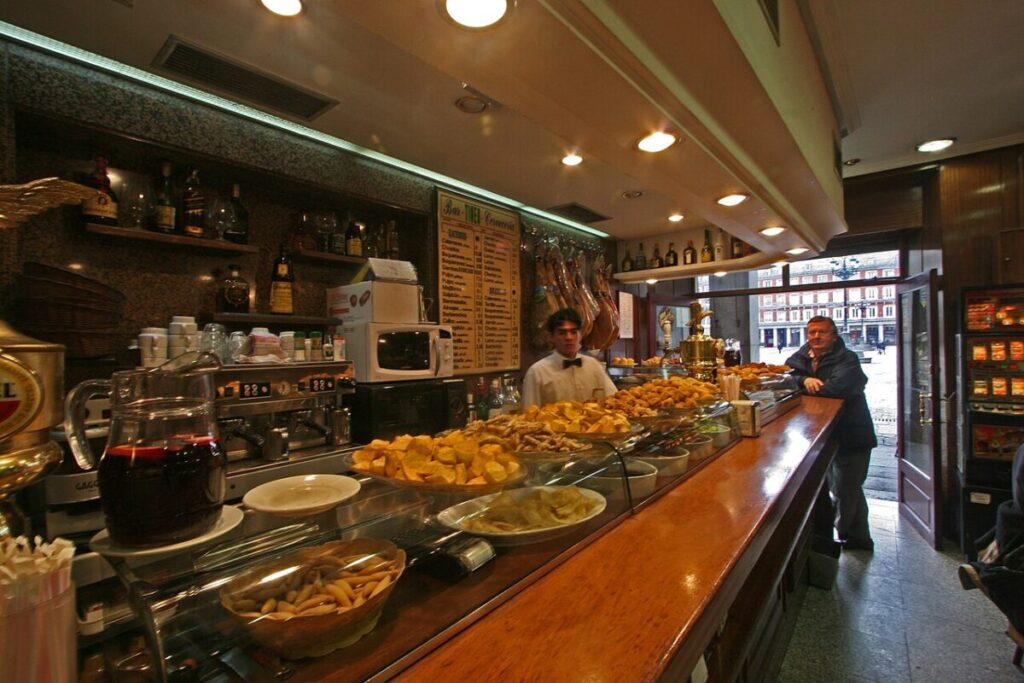
Always. A caña (a small, narrow glass of draft beer) is the default opener. Vermouth is what you see in every local’s hand on a weekend afternoon. Cava works too.
Skip the heavy red wine. A bold Rioja shuts your palate down and you’ll taste nothing after the second sip. Tapas go with something cold and light.
Forget the Menu
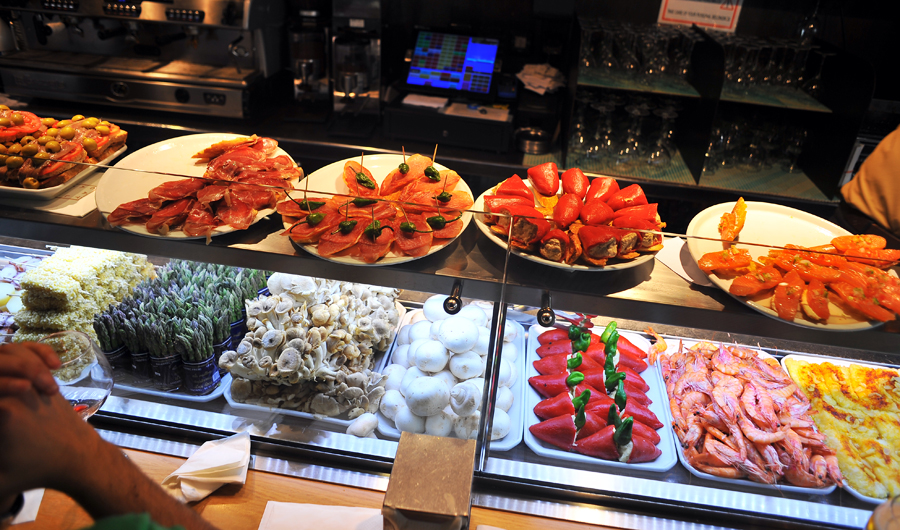
A lot of the best bars in Barcelona don’t hand out menus. The food is stacked in glass cases running along the bar top.
You lean in, point at what looks good, and the staff plates it up. If something needs to go on the grill, they’ll signal you when it’s ready.
Still overwhelmed? Tell the waiter your budget and any hard limits. Then let them order for you.
This is not a tourist move. This is what regulars do when they trust the house. The waiter knows what came in fresh that morning.
Never Try to Pay When You Order
The bartender is running a tab in his head. Sometimes without writing anything down. Trying to settle up round by round is a dead giveaway.
You eat, you drink, you finish. Then you ask for the bill.
Three Words Worth Knowing
A tapa is the small shared plate. A ración is the same dish in a larger portion, for when you’re actually hungry.
A pincho (also called a montadito) is a Basque-style bite on a small piece of bread.
At Basque-style bars, the pinchos are displayed on the bar and you help yourself. You tell the waiter at the end what you took.
Go to Quimet y Quimet Once
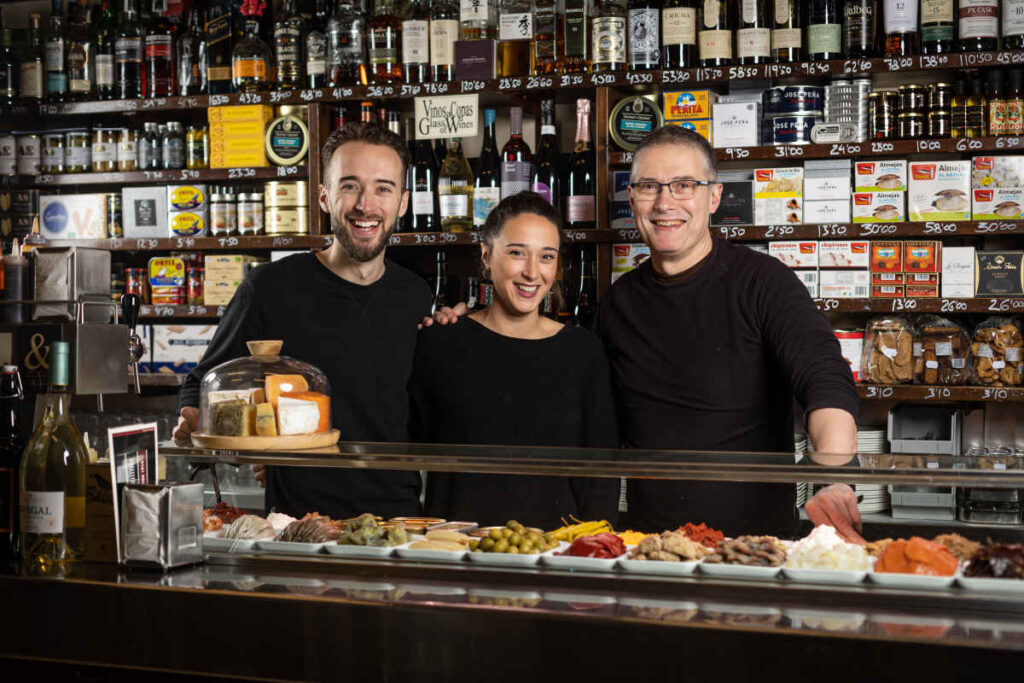
It’s a tiny standing-room bar in the Poble Sec neighborhood, open since 1914. No chairs. Tinned seafood on small pieces of bread. Vermouth from the tap.
There’s no menu. You look at what’s on the bar and point.
It opens at noon on weekdays and closes when the food runs out. On weekends that can be before 3pm, so don’t show up at 2:45 and expect miracles.
The Floor Is Not Disgusting
Walk into a busy old-school tapas bar and you will see napkins on the floor. Olive pits. Toothpicks. Shrimp shells.
This is how it works. In traditional bars, you drop used napkins and shells on the floor as you go. The staff sweeps regularly.
A dirty floor at 2pm means the bar has been packed since it opened. Locals read it as a good sign.