
Carcassonne: Why Most Day-Trippers Leave Disappointed
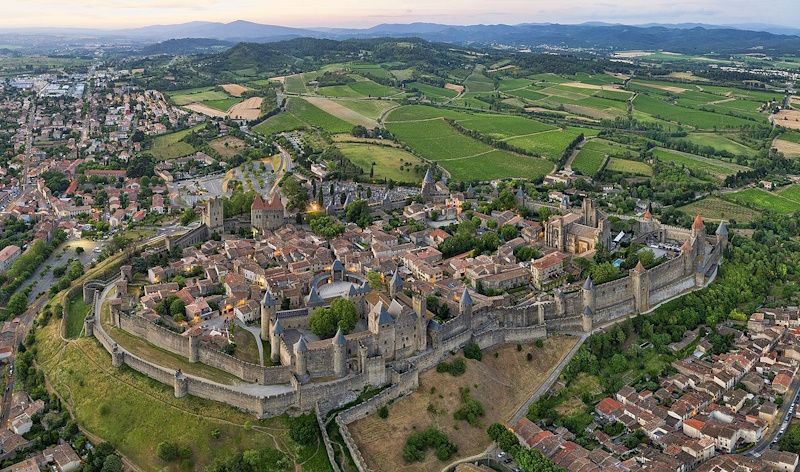
You see it before you expect to. Driving the A61 between Toulouse and Narbonne, the fortress just appears above the flat Aude plain. A hill covered in towers.
No gate, no dramatic reveal. It’s just suddenly there, looking exactly like a child’s drawing of a castle, except enormous and entirely real.
Two million people visit Carcassonne every year. A lot leave disappointed.
The disappointed ones arrived at noon in July, walked the main tourist street, paid too much for lunch, and headed out by 4pm. The ones who remember it stayed the night.
Getting There
From Toulouse, the train takes 50 minutes on the direct TGV line. From Montpellier, about 1 hour 15 minutes. From Paris Montparnasse, roughly 4.5 hours direct.
The station is in the lower town, 2.5 km from the medieval fortress. City buses 2, 3, and 4 connect the two for 1.20 euros. Line 3 drops you 150 meters from the main entrance, the Narbonnaise Gate.
Carcassonne also has its own small airport (Salvaza) with Ryanair connections from several UK cities, which is worth knowing if you’re flying in.
What to Do Inside the Walls
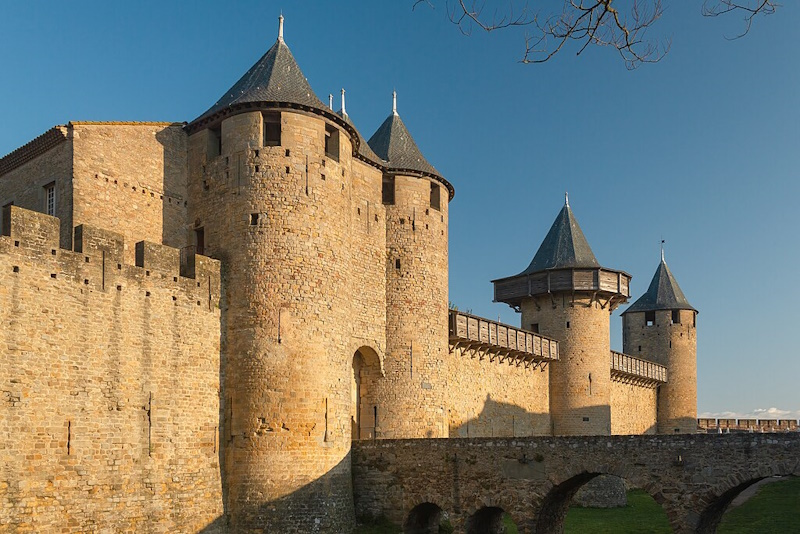
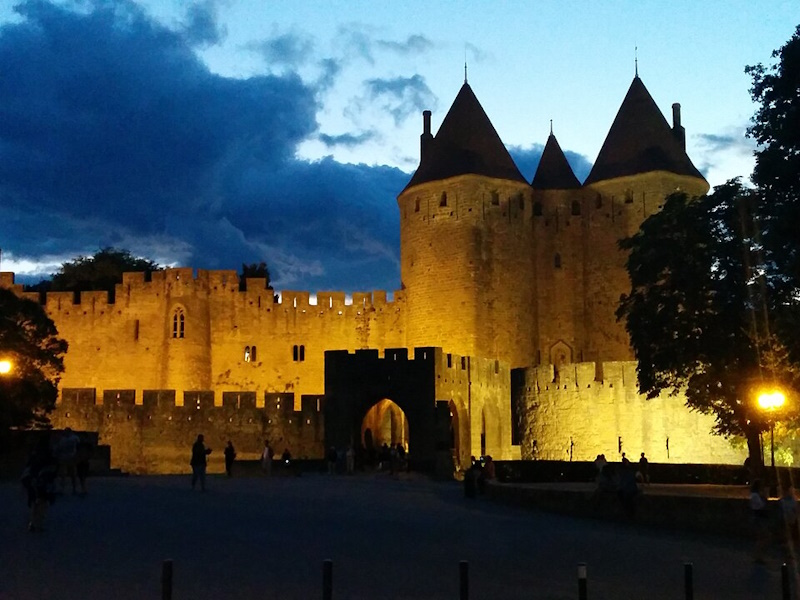
There are two gates into the Cité. The Porte Narbonnaise on the east side handles most of the tourist traffic. The Porte d’Aude on the west is quieter.
Once you’re in, ignore the main street for now.
Walk the lices first. The lices are the grassy corridor between the inner and outer walls, running the full circuit of the fortress.
Day-trippers miss this almost entirely because there are no shops. It’s also where the fortifications actually make sense as a military structure, and in the early morning it’s nearly empty.
The Château Comtal and ramparts walk costs around 10€, book online to skip the queue. Since a 2024 restoration completed, visitors can walk a full 1.3 km loop of the inner ramparts for the first time in centuries.
You can see the Pyrenees to the south and the Montagne Noire to the north. Budget 2 hours. Skip the audiovisual exhibition inside.
The Basilica of Saint-Nazaire, near the Porte d’Aude, gets overlooked because it sits off the main drag.
Built between the 9th and 14th centuries, it contains some of the finest Gothic stained-glass windows in the south of France. Free, and worth 20 minutes.
The Legend Nobody Mentions
The name Carcassonne comes from a story that is not historical but is genuinely good. Lady Carcas, widow of a Saracen prince, supposedly defended the city against Charlemagne’s siege for five years.
Running out of food near the end, she threw the last pig and the last sack of wheat off the city wall as a bluff. Charlemagne retreated.
When his army’s trumpets sounded, locals called out “Carcas sonne!” which translates roughly as “Carcas is ringing.” The name stuck.
Visitors leave without hearing this every single day.
Why You Should Stay the Night

Around 6pm in summer, the day-trippers leave. The souvenir shops close. The main street empties.
What you’re left with is a medieval fortress that is almost completely silent and lit from below after dark.
The Pont Vieux, a 14th-century stone bridge about 200 meters long connecting the lower town to the Cité across the Aude river, offers one of the best views in the south of France at night. The entire fortress reflects in the river. No crowds.
On July 14th, Bastille Day, Carcassonne stages one of the largest fireworks displays in France, launched from the ramparts.
The Cité looks like it’s on fire. Tens of thousands of people line the riverbank. You can’t experience it as a day-tripper.
The landmark property inside the walls is Hotel de la Cité (5 star). More affordable options exist just outside the Narbonnaise Gate, a short walk to the entrance.
See also My 5 top hotels in Carcassonne for every budget
Food and the Lower Town
The Ville Basse is where 48,000 people actually live. Restaurants here charge roughly half what the same meal costs inside the fortress.
There’s also a Saturday morning market in the Bastide Saint-Louis area with Languedoc wine, local cheese, and duck products.
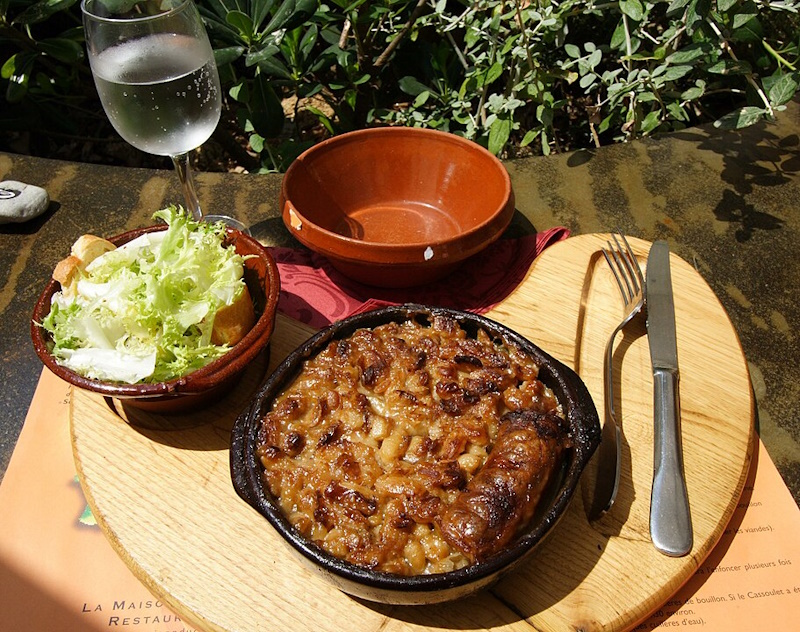
Order the cassoulet in the lower town. Carcassonne’s version uses partridge (perdrix) instead of the duck confit used in Toulouse’s version. That difference is a real local distinction.
The Pont Vieux walk connecting the two towns takes about 10 minutes on foot.
When to Go
May, June, September, and October are the best months. Warm, manageable crowds, and the Cathar castle day trips to the west are fully accessible.
July and August midday is when the Cité becomes genuinely unpleasant. Arrive before 9am or go after 6pm.
The Cité is open year-round. Winter is quiet and the cassoulet tastes better in the cold, though some restaurants inside the walls close between November and March.
The 1.3 km inner ramparts loop, fully walkable since the 2024 restoration, is the first complete circuit visitors have been able to do in centuries.