
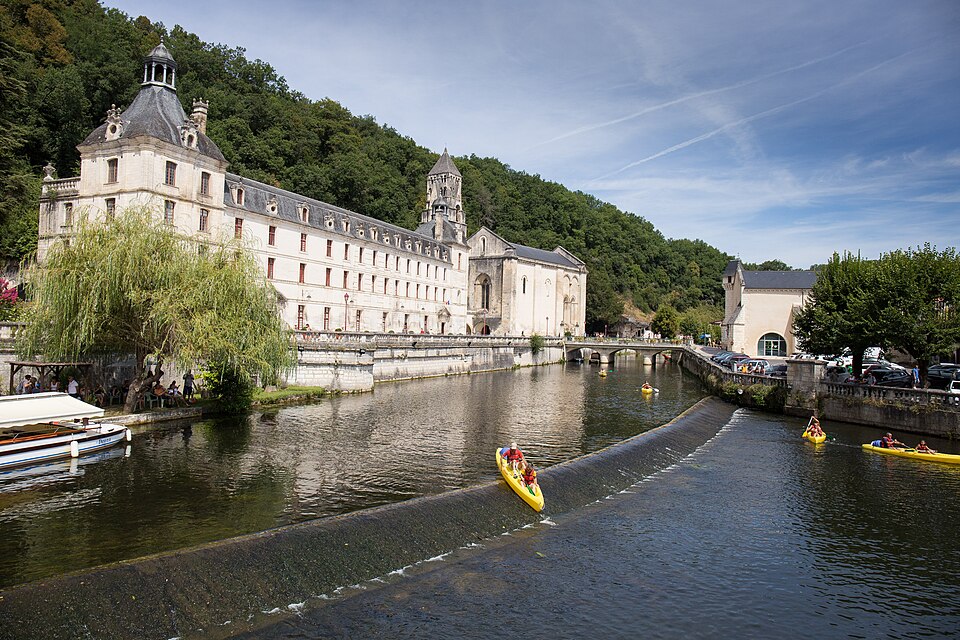
The French Town Built Inside a Cliff That Most Travelers Have Never Heard Of
The Dordogne’s big draws pull travelers straight to the Vézère Valley with its prehistoric caves, clifftop châteaux, the usual postcard route.
Brantôme sits about 45 minutes north, and it has something none of those places have: the town is an island, the abbey is carved into a rock face, and the whole thing was founded by Charlemagne in 769.
The abbey that grows out of the cliff
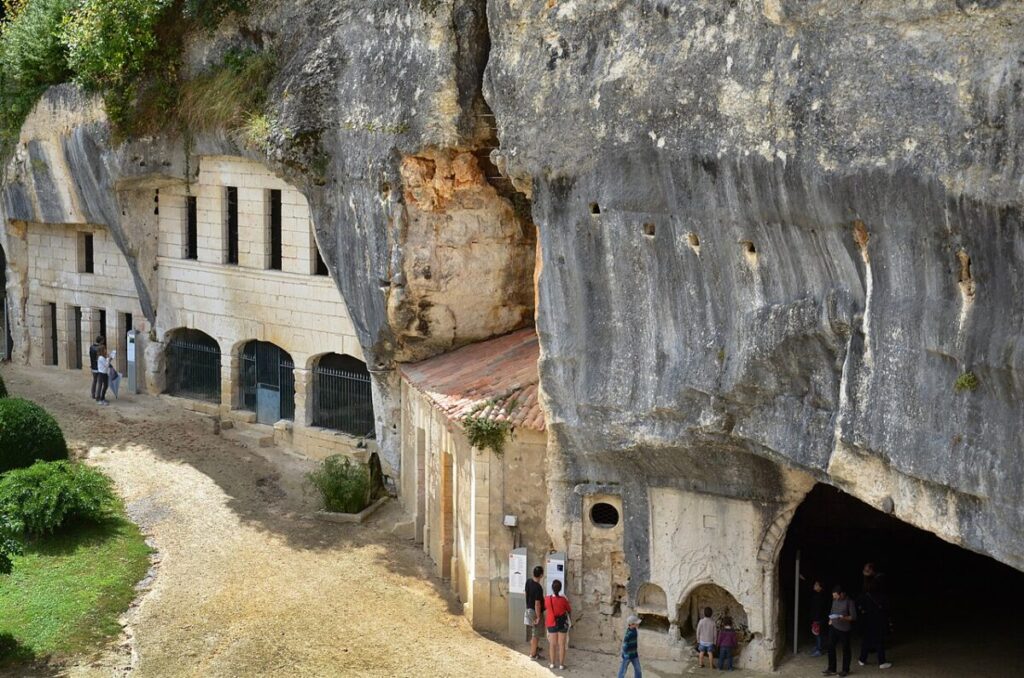
The Benedictine abbey of Saint-Pierre is the main event, and it earns the attention. The front of the building faces the Dronne river with a white façade stretching 75 meters long.
But the real surprise is out back, where the monastery extends directly into the limestone cliff behind it: Medieval monks carved rooms, chapels, and storage directly into the rock.
The deepest of these is the Grotte du Jugement Dernier (the Cave of the Last Judgement) where bas-reliefs of the crucifixion and the resurrection were chiseled into the stone sometime in the 15th century. You can still walk in.
The bell tower standing above the abbey is considered one of the oldest in France, built in the 11th century on a rocky outcrop above the main building. It predates most of what you see by several centuries.
An island town the river wraps around
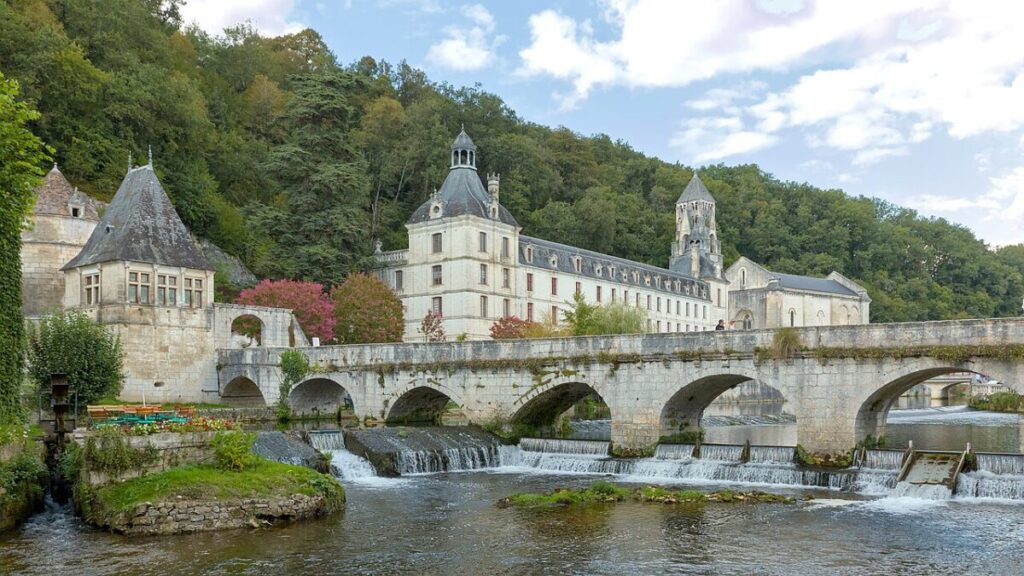
The Dronne loops almost entirely around Brantôme’s historic center, which earned the town its nickname – the Venice of Périgord.
It is a small place, maybe 2,000 people, but the island layout means water is never more than a few steps away.
The best view in town is from the Pont Coudé, the bent stone bridge that angles over the river right in front of the abbey. From here you get the full picture: white stone, water reflections, cliff face, bell tower.
In the summer, Friday evenings on the Dronne bring water jousting: jousters standing on platforms at the back of rowboats, knocking each other into the river. It sounds absurd. It draws a crowd every week.
Brantôme dining
This is Périgord Vert – the green, forested, least touristy corner of the Dordogne. The food is serious. Truffle noir, foie gras, duck confit, walnut oil, cèpes mushrooms – all of it grown or raised within a short drive.
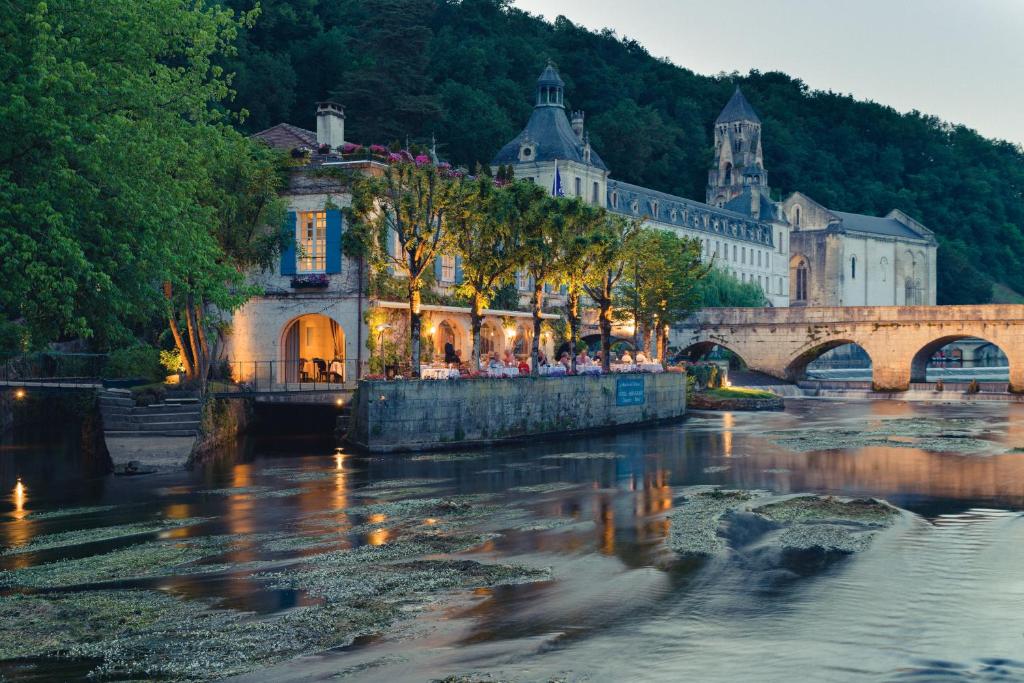
The most talked-about table in town is the Moulin de l’Abbaye, set inside a restored 17th-century mill right on the river at the Pont Coudé. A set three-course menu starts at €85.
For something less formal, Au Fils d’Eau is a riverside brasserie with a seasonal menu that locals actually eat at. A table facing the water on a weekday afternoon is one of the better ways to spend two hours in France.
Where to stay
Three properties get consistent praise from traveler, and for good reasons.
Le Moulin de l’Abbaye (4 stars) is the in-town pick – a converted riverside mill right at the Pont Coudé, with a Michelin-starred restaurant and rooms looking directly onto the abbey.
It is the most requested address in Brantôme, which means booking well in advance, especially in summer.
Moulin de Vigonac sits about 10 minutes outside town in a 16th-century mill on the Dronne. Travelers consistently single out the owner Olivier for making the stay feel personal.
Breakfast gets mentioned in nearly every review. Good pool, quieter setting, and easier parking than anything in the center.
Le Moulin du Roc (5 stars), about 5km away in Champagnac-de-Belair, is the splurge option – a 1670 mill with Michelin-starred cooking from Chef Alain Gardillou. Foie gras, black Périgord truffle, serious wine list.
Couples who stay here tend to book dinner in the restaurant first and the rooms as an afterthought.
When and how to visit
There is no direct train. The closest station is Périgueux, about 40 minutes by car. People driving through the Dordogne can typically add Brantôme without much detour.
Spring and early fall are the sweet spots. Summer gets busy and some parking fills up by midmorning.
Market day is Friday. The weekly market brings local producers into the center of town, and the streets fill up in a way that feels nothing like a tourist trap.
The abbey church is free to enter. The troglodyte caves and museum require a ticket, typically a few euros.
The kayak rental outfits on the river charge around €12-15 per person for a paddle along the Dronne.
It is the kind of place that people stumble onto and then tell everyone about for years. There’s a reason the French gave it a nickname borrowed from the most beautiful city in Italy.