
Why Danes Live Longer – And What We’re Getting Wrong
Denmark keeps showing up near the top of every “happiest,” “healthiest,” and “longest-living” list on the planet.
And if you’ve ever looked at what they’re doing differently, it’s equal parts inspiring and a little humbling.
Some of it is obvious. Some of it will catch you off guard.
They Walk and Bike Everywhere
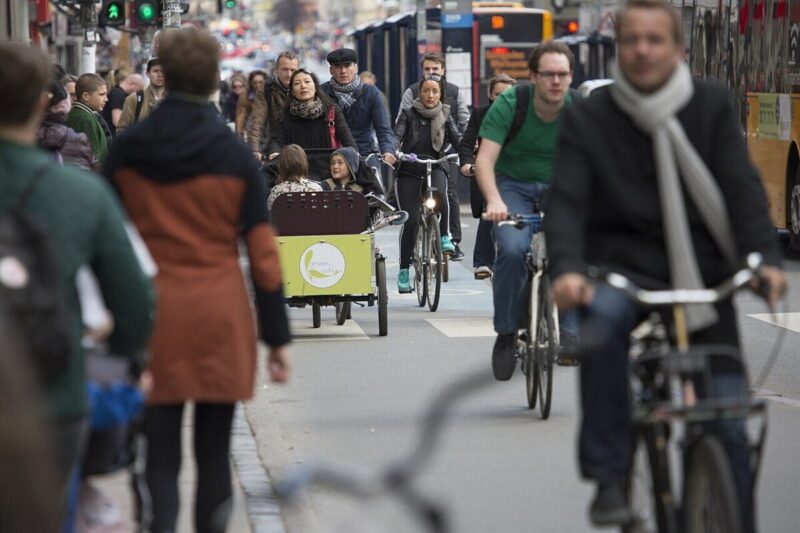
Around 62% of Danes cycle year-round, including in the snow. It’s not exercise to them. It’s just how they get places.
Compare that to countries where driving to the gym counts as the workout. The daily, low-intensity movement Danes get without thinking about it adds up fast.
The research backs it up.
Lunch Is Taken Seriously
The classic Danish lunch, an open-faced rye bread sandwich called smørrebrød, is packed with fiber, protein, and healthy fats.
It’s been the standard midday meal for generations.
Rye bread in Denmark has a glycemic index far lower than the white sandwich bread that dominates elsewhere.
Blood sugar stays stable. Energy doesn’t crash at 3pm.
They Have a Word for Cozy Rest
Hygge is the Danish concept of warm, comfortable togetherness. It’s lighting candles, slowing down, sitting with people you like, and genuinely switching off.
Chronic stress is one of the biggest drivers of cardiovascular disease and poor immune function in the U.S. and elsewhere.
Danes have built stress recovery directly into their culture. It’s not a weekend retreat, it’s a Tuesday evening.
Work Stops When Work Stops
The average Danish worker logs around 33 hours per week, well below the EU average, and overtime is genuinely rare.
More importantly, Danish law protects the right to disconnect. Emails after hours are not the expectation.
That boundary between work and the rest of life does real things for mental and physical health.
Healthcare Is Free and Preventive
Every Danish resident has access to free healthcare, including preventive screenings, mental health support, and GP visits.
Nothing costs money at the point of care. When healthcare is free, people go before they’re desperate. Conditions get caught early.
The downstream health outcomes are dramatically better as a result.
They Eat Less Ultra-Processed Food
Denmark has one of the lowest rates of ultra-processed food consumption in Europe. Traditional Danish cooking leans heavily on fish, potatoes, whole grains, fermented dairy, and seasonal vegetables.
Ultra-processed food consumption is now linked to over 30 adverse health outcomes in large-scale U.S. studies.
Eating less of it is not complicated. It’s just harder to do when your food environment makes it the default.
Kids Play Outside Regardless of Weather
Danish children spend a significant portion of their school day outdoors, in all weather. There’s even a saying: “There’s no such thing as bad weather, only bad clothing.”
Outdoor time in childhood is tied to better sleep, stronger immune systems, and lower rates of anxiety and depression in adulthood.
It also means Danish adults grow up treating movement as normal rather than optional.
They Sleep More
Danes average around 7.8 hours of sleep per night, which puts them among the better-rested populations in Europe.
Sleep deprivation is not worn as a badge of productivity the way it is in U.S. culture.
Poor sleep is linked to obesity, type 2 diabetes, heart disease, and reduced immune function.
Getting enough of it is one of the most powerful health interventions available, and it costs nothing.
Alcohol Is Consumed Differently
Denmark does drink. But the culture around it tends toward moderation and social context rather than binge drinking.
A glass of wine with dinner is more common than heavy weekend drinking sessions.
The social norms around alcohol count as much as the quantity. Drinking slowly, with food, in relaxed company produces very different outcomes than drinking quickly in high-stress environments.
Equality Reduces Stress
Denmark consistently ranks among the most equal societies in the world by income and opportunity.
Health researchers have found that inequality itself, independent of individual income, is a driver of poor health outcomes.
When people feel economically secure and socially included, cortisol levels are lower, trust is higher, and community ties are stronger. A
ll of those things are measurable predictors of a longer life. The average life expectancy in Denmark is around 81.6 years, compared to 76.4 in the United States.