
The Dordogne Itinerary for People Who Care More About Food Than Caves
The Dordogne has a marketing problem. Every guide leads with prehistoric cave paintings and medieval chateaux.
Those are fine. But the real reason to come here is to eat.
Périgord, the old name for this corner of southwest France, produces some of the most obsessively good food in the country.
Black truffles. Duck confit. Foie gras. Walnut oil so good people used to settle debts with it. You can spend three days here and barely scratch the surface.
This is how to use those three days well. No caves required, though Lascaux is 45 minutes from Sarlat if you can’t help yourself.
Day One: Sarlat and the Market
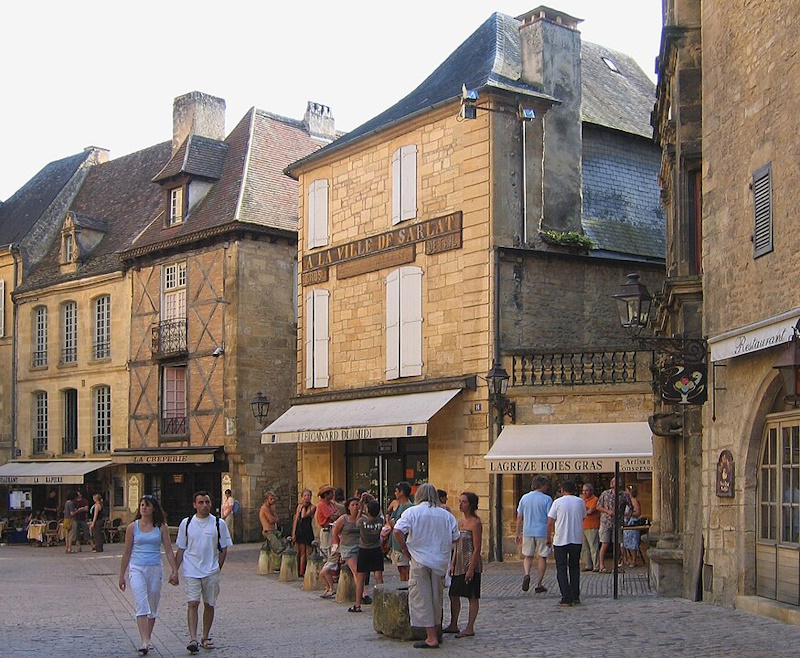
Get to Sarlat-la-Canéda on a Wednesday or Saturday morning. Those are market days, and the medieval stone streets fill up with local producers selling foie gras, walnut oil, strawberries, and cured duck in every form imaginable.
Arrive by 8:30am. The serious producers set up first; the touristy stuff comes later.
Sarlat is Périgord Noir’s capital, and the market is a crash course in what the region eats.
Pick up a terrine of foie gras from a local farm stall, a bottle of walnut oil, and something for lunch. You’ll pay less than you would in a restaurant and eat better.
Salade Périgourdine is the thing to order if you sit down anywhere for lunch on day one. It sounds modest.
It’s a salad of duck gizzards, smoked duck breast slices, and often a sliver of foie gras, dressed in walnut oil vinaigrette. It’s nothing like any salad you’ve had before.
For dinner, Le Petit Manoir is a 15th-century boutique hotel right in the historic center that TripAdvisor reviewers keep calling one of the best stays in Sarlat, with guests raving about the breakfasts and the staff’s warmth in equal measure.
If you’re basing yourself here, book early: it has nine rooms and fills up fast.
Day Two: Périgueux
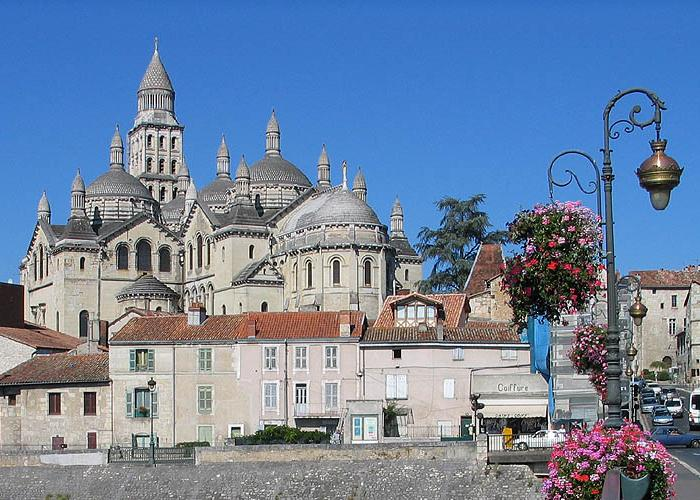
Périgueux is 90 km northwest, and it’s worth the drive for one reason in particular: this is where you eat duck properly.
Duck is the backbone of Périgord cooking. Magret, the breast, usually served pink, is on almost every menu. Confit de canard is the slow-cooked leg, crisped in the oven and served with potatoes fried in duck fat.
The whole production sounds heavy. But it’s exactly what you want after a morning market.
The Périgueux market runs year-round at the foot of the Saint-Front cathedral. In the winter, truffles appear, with sellers and buyers negotiating in low voices over small black lumps that can cost hundreds of euros per kilo. Even watching is worth something.
L’Essentiel is the city’s most talked-about restaurant, a Michelin-starred room near the cathedral known for menus heavy in local truffles, asparagus, and duck.
Menus run from around €62 for four courses. It won’t hurt as much as you expect.
Pair anything with a Bergerac red or a glass of sweet Monbazillac with the foie gras. The Bergerac vineyards run along the river just west of the city, and the wines are far better than their low profile suggests.
Day Three: La Roque-Gageac
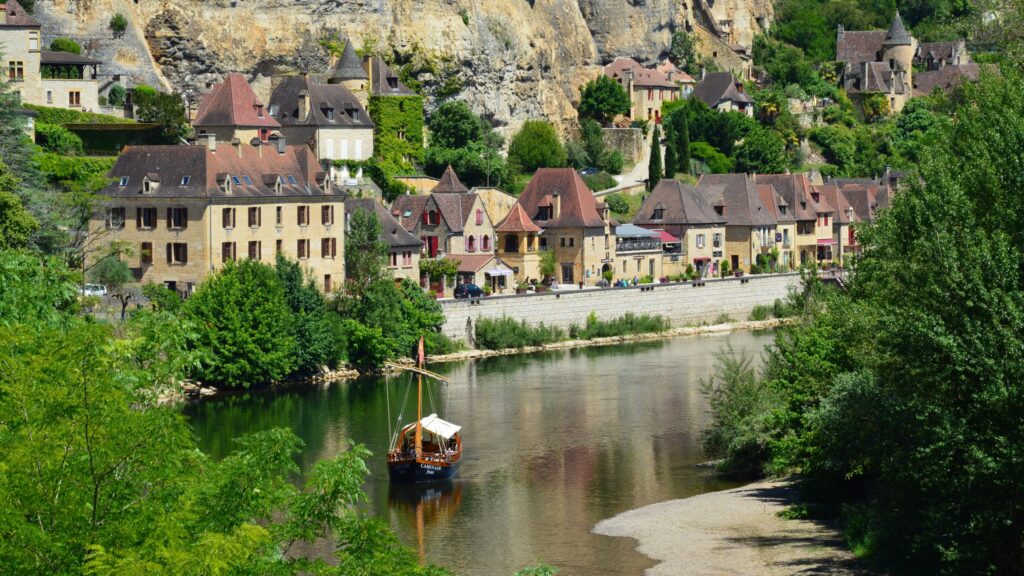
La Roque-Gageac is the village that stops people in their tracks. It clings to a limestone cliff above the Dordogne river, and on a clear morning the light off the water is genuinely ridiculous.
Come here to slow down. Walk the single main street. Take a flat-bottomed gabarre boat ride on the river, those used to carry walnut oil and wine downstream toward Bordeaux centuries ago.
La Roque-Gageac regularly shows up on lists of the prettiest villages in France, and you’ll spend at least 20 minutes just standing at the river’s edge.
Hotel La Belle Etoile sits right on the river with an on-site restaurant that travelers have ranked number one in the village for years running. Some visitors stayed there ten times and saw no reason to look elsewhere.
The food is traditional Périgord, the rooms are simple, and the view is the whole point.
Dinner here, with a glass of Bergerac red, is the correct ending to this trip. Order the duck.