
How to Visit This Popular French Riviera Town Without Wasting the Trip
You see it before you arrive. A cluster of medieval stone sitting 427 meters straight up from the sea, walls intact, cars nowhere in sight.
That’s Eze. A genuine 12th-century fortified village above one of the most expensive coastlines on earth. It’s worth the detour. Here’s how to do it right.
Getting There: Where Tourists Go Wrong
Three routes exist, each with a real tradeoff.
The train drops you at Eze-sur-Mer, the coastal station at sea level. Not Eze village. Plenty of visitors miss that distinction.
From the station, the Nietzsche Path climbs 1.5 km with around 300 meters of elevation gain. Budget 45 minutes to an hour.
It’s steep and rocky, sandals are a bad idea, and going up is harder than the photos suggest.
The path is named because Nietzsche reportedly conceived part of Thus Spoke Zarathustra on this walk, which either makes the suffering feel poetic or just makes it worse.
A lot of visitors take the bus up and walk down.
Bus 83 from Nice runs along the Grande Corniche and drops you directly at the village entrance. It’s cheap, runs regularly, and you skip the parking situation entirely.
If you have a car, drive the Grande Corniche anyway. It’s one of the most scenic coastal roads in Europe. T
he village is pedestrian-only, so you park outside the walls and walk in.
The village takes about 1.5 to 2 hours at a normal pace. It is small. Don’t rush it.
The Jardin Exotique
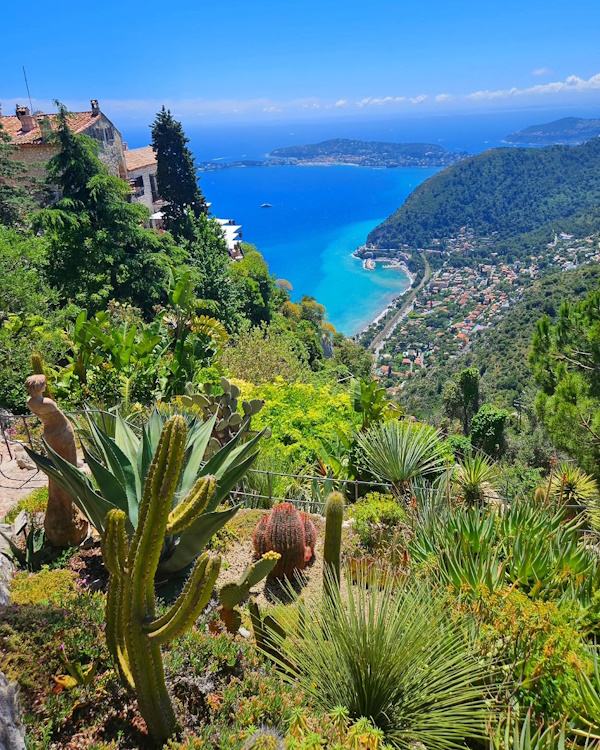
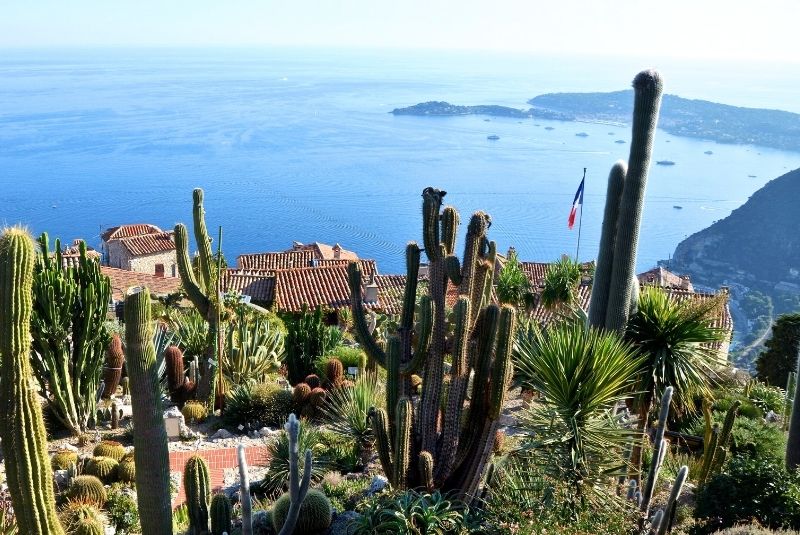
Go here first. Built on the ruins of a castle Louis XIV destroyed in 1706, now planted with exotic cacti and succulents. The entrance fee is around 6 euros.
The views from the top are the payoff for the whole trip: the coastline stretching from Nice to Monaco, the Mediterranean below, the Alps behind.
The best coastal viewpoint on the Riviera that doesn’t require a hotel reservation or a Michelin booking.
A lot of visitors skip it thinking it’s just a garden.
Streets and Shops
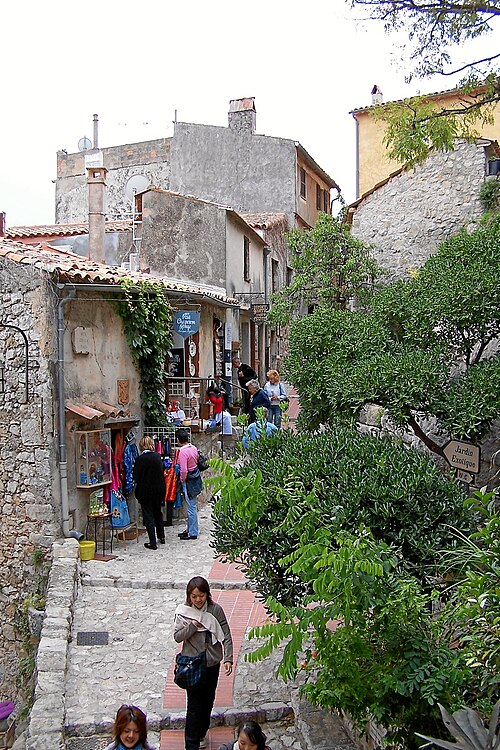
The lanes are narrow, steep, and entirely cobblestone. Art galleries, perfume shops, lavender sellers. The shops are tourist-facing but not aggressively tacky.
The Fragonard perfumery has a free boutique and a small exhibition about scent-making and Grasse. Worth 15 minutes even if you have zero interest in buying anything.
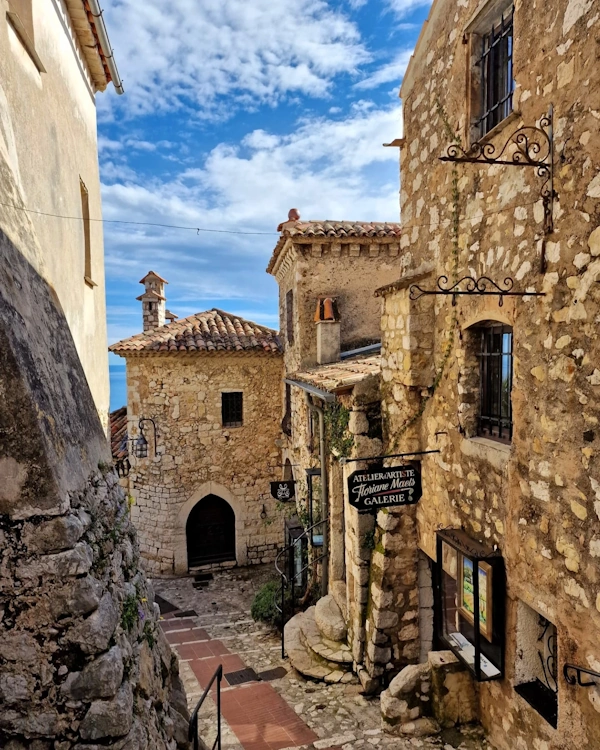
The Eglise de l’Assomption sits in a small square near the center. Quiet, cool, and free. The square outside is the best spot to eat something without being in the main tourist flow.
Food: An Honest Take
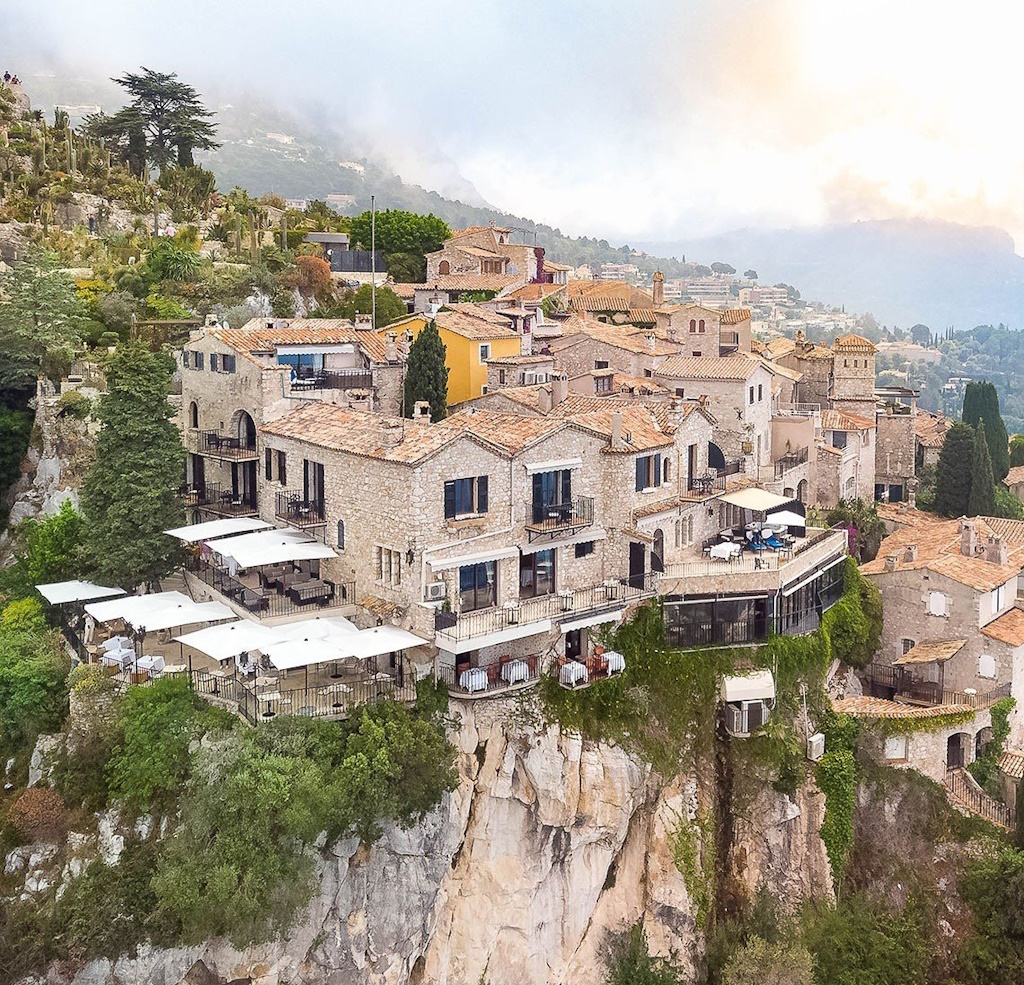
Eze is not where you want to have a serious lunch unless you’re prepared to spend seriously.
Mid-range options are mediocre relative to what Nice or Villefranche serve for less. Eat before you come or after you leave.
Bring water: the hike is warm, the village has little shade, and the fountain isn’t always running.
The small café near the church square is the least overpriced option if you need to sit down.
Château de la Chèvre d’Or and Château Eza are genuinely exceptional, both carrying Michelin stars. Expect 150 euros per person minimum and book weeks or months ahead. You can’t walk in and get a table.
The Lower Village Most Tourists Never See
Eze-sur-Mer, the settlement at sea level near the train station, is a completely different place.
Belle Epoque villas, a shingle beach, good fish restaurants, and quiet even in August. If you take the Nietzsche Path down, you end up here.
Ten minutes by car, the Trophy of Augustus at La Turbie is a massive Roman monument built in 6 BC that almost nobody visits. Worth knowing about if you have a car.
When to Go
Early morning in summer, before 10am, is the best version of Eze. Any weekday in May, June, or September also works well.
July and August at midday is the worst version. The village has one entrance, minimal shade, and the crowds are genuinely uncomfortable.
October and November are underrated. The light on the coast is exceptional, the village runs at half-capacity, and La Chèvre d’Or is far easier to book.
Winter is open and beautiful. Some shops close but the Jardin Exotique stays open.
The image of cacti in bloom with snow on the Alps behind them is one of the better views the Riviera offers all year.
Who Leaves Disappointed vs. Stunned
The tourists who leave disappointed usually arrived at noon in August, walked the main street, found it crowded and expensive, and left in under an hour.
The tourists who leave stunned went early, paid the 6€ for the garden, stood at the top looking down at the Mediterranean, and walked the Nietzsche Path down to the sea.
Same village, completely different trip.