
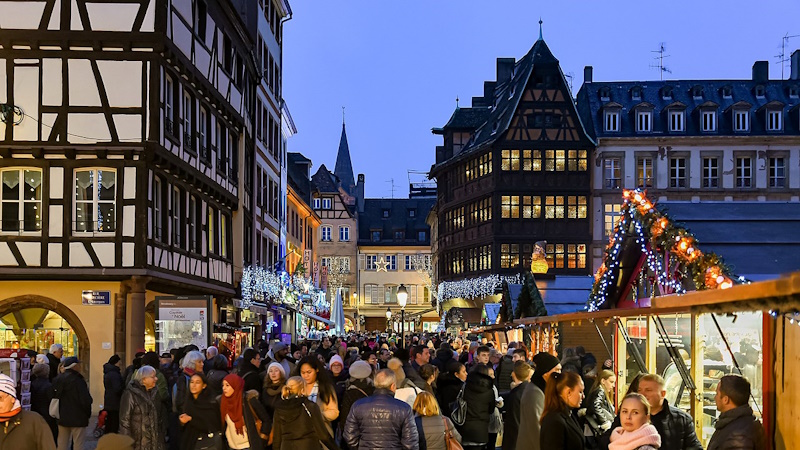
France Is Tightening Security Around Christmas Markets This Year
France is increasing security around Christmas markets this year as the national terror threat level is considered very high.
The Interior Ministry asked every prefect in the country to raise surveillance, strengthen controls, and treat December crowds as sensitive zones.
This affects every major market, from Paris and Strasbourg to Lille, Lyon, Metz, Colmar, and coastal towns preparing smaller seasonal events.
The move follows several warning signs. Police in Strasbourg recently discovered a gun and ammunition hidden near the market area.
Intelligence services also flag risks linked to isolated radicalised individuals and small extremist groups that could use holiday crowds to stage violent acts or disruptions.
Christmas markets are treated as symbolic targets because of the 2018 Strasbourg attack, which killed five people and still shapes France’s holiday-season security policy.
Visitors will notice stronger measures in different places, all tied to the same national plan. More police on foot, possible Sentinelle soldiers, bag checks, funnelled entry points, and restricted traffic close to market streets.
Markets with heavy foot traffic now rely on reinforced CCTV and on-site coordination rooms linking police, firefighters, and municipal teams in real time.
Prefectures also reassess weak spots around each site, including parking areas, narrow passages between stalls, blind corners and high-density walkways.
About 2,700 markets will operate under this reinforced protocol. Some individuals considered high risk have been restricted from attending or placed under tighter monitoring.
The goal is to stop incidents at the earliest stage, from weapon drops or abandoned bags to disruptive actions meant to cause panic.
The markets remain open as planned though. The changes mostly affect the security structure around them, not the events themselves.
Security agencies also study patterns observed in other European countries during the holiday period. Germany reported attempted attacks and disrupted plots last winter, which pushed French intelligence to tighten its own approach for 2025.
Cities like Strasbourg, Paris and Lyon follow the strictest models. They run live coordination hubs during market hours, tracking crowd movements and unusual behaviour.
Some sites use mobile patrols trained to spot sudden shifts in the crowd, suspicious objects, or attempts to use blind spots near stall lines.