
The French Village That Was Never Rebuilt After the SS Burned It to the Ground
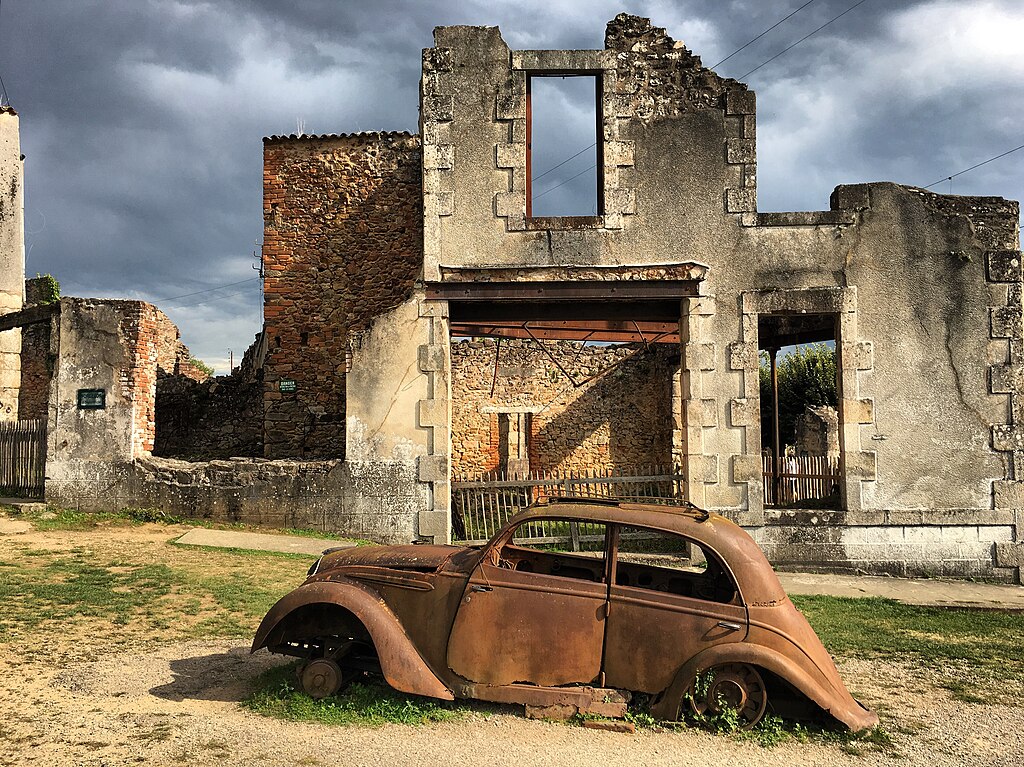
On June 10, 1944 – four days after D-Day – around 200 Waffen-SS soldiers from the 2nd Panzer Division Das Reich rolled into a small farming village called Oradour-sur-Glane, about 15 miles northwest of Limoges in central France.
The village had nothing to do with the war. There was no Resistance activity there, no military targets, no strategic value.
By that afternoon, 642 men, women, and children were dead.
The soldiers surrounded the village at midday and ordered everyone to the market square. They separated the men from the women and children.
The 197 men were split into groups and forced into six barns around the village. Machine guns had already been set up inside.
The 247 women and 205 children were locked inside the village church, Saint-Martin. The SS threw grenades and incendiary devices through the doors and windows.
Then they set fire to the building.
Only one woman survived the church. Marguerite Rouffanche jumped from a window and was shot five times before crawling into a garden, where she hid until the following afternoon.
In total, six men and one woman survived. They escaped by hiding under the bodies of the dead.
Why Oradour
The massacre was ordered by SS Major Adolf Diekmann. His close friend, SS Commander Helmut Kampfe, had been captured and killed by the French Resistance the day before.
An informant told Diekmann that Kampfe had been burned alive in front of a crowd at Oradour.
That turned out to be false. Kampfe was never held in Oradour. There is no evidence the village had any connection to Resistance operations.
Even the German military command was stunned. Field Marshal Erwin Rommel protested.
The division’s own commanding officer, SS Colonel Sylvester Stadler, ordered a court martial for Diekmann.
It never happened. Diekmann was killed in combat in Normandy 19 days later.
A village preserved in ruins
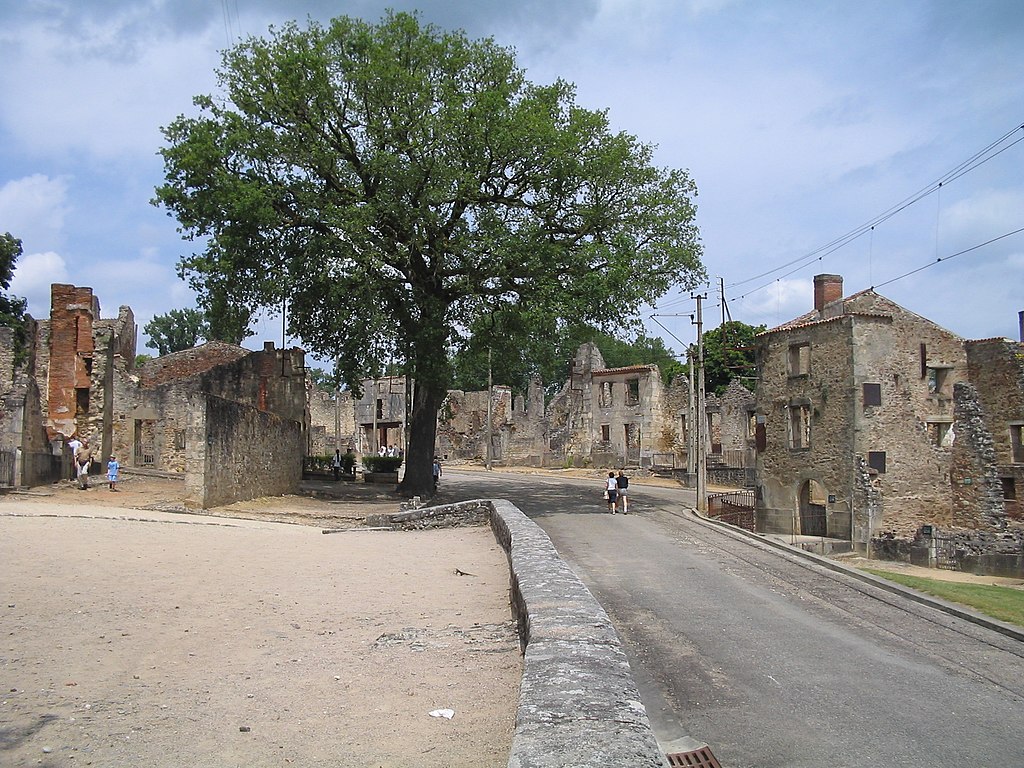
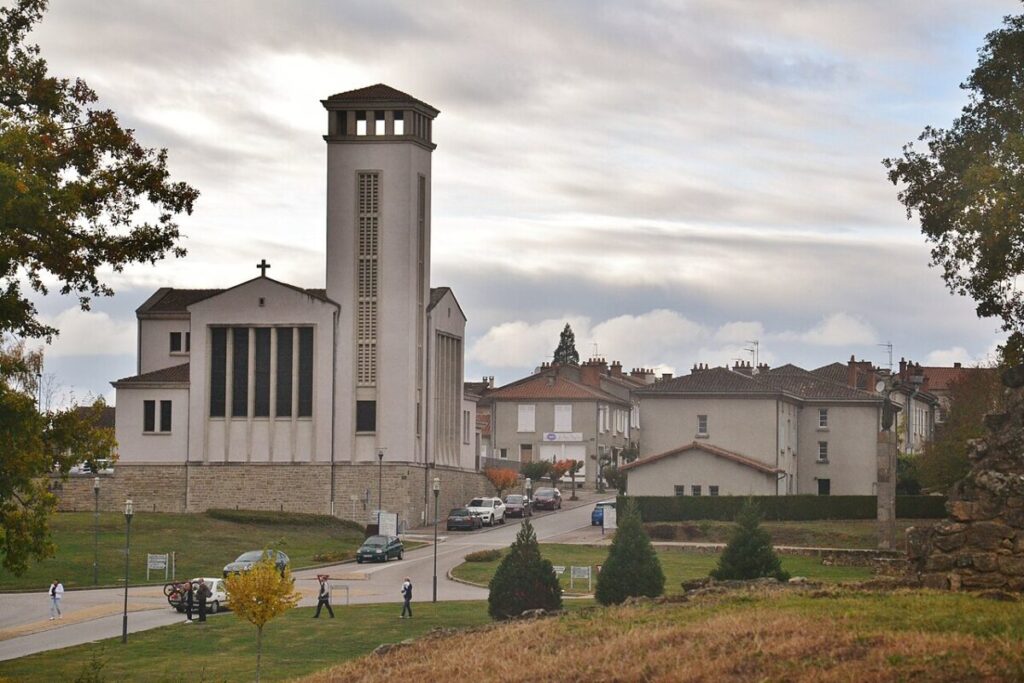
After the war, Charles de Gaulle visited the site and ordered that the village be preserved exactly as it was left on June 10, 1944. A new village was built nearby, a short distance to the west.
Today, the original streets are still there. You can walk past the burned-out shells of the baker’s shop, the mechanic’s garage, and the old hotel-restaurant.
Rusted cars sit where they stopped 82 years ago. The church still has its bullet-pocked walls.
Plaques on each building list the names and occupations of the people who lived there. In the cemetery, every victim’s name is carved into a long stone wall.
Le Centre de la Mémoire
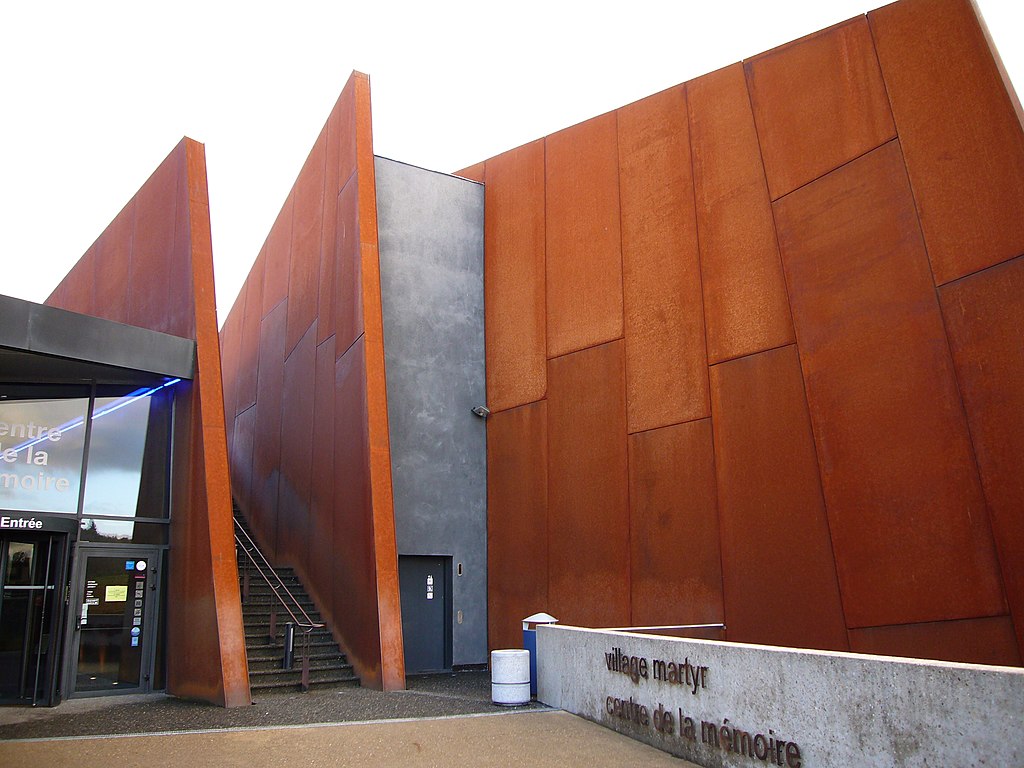
The ruins are open year-round, free of charge, seven days a week. The site is about 22 kilometers northwest of Limoges.
The Centre de la Memoire, the memorial museum at the entrance, is closed for major renovations until June 2027. A temporary reception point in the parking area is still available to welcome visitors and provide context before entering the ruins.
The visit takes about two hours. It is not recommended for young children.
Around 300,000 people visit each year. The site does not advertise. There is no gift shop inside the ruins.
The trial that split France
In 1953, a war crimes trial was held in Bordeaux. Twenty-one defendants appeared – seven Germans and fourteen French citizens, mostly young men from Alsace who had been forcibly conscripted into the SS.
The trial exposed a wound France had tried to avoid. The Alsatian soldiers were victims of forced conscription, but they had been present at one of the worst massacres on French soil.
All were found guilty. Two received death sentences. But within weeks, the French government passed an amnesty law releasing the Alsatian defendants.
Oradour’s survivors and families were devastated.
For nearly 20 years after the amnesty, the village’s families refused to allow French officials at the annual June 10 ceremony. They held the commemoration in private.
One last survivor
Robert Hebras was 18 years old on June 10, 1944. He survived by hiding under the bodies of his neighbors in one of the barns.
He spent the rest of his life giving tours of the ruins and telling visitors what happened. He was the last living survivor of the massacre.