
The French Worm That’s Healing Europe’s Worst Fire Victims
Something unusual happened in the burn units of Switzerland and France after the Crans-Montana disaster.
Doctors were treating patients with a gel made from the blood of a worm.
Actual marine worm blood, harvested on the beaches of Brittany, purified in a lab, and packed into dressings that were rushed to hospitals across Europe.
And it came from the mind of one French biologist who spent years staring at creatures most of us step over without a second thought.
The Fire That Shocked Europe
On January 1, 2026, just after 1:30 in the morning, a fire ripped through Le Constellation, a packed bar in the Swiss ski resort of Crans-Montana.
Sparklers attached to champagne bottles caught the ceiling. Within seconds, the room was engulfed.
41 people died. 115 others were injured. 83 of them had severe burns.
The burn units in Valais filled up within hours. Victims were airlifted to hospitals in Lausanne, Geneva, Zurich, Lyon, and Bern. France took in dozens more.
It was one of the deadliest nightclub fires in European history.
Enter the Worm
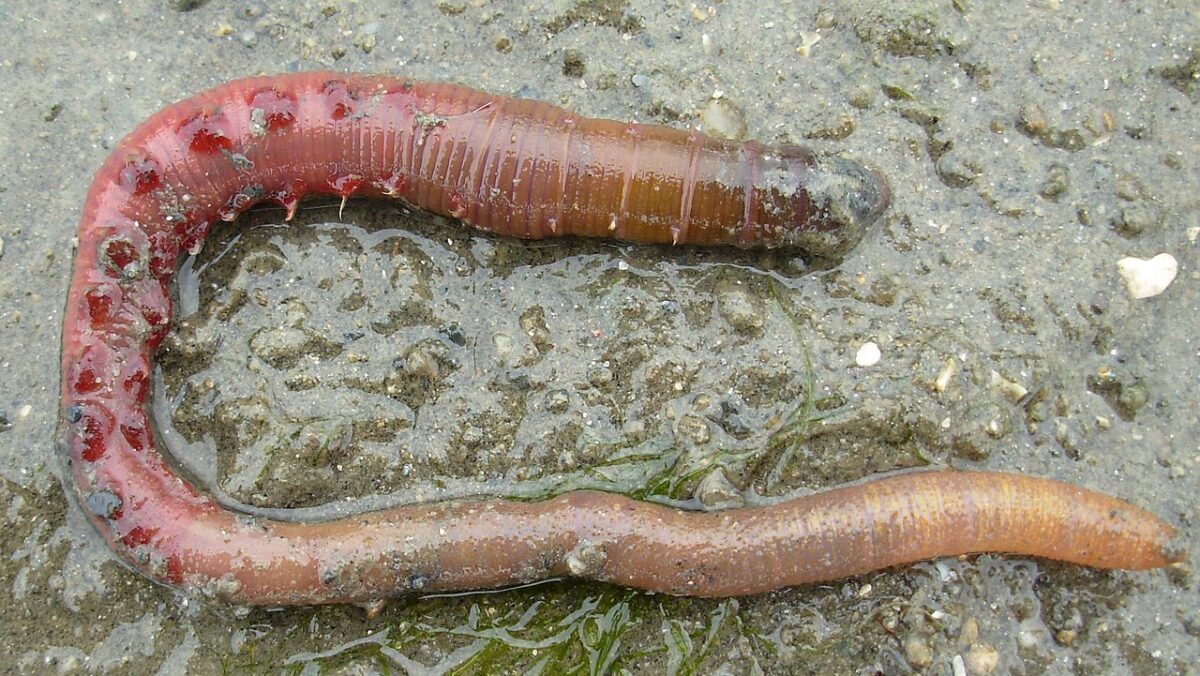
In Morlaix, a small city in Brittany, a biologist named Franck Zal had spent years studying a creature called Arenicola marina – a common sand worm found on beaches all over the world.
You’ve probably seen them without knowing it. They live just under the surface of wet sand, and they survive something remarkable: being stranded out of water for hours at low tide with almost no oxygen.
How? Their blood stores oxygen at levels that put human blood to shame.
Zal, a former researcher at the CNRS – France’s national scientific research center – saw a medical opportunity. If this worm’s hemoglobin could keep the animal alive in near-zero oxygen conditions, could it help keep human tissue alive too?
15 Years of Work, Then a Disaster
Zal founded a company called Hemarina, still based in Morlaix, and spent over 15 years developing the molecule, named M101, into a usable medical product.
The key insight is simple: oxygen is the first ingredient healing needs.
When skin is burned, the damaged tissue is starved of oxygen. Standard dressings protect the wound from infection, but they don’t solve that problem.
Hemarina’s gel, applied directly to the burn, delivers oxygen continuously as it sits on the wound.
The worms are now farmed by the ton in aquaculture facilities in Brittany, on the island of Noirmoutier. The molecule is extracted, purified, and turned into a hydrogel.
And it appears to work.
Used in a Medical Emergency Without Full Approval
The gel has not received standard market authorization – not in Switzerland, not in the European Union. As of today, it remains an experimental treatment.
But after the Crans-Montana fire, the CHUV hospital in Lausanne, which received 22 victims on the night of the disaster, obtained emergency authorization to use it.
Hemarina sent thousands of dressings to Swiss hospitals in the days that followed. The CHUV confirmed it used the gel on specific patients, but declined to share clinical outcomes.
Some doctors praised the approach. Others publicly urged caution, noting the lack of formal approval and the need for controlled clinical data.
The French doctor at Lyon’s Edouard-Herriot burn center – one of the largest in France, which also received Crans-Montana victims – acknowledged being alerted to the disaster within hours and coordinating with Swiss colleagues on treatment options.
Finalist for Europe’s Top Invention Prize
Franck Zal has just been named a finalist for the 2026 European Inventor Prize, awarded by the European Patent Office.
He’s in the running in the SME category (small and medium enterprises) alongside a Czech engineer who developed industrial nanofiber production and a Polish inventor working on magnetic levitation for rail networks.
The winners are announced on July 2, 2026, at a ceremony in Berlin.
Whether Zal takes the prize or not, the nomination itself says something. A French biologist from a mid-sized Breton city, farming worms on an Atlantic island, has built a biotechnology that was deployed in one of the worst mass casualty fires Europe has seen in years.
The CHUV confirmed it: “The first treatments began on certain patients who were victims of the January 1 fire.”