
Le Marais or the 11th Arrondissement: Which is Better for a Stay?
Both areas work. The difference is not about right or wrong. It’s about daily rhythm, noise, space, and how you move around the city.
Here’s a clear breakdown of what each area offers in practice.
The 11th Arrondissement: Everyday Paris
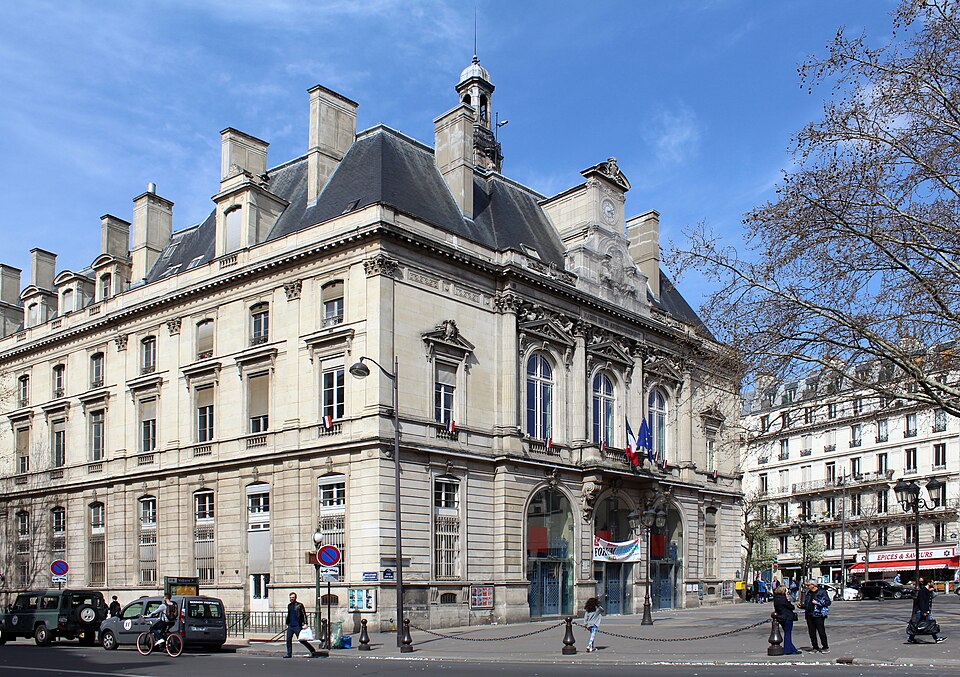
The 11th feels residential. Streets are active during the day and calmer at night, by Paris standards. There is traffic, but it does not dominate the area.
Shops and bakeries cater to locals, which usually means better prices and a more regular neighborhood pace.
Food is one of the main strengths. Within a short walk, there are clusters of restaurants and cafés in several directions. Rue de Charonne, Rue de la Roquette, Rue du Chemin Vert, and Rue Saint-Maur all concentrate good options.
Places like Aux Bons Crus, Jones, and Café du Coin are frequently cited for casual meals without planning ahead.
The area feels lived-in, less tourist-heavy, and daily errands blend naturally with eating out or walking around.
Green Space and Open Areas in the 11th
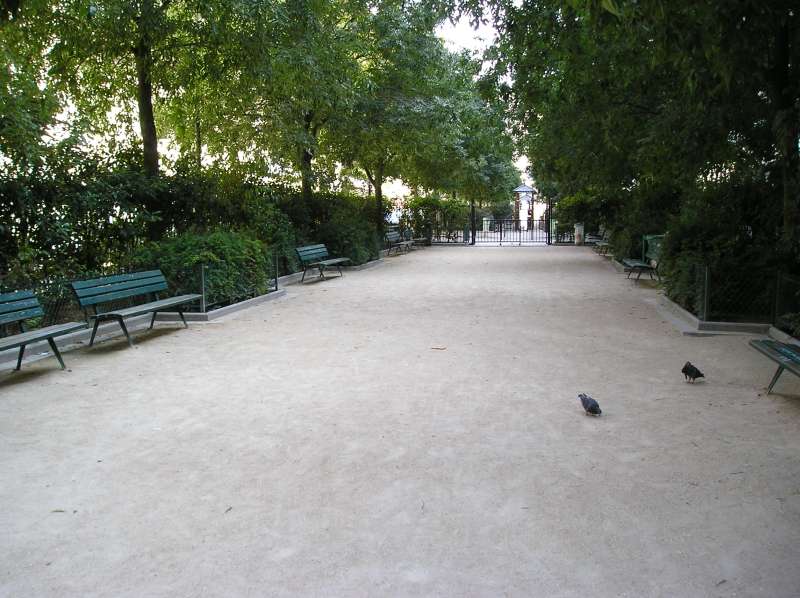
The 11th has access to several parks and open stretches that matter when you want a break from dense streets.
Near Atelier des Lumières, there is a large park that stands out for its size compared to central districts. Square Maurice Gardette is another green space that people use regularly.
Boulevard Richard-Lenoir offers long, open sidewalks and room to move, especially toward Place de la Bastille.
The streets around Rue du Chemin Vert and Richard-Lenoir are often mentioned as practical places to stay because they balance space, walkability, and access to transport.
One tradeoff exists near the Atelier des Lumières park itself. Staying directly by the park can mean longer walks to the most useful metro stations. Restaurants in that immediate square are fine but not the strongest part of the neighborhood.
Getting Around From the 11th
Metro access is solid but not central-hub level. Stations like Voltaire, Parmentier, and Oberkampf serve different lines and give flexibility. Bastille is a key station nearby, with several lines and strong coverage across the city.
Most trips involve one transfer, sometimes two, depending on the destination. Line 9 is commonly used and practical, though it gets crowded during rush hour.
Walking fills many gaps. From parts of the 11th, it is easy to walk to République, Bastille, Place des Vosges, and into the Marais without using public transport.
Le Marais: Central and Intense
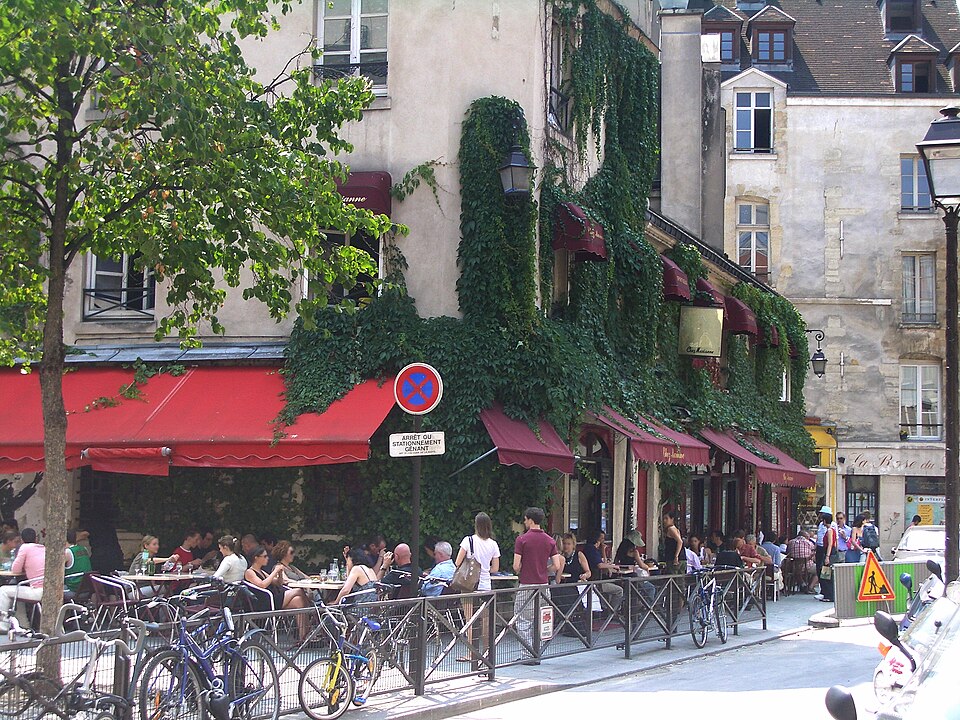
Le Marais wins on location. Staying near Rambuteau or close to Châtelet places you near the geographic and transport center of Paris. Many destinations are reachable in around thirty minutes, often with a single transfer.
Architecture is a major draw. Streets are historic and visually dense. Shopping is stronger here, especially for well-known fashion brands and concept stores.
Crowds are constant. Noise depends heavily on the exact street and day of the week. Narrow streets amplify sound, and weekend nights are noticeably louder.
Staying near Beaubourg creates the most issues. These areas see heavy foot traffic, late-night activity, and higher noise levels. Eastern parts of the Marais are calmer by comparison.
Rambuteau itself functions more as a busy corridor than a classic Marais street. It sits between zones and feels more like Beaubourg than the quieter historic core.
As the historic center, the Marais has very little green space. There are a few small, tucked-away gardens, but nothing comparable to the larger parks or open stretches found slightly farther east.
The Châtelet Factor
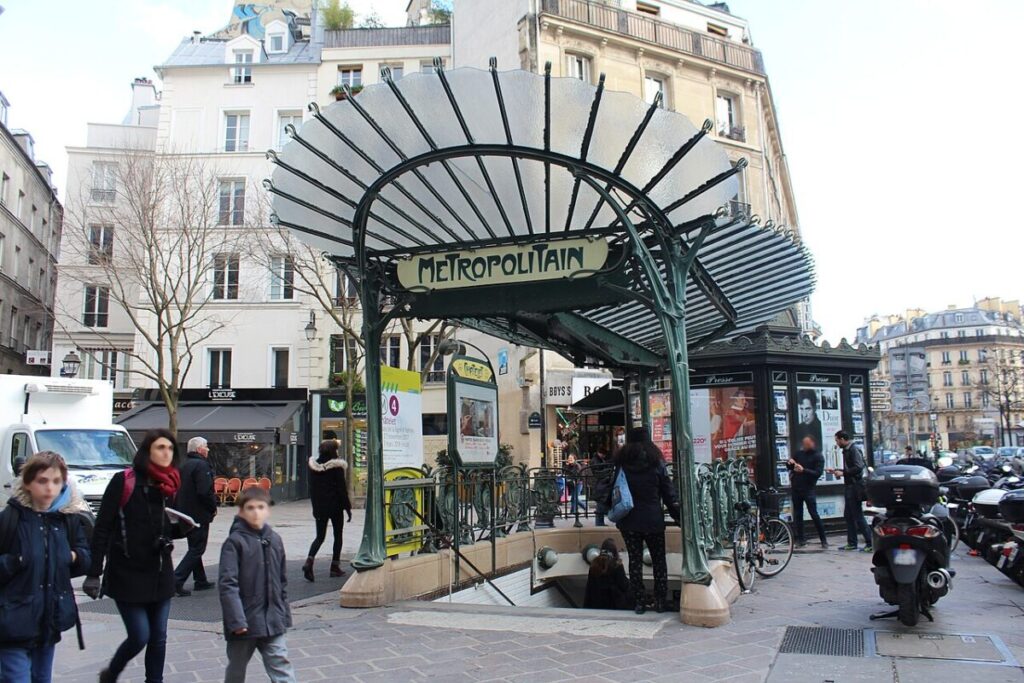
Staying near Rambuteau often means passing through Châtelet–Les Halles frequently. This station is massive and fully underground.
It connects RER A and B with several major metro lines, including Lines 1 and 4. Foot traffic is constant. Even experienced riders lose time navigating it.
Moving walkways are sometimes closed for maintenance, which adds long walks between platforms. It works, but relying on Châtelet every day adds friction to otherwise simple routes.
Some transfers can be done at Palais Royal instead, such as between Line 1 and Line 7, which helps reduce exposure to Châtelet.
Elevators are rare in the Paris metro. Escalators exist but are inconsistent. Expect stairs at most stations. Wide manual fare gates are available near regular gates. Station agents open them remotely when needed.
Line 14 stands out as the only fully elevator-equipped metro line. It simplifies routes when it fits your itinerary.
RER A and B generally have elevators but are not fully accessible end to end. Boarding space on RER A is best at the ends of each car, since the center doors are surrounded by stairs due to the bi-level design.
Line 1: A Practical Advantage
Line 1 is one of the most useful lines for sightseeing. It runs directly through many major stops along the Seine: Arc de Triomphe, Concorde, Champs-Élysées, Louvre, Tuileries, and the Notre-Dame area.
No transfers are needed along this stretch, which makes moving across the city straightforward.
At one end of the line, Vincennes offers a quieter castle alternative. Versailles is reachable via metro and RER connections, though it requires at least one change.
Which Area Fits Better?
The 11th offers calmer streets, better access to open space, strong food options, and a daily vibe that feels local. Transport works well enough, and walking covers a lot of ground.
Le Marais has unmatched central access, historic scenery, and shopping, but comes with crowds, noise, limited green space, and frequent encounters with Châtelet.
The choice depends on whether you value central convenience above all, or prefer a smoother daily pace slightly outside the busiest core.