
Montmartre’s Dalí Museum: Surreal Paris Stop Most Travelers Miss
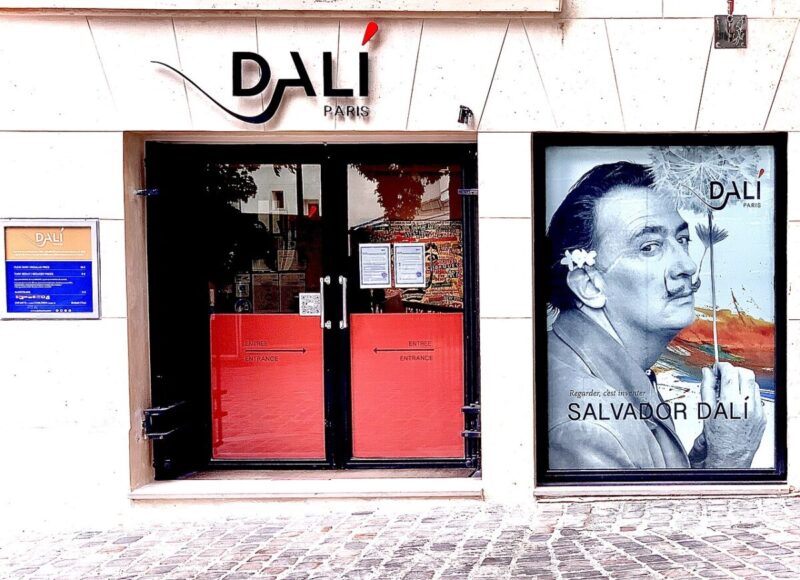
Musée Dalí sits on Rue Poulbot, tucked between the steep lanes above Place du Tertre. People walk past it without noticing that one of the biggest collections of Dalí sculptures and graphic works in France is right there under their feet.
This is a private museum, not a national institution, and the angle is different from what most expect. You don’t come here for the famous paintings in Spain but for the objects Dalí shaped, cast, etched, and illustrated.
It’s his three-dimensional world, kept in a space that feels more intimate than the large Paris museums.
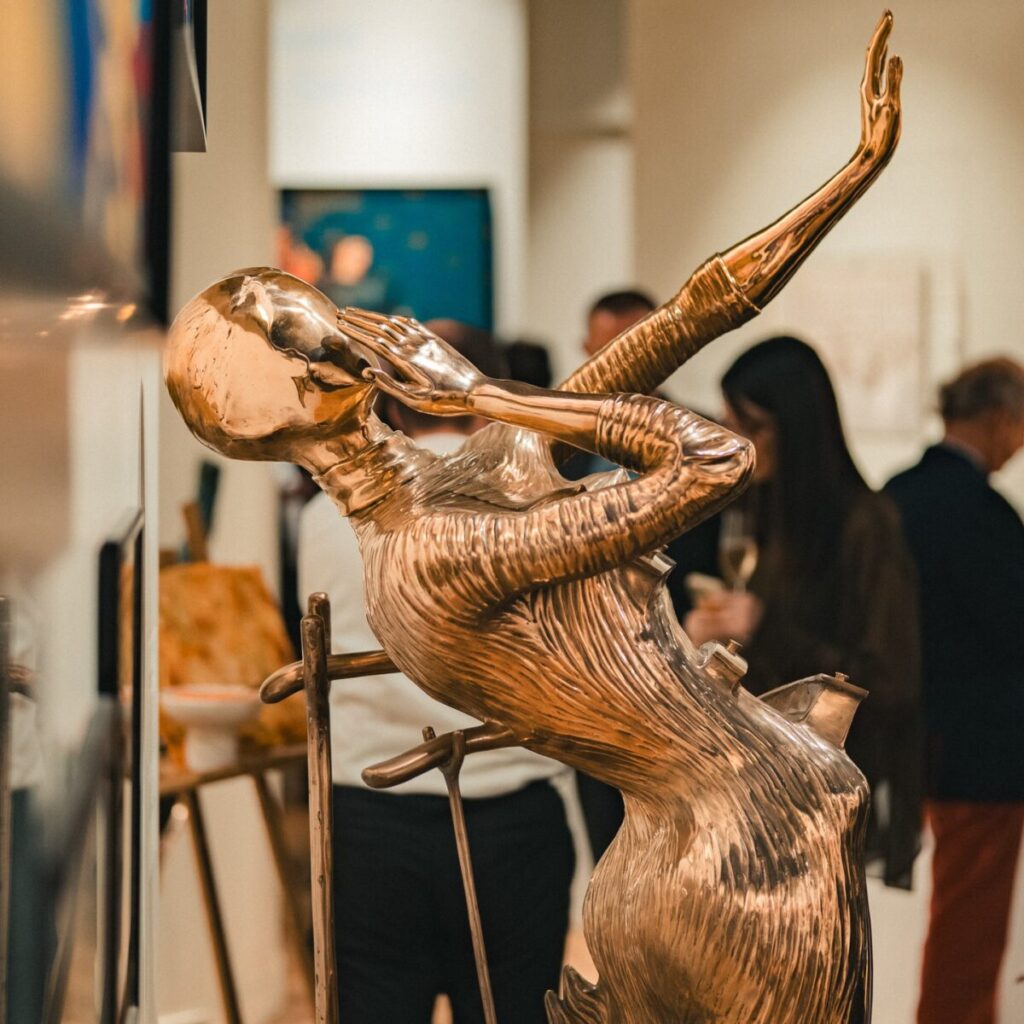
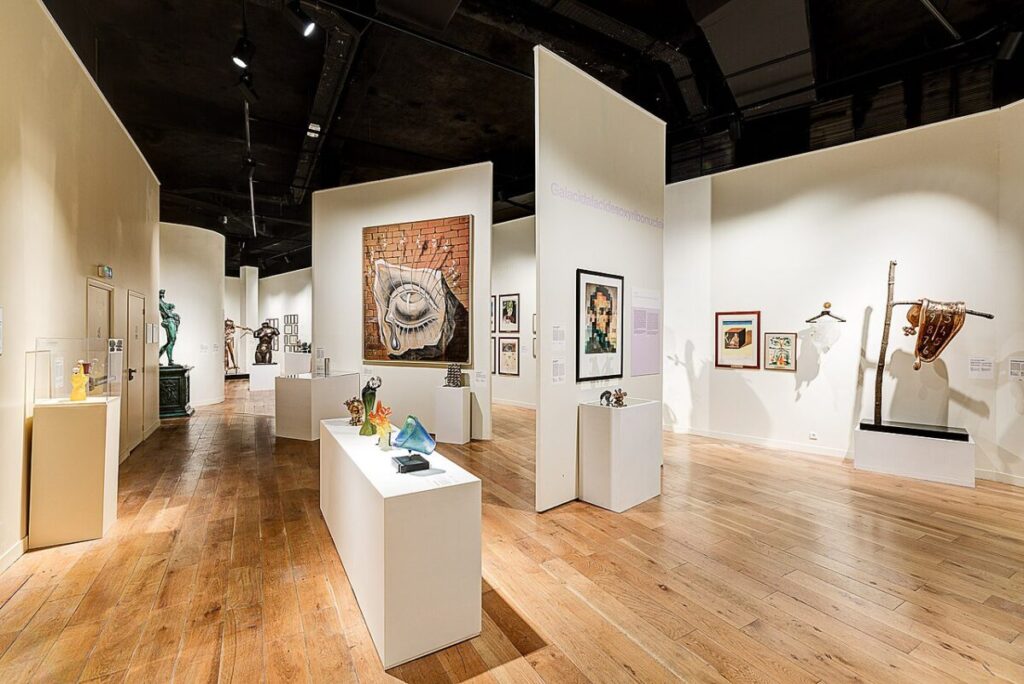
The visit starts on the upper level, then drops into a series of low-lit rooms below street level. Bronze elephants stand on long, spindly legs. Soft clocks hang and slide in slow arcs. Alice in Wonderland returns again and again in sculpted form.
The museum also shows Dalí’s long book projects: the Divine Comedy, Don Quixote, and Genesis. These cycles show how he used engraving, drypoint, and lithography to build scenes with fine, sharp lines instead of paint.
Short notes explain each technique, so you can see how he layered the work instead of guessing at it.
The compact layout works in its favor as you’re close to each sculpture. You can study surfaces, casting marks, and textures in a way that’s impossible behind big museum barriers.
The staff rotate parts of the collection, so the mix of engravings and sculpture editions changes over time. It’s the kind of place where a second visit doesn’t feel like a repeat.
Dalí spent several stretches of his career in Paris, and Montmartre was part of the wider art ecosystem he moved through. The museum touches on this history without turning it into a lecture. You get enough context to place the work.
A visit is self-guided. Tickets usually run between 14€ and 16€. Most people spend under an hour, though the engravings can pull you in longer. ç
The shop upstairs carries authorized prints linked to the works downstairs, which is rare in Paris.
It’s an easy stop from Abbesses or the Montmartre funicular and fits naturally into a day of exploring the hill.
Musée Dalí sits on Rue Poulbot, tucked between the steep lanes above Place du Tertre. People walk past it without noticing that one of the biggest collections of Dalí sculptures and graphic works in France is right there under their feet. This is a private museum, not a national institution, and the angle is different from what most expect. You don’t come here for the famous paintings in Spain. You come for the objects Dalí shaped, cast, etched, and illustrated. It’s his three-dimensional world, kept in a space that feels more intimate than the large Paris museums.
The visit starts on the upper level, then drops into a series of low-lit rooms below street level. The pieces hit fast. Bronze elephants stand on long, spindly legs. Soft clocks hang and slide in slow arcs. Alice in Wonderland returns again and again in sculpted form. The museum also shows Dalí’s long book projects: the Divine Comedy, Don Quixote, and Genesis. These cycles show how he used engraving, drypoint, and lithography to build scenes with fine, sharp lines instead of paint. Short notes explain each technique, so you can see how he layered the work instead of guessing at it.
The compact layout works in its favor. You’re close to each sculpture. You can study surfaces, casting marks, and textures in a way that’s impossible behind big museum barriers. The staff rotate parts of the collection, so the mix of engravings and sculpture editions changes over time. It’s the kind of place where a second visit doesn’t feel like a repeat.
The museum also leans into its location. Dalí spent several stretches of his career in Paris, and Montmartre was part of the wider art ecosystem he moved through. The museum touches on this history without turning it into a lecture. You get enough context to place the work, but the focus stays on what is in front of you.
A visit is self-guided. Tickets usually run between 14 and 16 euros. Most people spend under an hour, though the engravings can pull you in longer. The shop upstairs carries authorized prints linked to the works downstairs, which is rare in Paris. It’s an easy stop from Abbesses or the Montmartre funicular and fits naturally into a day of exploring the hill.