
The Paris metro line that will change how visitors move around in 2026
Paris is still expanding its transport network well beyond the historic metro map most visitors know. One of the biggest changes arrives at the end of 2026 with the partial opening of Paris Metro Line 18, a new route built as part of the Grand Paris Express.

This isn’t a line aimed at sightseeing districts or postcard landmarks, its value sits in how it changes arrival, departure, and day-to-day movement for travelers who stay outside central Paris or land at Orly.
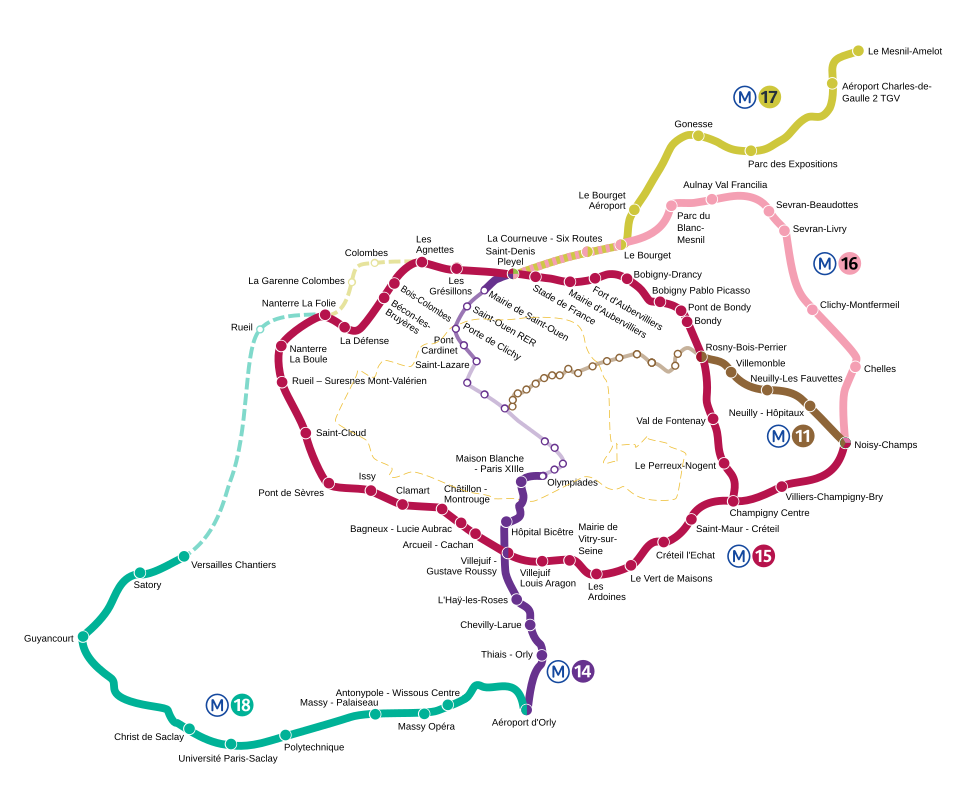
The first section to open runs between Massy-Palaiseau and Christ-de-Saclay, across the Saclay plateau in the southern suburbs.
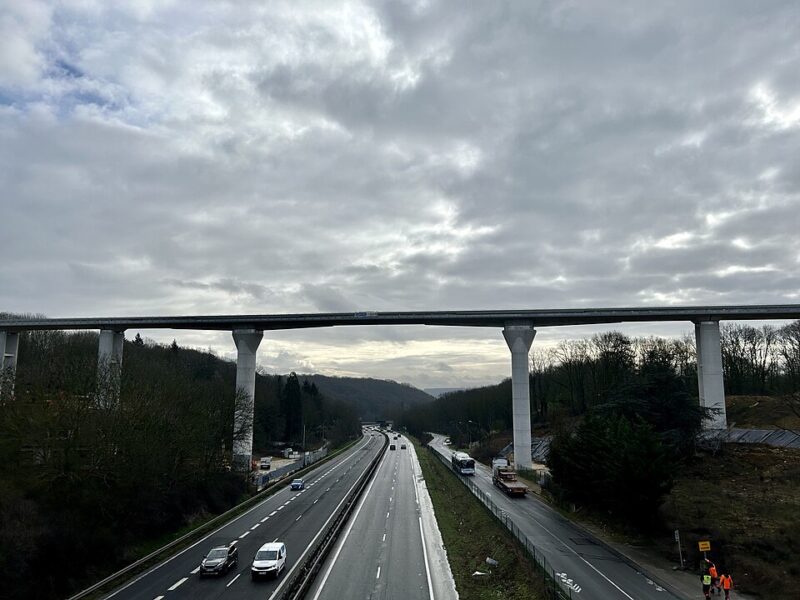
What sets it apart immediately is that almost the entire stretch runs above ground, carried by a viaduct close to seven kilometers long. This structure is the longest rail viaduct in France.
Instead of tunnels, passengers travel in daylight, above open land, university campuses, and research sites that most visitors never see.
A different kind of metro ride around Paris
This section of Line 18 doesn’t resemble the classic Paris metro experience. The train runs at higher speeds over longer distances, with fewer stops and wide spacing between stations.
Large windows stay exposed to the outside landscape for most of the journey, giving you a sense of where you are in the region rather than underground blur.
The trains themselves are new and fully automatic. Each train carries roughly 350 passengers and is designed for longer rides rather than short inner-city hops.
Air-conditioning is standard throughout the line. USB charging ports are built into the carriages. Mobile coverage includes 5G and onboard Wi-Fi.
These features are great for travelers arriving from the airport, moving between accommodations, or planning longer days out without returning to a hotel to recharge devices.
Stations are built to current accessibility standards. Platforms are wide and straight. Boarding is level, with no step between platform and train. Elevators connect street level, concourse, and platforms directly. Wayfinding is clear and modern.
For visitors with luggage, strollers, or limited mobility, this removes many of the friction points still common on older Paris lines.
Staying outside central Paris
Massy-Palaiseau already acts as a major transport hub, with direct links via RER B, RER C, and mainline trains. Until now, moving between Massy and the Saclay plateau relied heavily on buses, which were slow and sensitive to traffic.
Line 18 replaces those trips with a fast, direct rail connection. For visitors, this opens realistic alternatives to staying inside Paris proper. Accommodation around Massy and the southern suburbs often comes at lower prices and with quieter surroundings.
With Line 18 in service, these areas become easier to use as a base while still connecting smoothly to the wider rail network.
As later sections open, the line will extend south to Aéroport d’Orly and north to Versailles–Chantiers.
When the Orly segment enters service, Line 18 will offer an additional option for airport transfers that avoids the density and complexity many travelers associate with the RER during peak hours.
Clear station layouts, fewer vertical changes, and modern rolling stock will make a notable difference after a long flight.
A lesser-known side of Paris
The Saclay plateau sits at the center of one of Europe’s largest university and research clusters, home to engineering schools, laboratories, and institutions that shape modern France.
This area rarely appears in travel itineraries, yet it represents a large and active part of daily life around Paris. Line 18 provides a direct view of this side of the region, with open land and large campuses unfolding outside the windows.
This perspective appeals to travelers who enjoy understanding how a city actually functions beyond its historic core.