
What the Paris Bouquinistes Won’t Tell You
The green boxes lining the Seine look like they’ve always been there. In a way, they have.
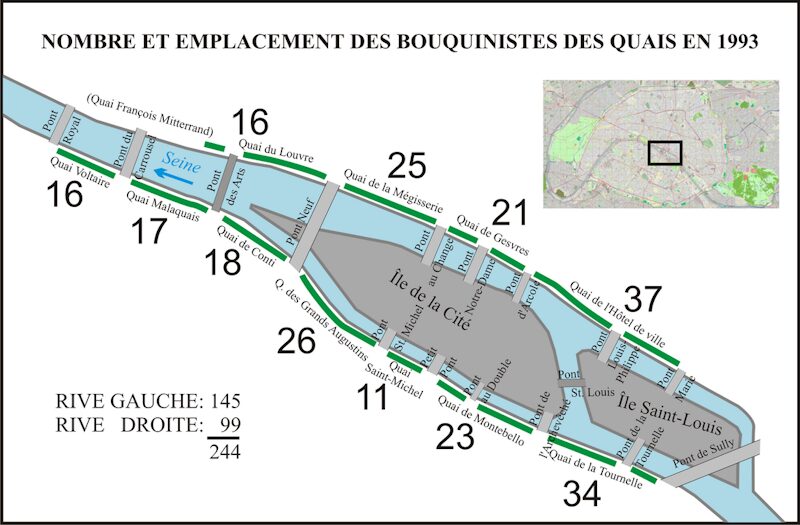
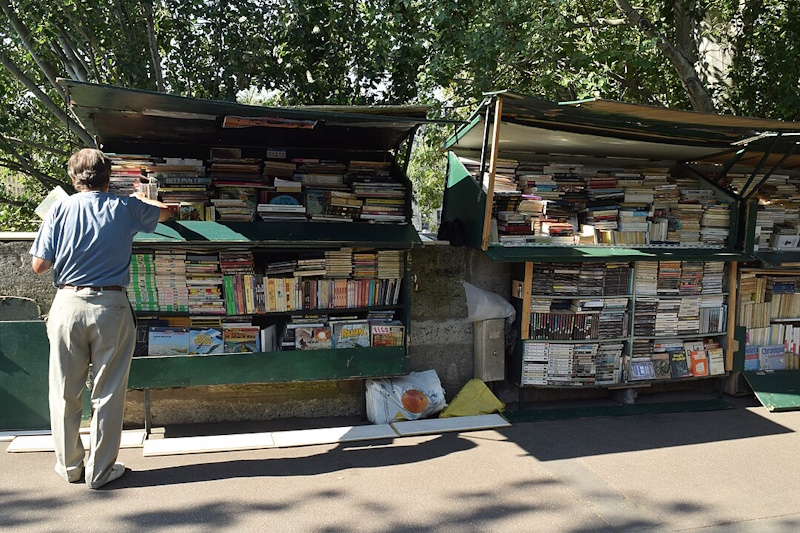
The bouquinistes – Paris’s open-air booksellers – trace their roots to the early 1500s, when peddlers sold books along the riverbanks from baskets. The city officially recognized them in 1859. Today, 240 bouquinistes manage over 900 boxes stretched across 3.9 kilometers on both banks of the Seine.
They Needed Royal Permission
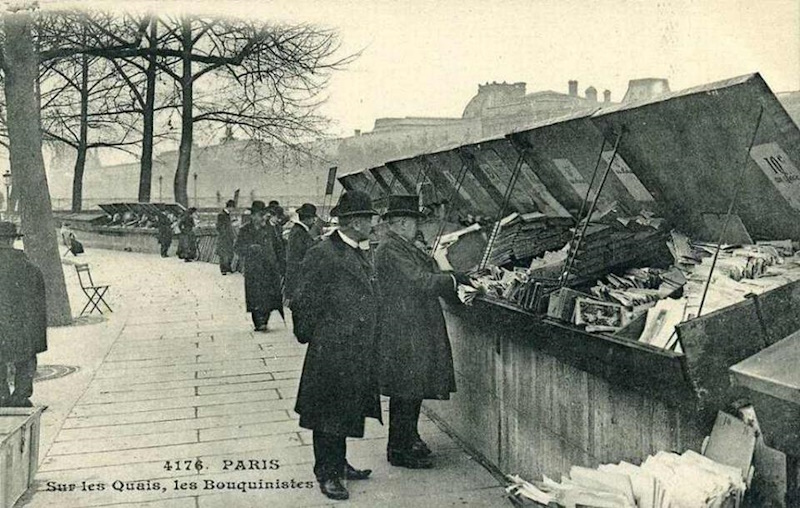
In the early days, selling books on the street wasn’t legal without approval from the king. Books were seen as dangerous – capable of spreading ideas the crown didn’t want circulating. Getting a license to sell along the Seine meant navigating a system designed to control what people read.
The Green Boxes Are Regulated Like Monuments
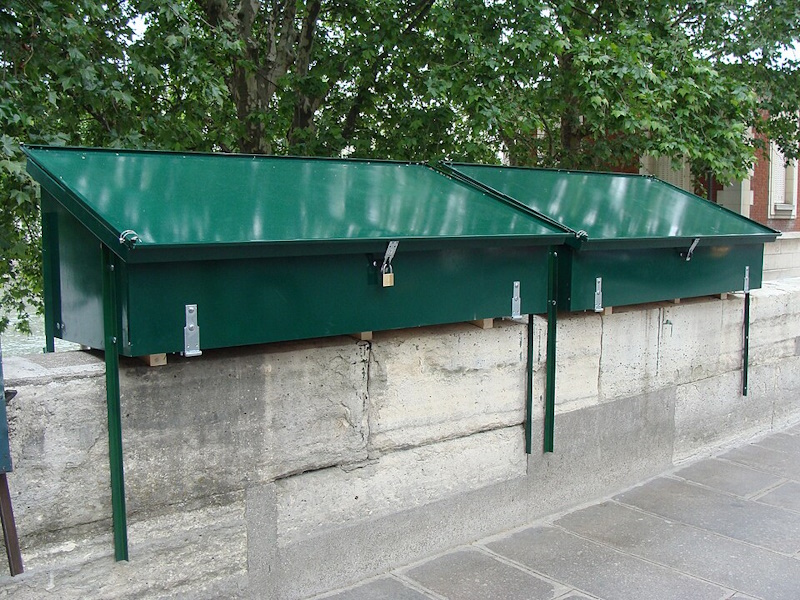
Each box must measure exactly 2 meters long and 75 centimeters high, painted in a specific shade of official Paris green. Bouquinistes must open at least four days a week regardless of weather, cannot sublet their stalls, and can lose their license for non-compliance. The boxes are treated by the city as fixed urban furniture – essentially immovable parts of the streetscape.
Part of a UNESCO World Heritage Site
In 1991, the Seine riverbanks were designated a UNESCO World Heritage site. The bouquinistes were included as an essential element – not a side attraction, but a core reason the riverbanks qualified.
Over 100,000 Books at Any Given Time
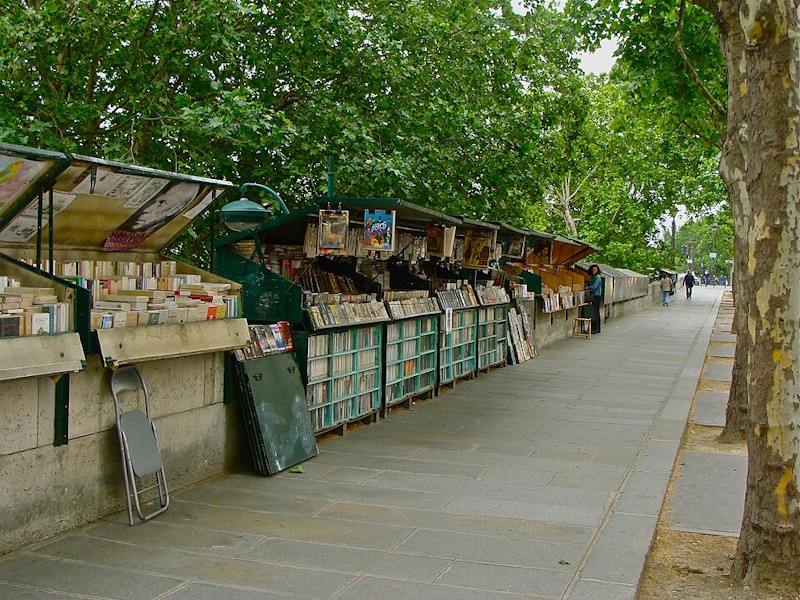
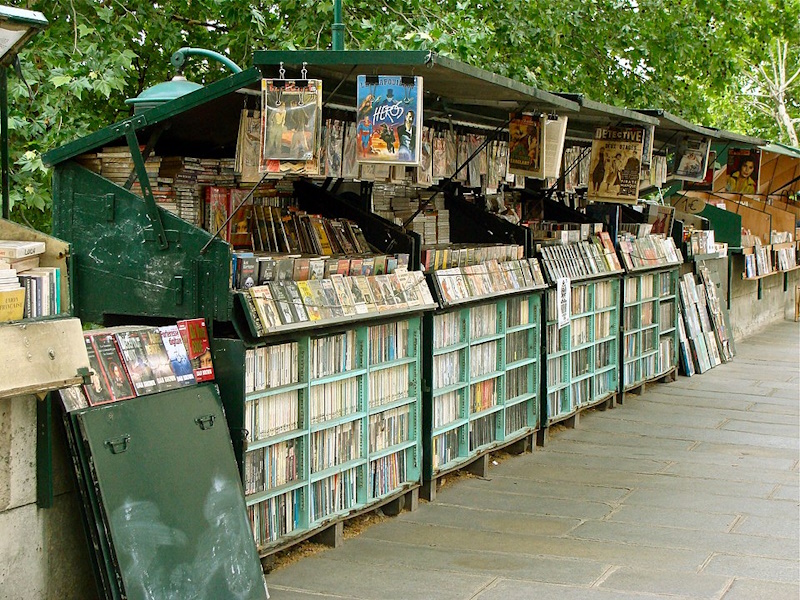
The 900-plus boxes collectively hold more than 100,000 items. Some bouquinistes specialize in science fiction, others in antique maps, vintage postcards, or 19th-century prints of Parisian landmarks. A few carry handwritten letters from past centuries. Finding a rare first edition here is not unusual.
It’s Not Just Books
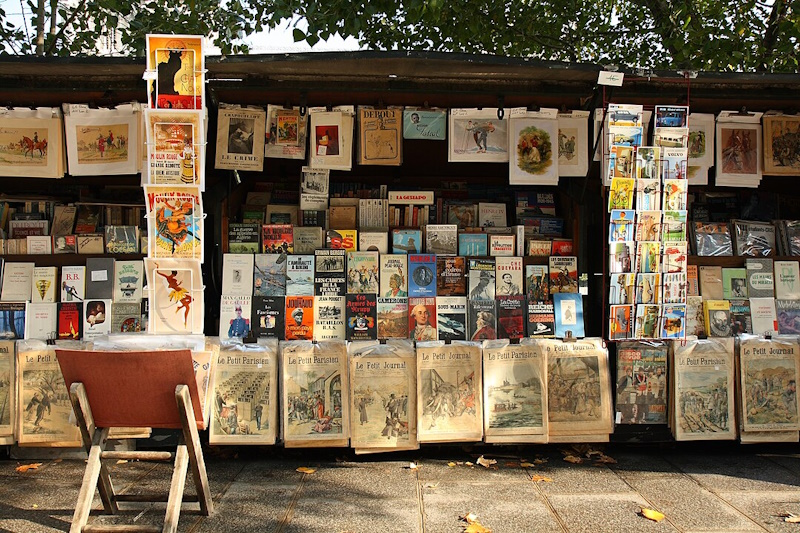
Stamps, antique coins, small sculptures, vintage advertisements – the stalls sell far more than literature. The rule is that no more than 25% of a bouquiniste’s inventory can be tourist souvenirs. The city added that restriction specifically to keep the stalls from becoming gift shops.
Hemingway and Joyce Browsed Here
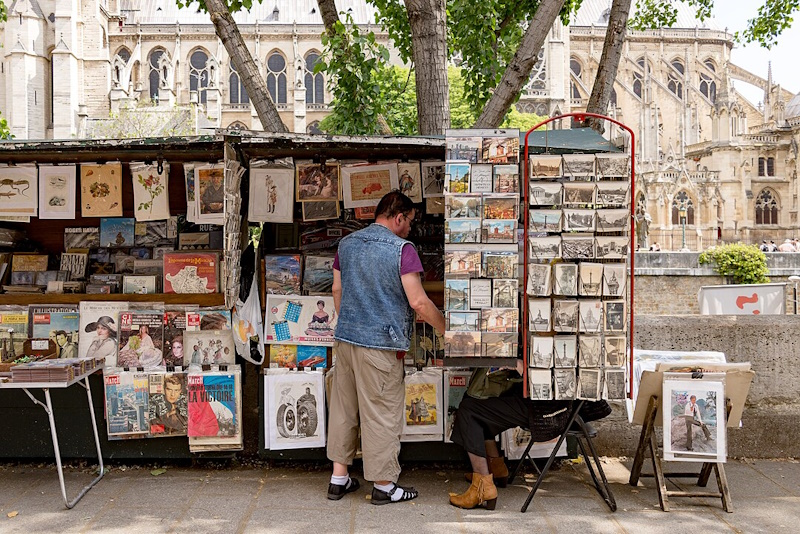
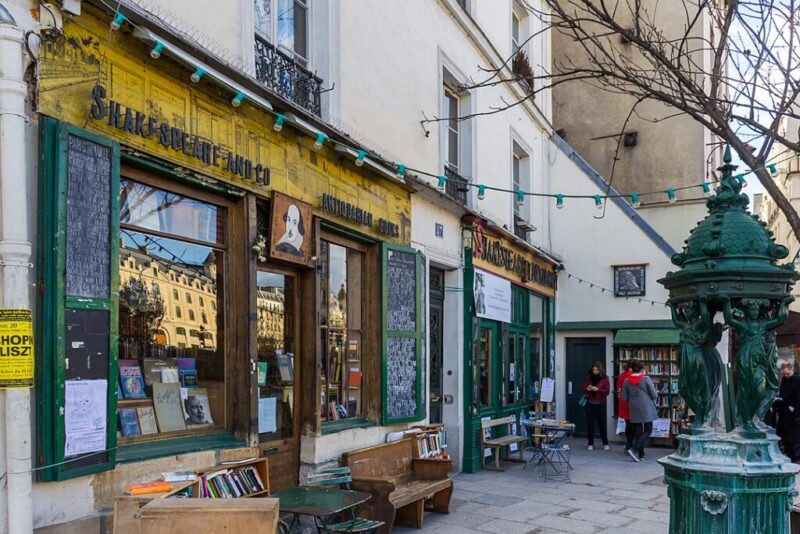
Ernest Hemingway, James Joyce, and Sylvia Beach – who published Ulysses in 1922 when no other publisher would touch it – were all regular visitors. Beach sourced books for her Shakespeare and Company bookstore directly from the bouquinistes.
George Orwell Mentioned Them
In Down and Out in Paris and London, Orwell described the bouquinistes as a resource for intellectuals who couldn’t afford proper bookshops. For struggling writers living on almost nothing in 1920s Paris, the stalls were one of the only places to find serious literature cheaply.
No Other City Has Managed to Copy Them
Amsterdam and London have tried. Neither has come close to the bouquinistes’ scale or longevity. The combination of history, regulation, and location – the Seine riverbanks specifically – has made it unreplicable.
The City Is Fighting to Keep Them Alive
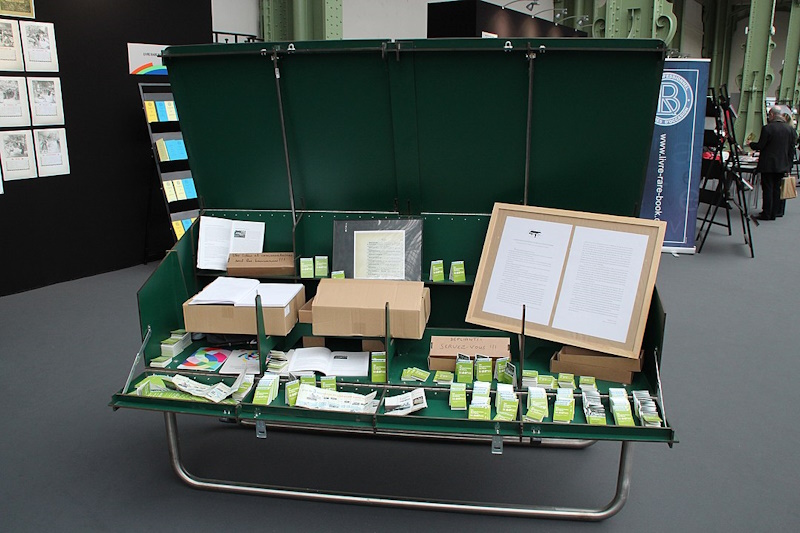
Digital media gutted foot traffic and sales through the 2010s. In 2021, Paris launched a formal preservation effort: digital payment terminals were installed, restoration of the green boxes began, and the city started hosting book fairs specifically to bring younger buyers to the stalls. As of 2024, the waiting list for a bouquiniste license is still years long.