
The Parisian Brasseries Worth Planning a Meal Around
Paris has no shortage of places to eat. It also has no shortage of mediocre places to eat disguised as classics.
But the real brasseries, the ones that have been feeding writers, politicians, and ordinary Parisians for over a century, are a different thing entirely. More than restaurants, they’re a ritual.
What Makes a Brasserie a Brasserie
The word comes from the French for brewery. Most of the legendary ones started as Alsatian establishments after the Franco-Prussian War of 1870, when thousands of refugees from Alsace-Lorraine flooded into Paris and brought their food culture with them.
Choucroute, draft beer, and a certain convivial chaos that became the backbone of Parisian dining.
Today, the format is the same. Long hours, no-nonsense service, big mirrors, and a menu built around things that have worked for 150 years.
Brasserie Lipp
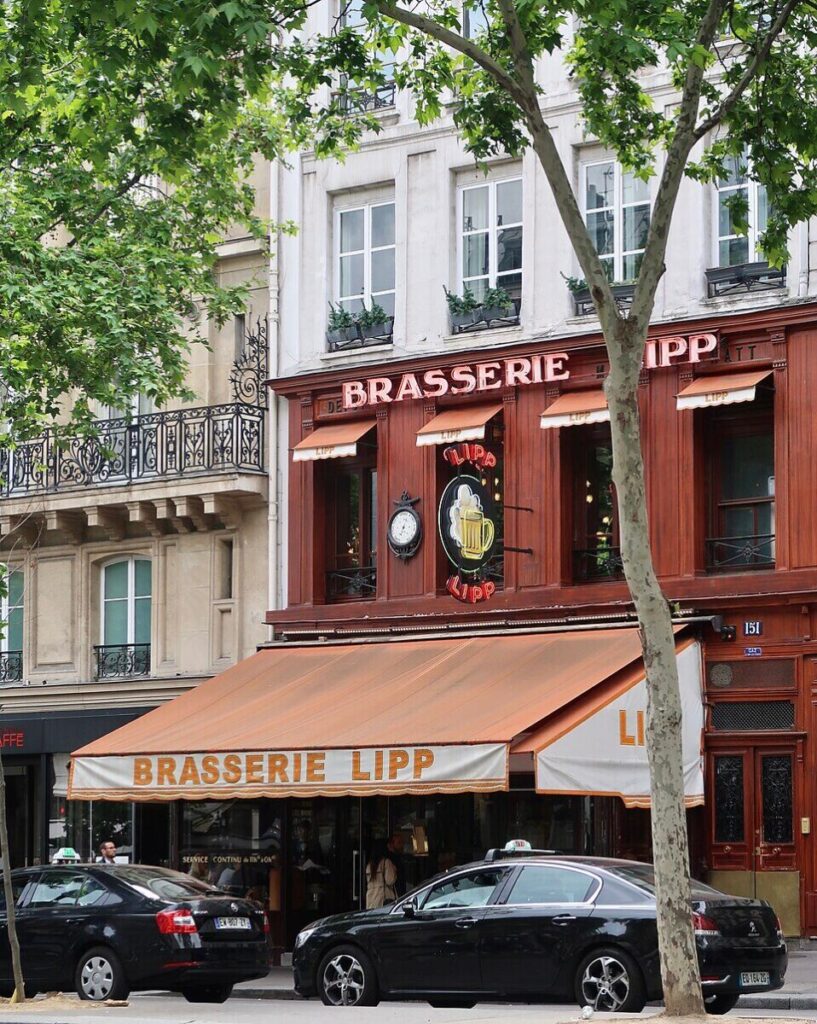
If you’re going to eat at one brasserie in Paris, a strong argument can be made for Lipp.
It opened in 1880 on Boulevard Saint-Germain, founded by Léonard Lipp, another Alsatian who fled the war.
Hemingway ate here. So did Proust, Camus, and what appears to have been most of the French government at various points.
The interior is unchanged: ceramic tiles, painted ceilings, large mirrors. It’s a listed historic monument.
What to order is not complicated. The choucroute garnie is the reason to come, made with sausages and pork prepared the Alsatian way.
Mains run €25 to €50. The menu changes daily. Lipp doesn’t take reservations. Show up early, especially on weekends.
La Coupole
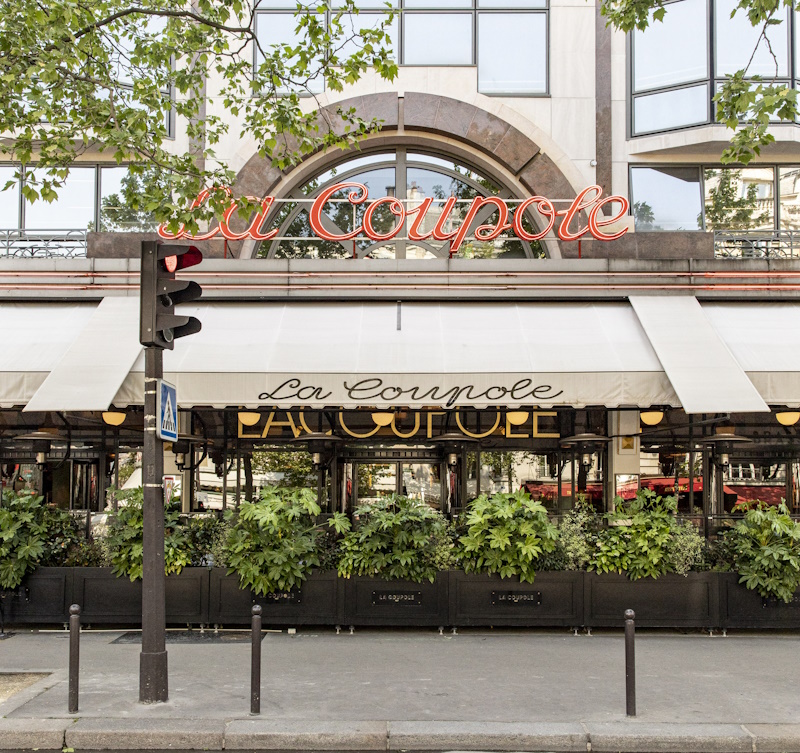
La Coupole opened in 1927 in Montparnasse and immediately became the center of everything. Picasso, Josephine Baker, and Hemingway were regulars.
The Art Deco interior, with its painted pillars and murals, seats over 300 people and still somehow feels like a dining room rather than a canteen.
The menu is wider than most brasseries. Seafood platters are the thing to get, with oysters from Normandy and Brittany.
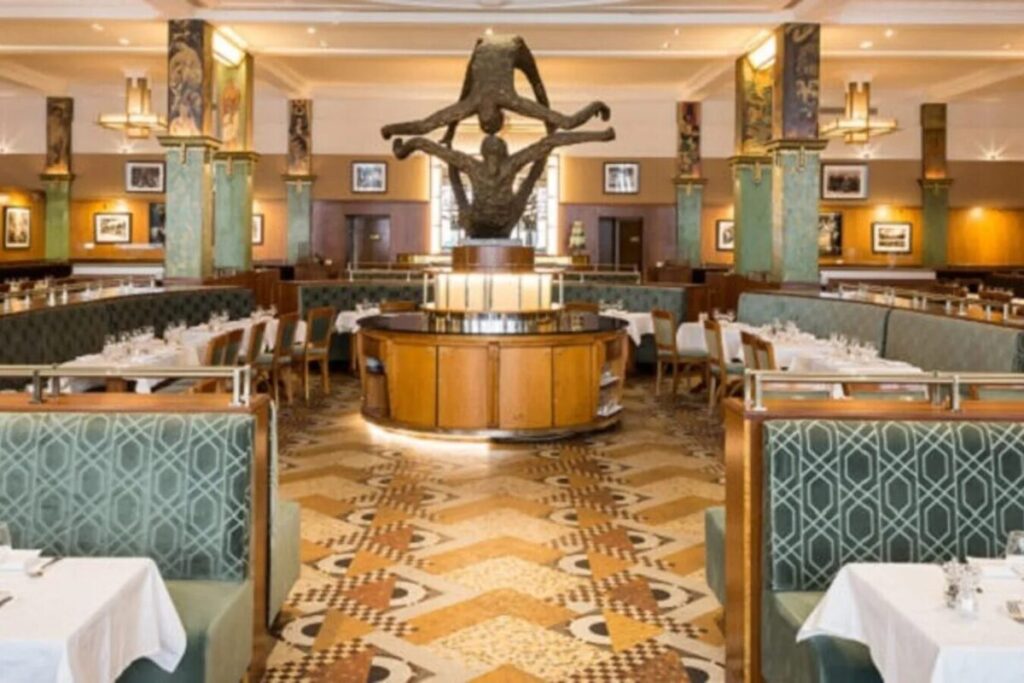
A platter for two can cost above €120. The signature lamb curry is a surprising menu fixture and a nod to France’s colonial past.
Prices generally land between €20 and €50 for a main. No reservations on the terrace, so arrive early if you want to sit outside.
Bofinger
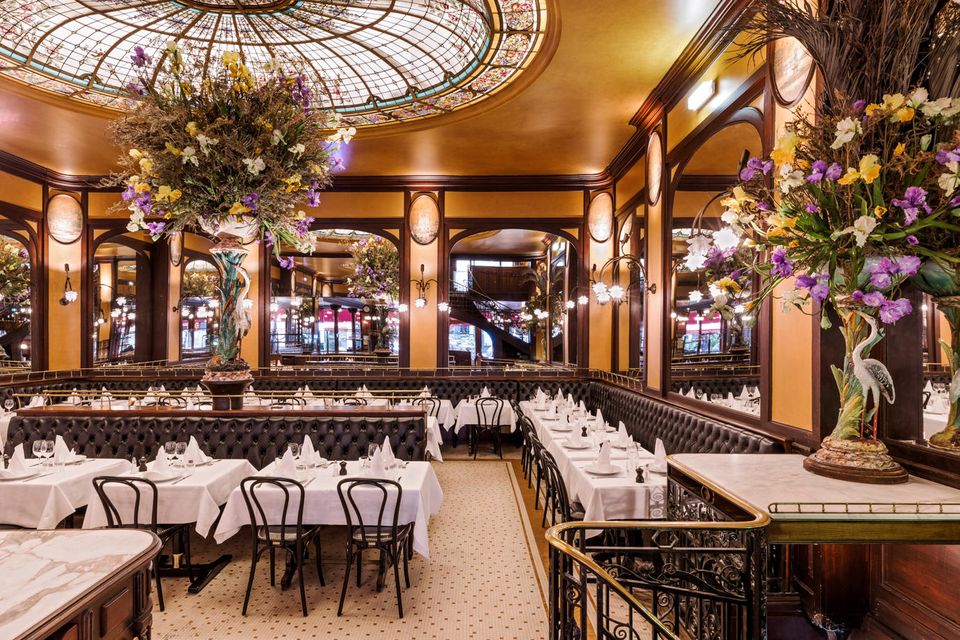
Founded in 1864 near Bastille, Bofinger is the oldest brasserie in Paris.
It was also the first establishment in the city to serve draft beer, which at the time was considered something of a novelty.
The interior was completely redesigned in Art Nouveau style between 1919 and 1921 and is now a historic monument.
The glass dome over the main dining room is one of the genuinely beautiful things in Parisian restaurant design. It seats 280 people across two floors.
The choucroute here is made with goose confit and Baltic herrings, from original family recipes. Order that, or the flammekueche if you want to understand what Alsatian food does well.
The seafood selection is strong. A three-course lunch menu runs around €38.
Le Grand Colbert
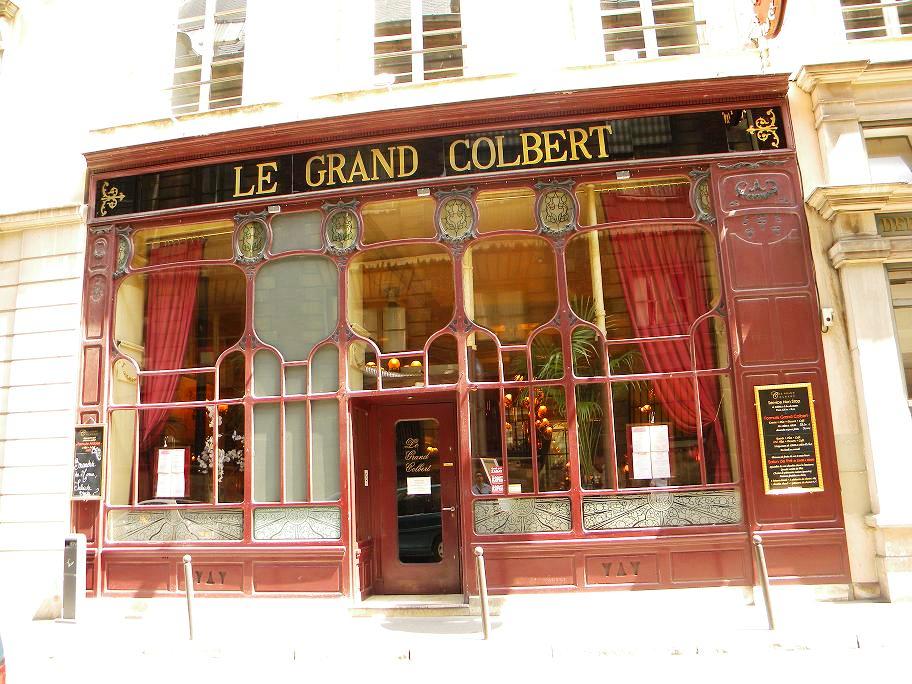
Le Grand Colbert sits inside the Galerie Vivienne, a 19th-century covered passage near the Palais-Royal.
The building goes back to 1637. The restaurant as it exists today dates to around 1900, when it was one of the cheapest bouillons in the city.
Now it charges considerably more, but the fixed-price lunch is still reasonable: starter, main, and dessert for €34.50 on weekdays.
American visitors sometimes recognize it from the film Something’s Gotta Give, where Jack Nicholson and Diane Keaton shared a famous scene.
The roast chicken became a star of the menu shortly after. Order it, or the sole meunière if seafood is your preference.
Oysters and escargots are consistently mentioned by people who eat here regularly.
The service is formal and efficient. Gilded chandeliers, mosaic floors, carved woodwork.
It’s open daily from noon until 1 a.m., which makes it a useful option if you find yourself hungry late in the Palais-Royal area.
Le Train Bleu
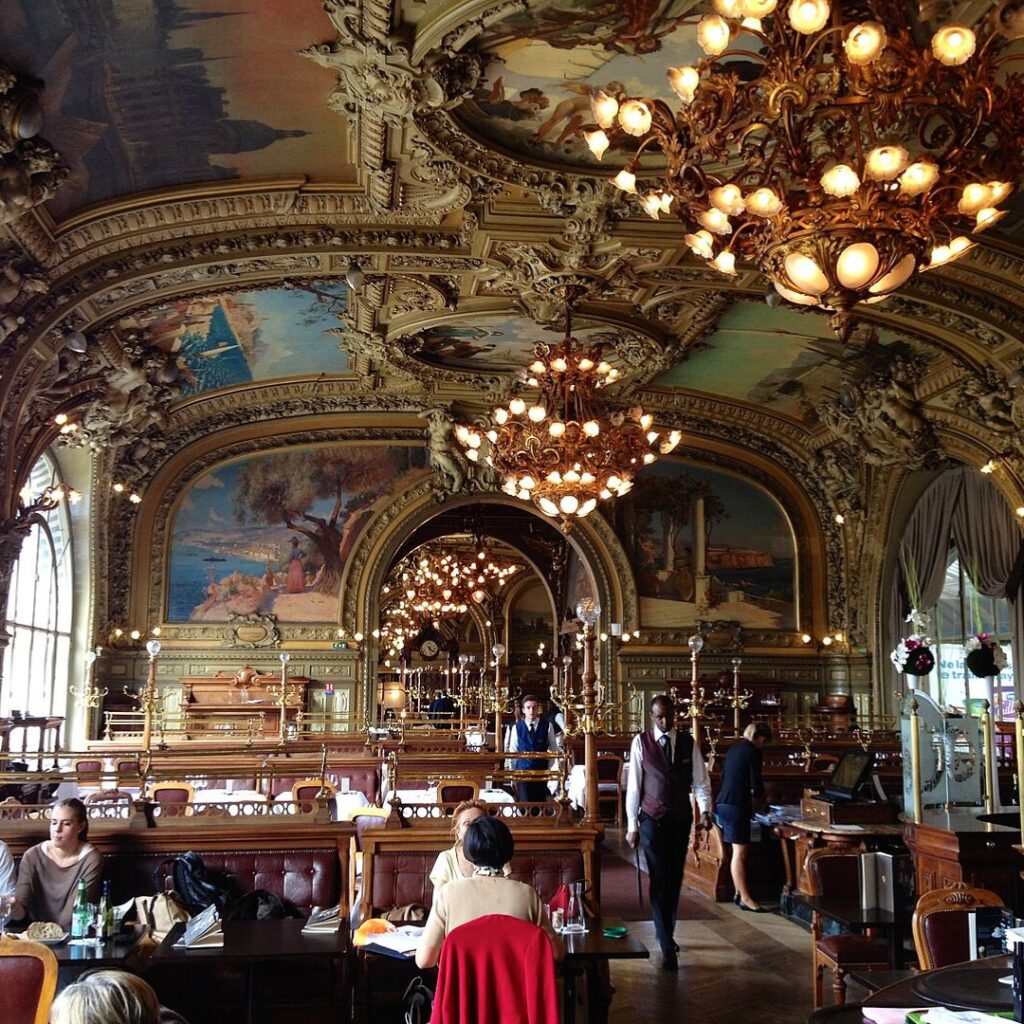
Le Train Bleu is inside the Gare de Lyon, which sounds like a reason not to go. It’s the opposite.
The restaurant opened in 1901 for the Exposition Universelle, designed to impress travelers boarding trains to the French Riviera. The architect was Marius Toudoire, who also designed the station’s clock tower.
The dining room covers roughly 1,000 square meters, with gilded moldings, chandeliers, and 41 ceiling paintings representing cities and regions across France.
It was classified a historic monument in 1972.
The menus start at €56 for three courses and go up to €110 for the full Train Bleu experience. À la carte starters run around €20 to €29.
Tables are widely spaced by Parisian standards, which makes it one of the quieter options on this list for a room this large.
It’s formal without being stiff. The kitchen is currently guided by the influence of chef Michel Rostang with an emphasis on braised dishes, sauces, and tableside presentation.
People go for the spectacle as much as the food.