
Paris Restaurants That Have Refused to Change for Over 100 Years
Paris reinvents itself constantly. New hotels, new menus, new everything. And then there are the places that simply refuse to move.
A handful of restaurants in this city have been serving the same dishes, in the same rooms, to the same kinds of people, for well over a hundred years. Paris changed around them. They didn’t notice.
Bouillon Chartier (Since 1896)
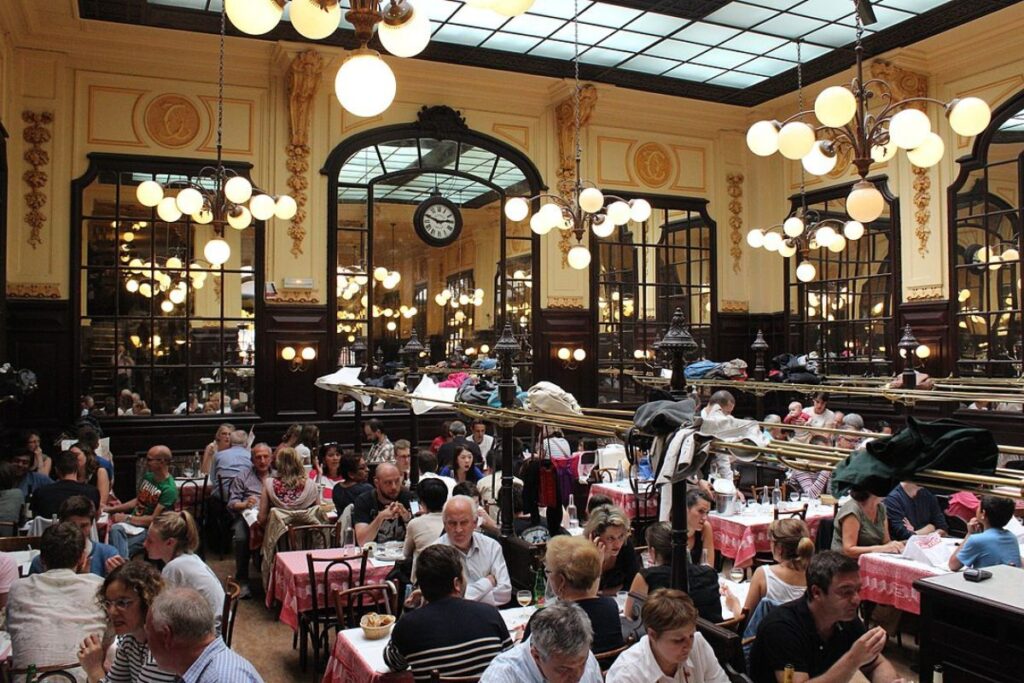
You know a restaurant is serious about tradition when its waiters still scribble your bill directly on the paper tablecloth.
Bouillon Chartier opened in 1896 in the Grands Boulevards district, built to feed Paris’s working class.
The Chartier brothers had one goal: a proper meal for under 20 francs. Today the goal is the same, just in euros. Starters start at €1. Main courses start at €7.
You can leave full for under €20, which in Paris in 2026 is borderline miraculous.
The room is classified as a historic monument, and you can see why. Carved woodwork, towering mirrors, brass accents, and chandeliers overhead.
The kitchen hasn’t drifted either. Leek vinaigrette. Œufs mayo. Duck confit. Braised beef cheek. Chocolate mousse. Nothing creative, everything correct.
No reservations. The line spills onto the pavement most evenings.
Polidor (Since 1845)
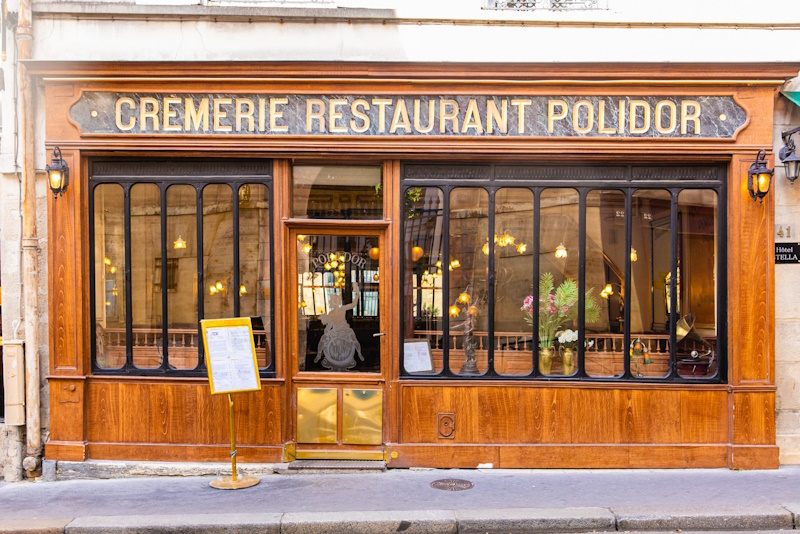
Hemingway wrote about eating here in A Moveable Feast. He lived nearby in the 1920s and came often, describing it warmly.
Before him, Verlaine and Rimbaud were regulars. After him, Joyce, Gide, and Kerouac. You’ll find their portraits on the walls of the narrow Latin Quarter dining room at 41 rue Monsieur-le-Prince.
The Belle Époque interior has been largely unchanged for over 100 years. Long shared tables, communal salt and pepper shakers, French mustard in small pots.
The menu reads like it hasn’t moved much either: boeuf bourguignon, blanquette de veau, tarte tatin. A three-course formula runs around €25. Cash only.
The Frommer’s guide calls it “not so much a restaurant as a snapshot of a bygone era.” Woody Allen filmed part of Midnight in Paris here, which has added a certain romantic sheen.
But the locals were coming long before that.
Lapérouse (Since 1766)
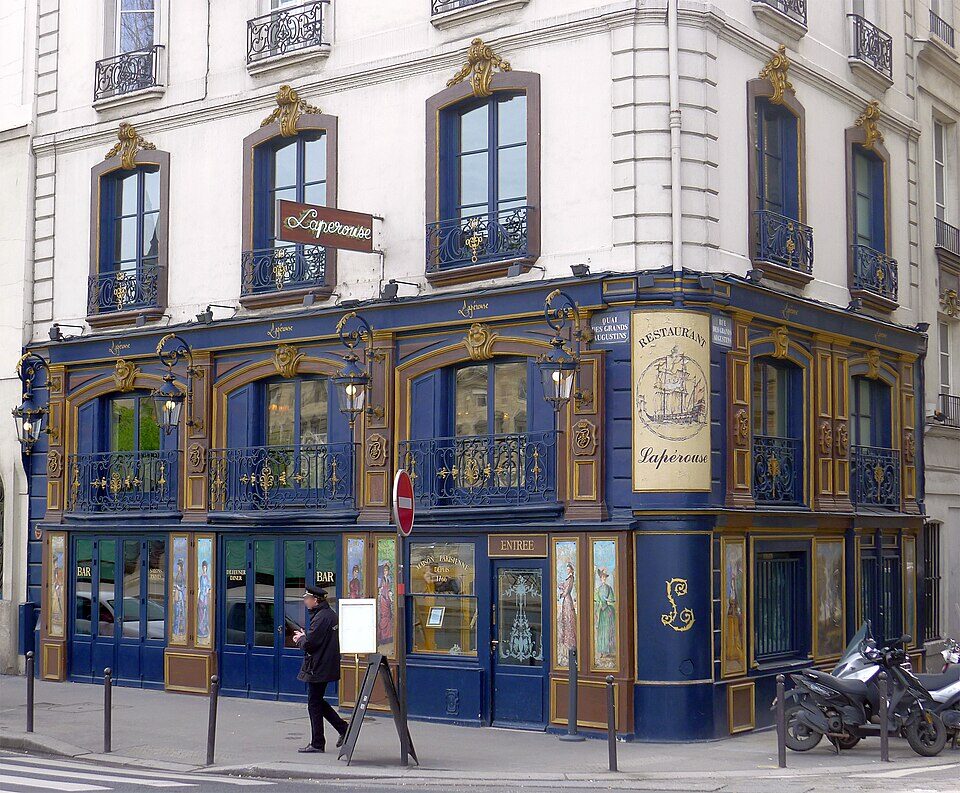
This one goes back to the reign of Louis XV.
Lapérouse started as a wine shop on the quai des Grands-Augustins in 1766 and became one of the most scandalous dining rooms in Paris.
19th century courtesans used the private boudoir salons to test the diamonds their lovers had given them by scratching the mirrored walls. Those scratches are still there. So are the mirrors.
Victor Hugo dined here. So did Zola, Balzac, Sarah Bernhardt, and Orson Welles. Marcel Proust referenced it in In Search of Lost Time.
Lapérouse was one of the first restaurants in Europe to earn three Michelin stars, which it held until 1969.
The restaurant changed hands in 2018 and the new owners renovated carefully, replacing as little as possible. The painted ceilings, embossed leather walls, and private salons with frosted glass doors survived intact.
The chocolate soufflé has been on the menu since 1766.
La Tour d’Argent (Since 1890, For the Duck)
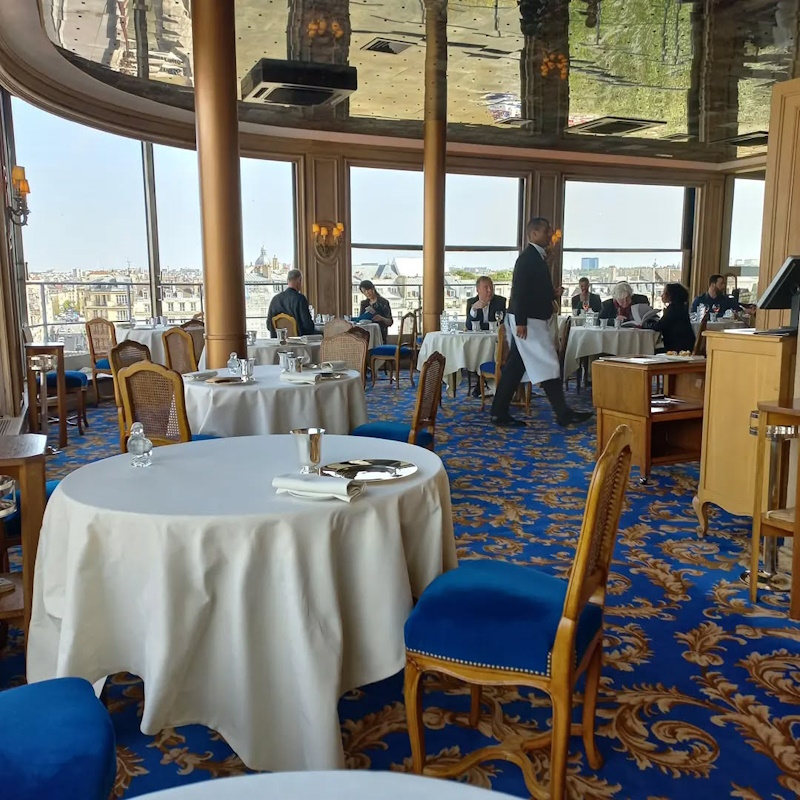
The restaurant itself claims 1582, which would make it older than the Louvre as a public institution. That’s a disputed point. What isn’t disputed is the duck.
In 1890, a maître d’hôtel named Frédéric Delair took over the kitchen and invented canard à la presse: pressed duck, its carcass crushed in a silver press to extract every last drop of blood and bone marrow, served in two courses at the table.
He also started numbering each duck served. By October 2023, duck number 1,178,727 had been served. Every duck since 1890 has come from the same family farm in Challans.
Lunch menus start at around €160. Dinner runs €400 before you open the wine list. The list weighs 17 pounds.
From the sixth-floor dining room, you look directly at Notre-Dame across the Seine.
The duck recipe hasn’t changed. The duck source hasn’t changed. You leave with a card printed with your duck’s number, the way people at Wimbledon leave with a scorecard.