
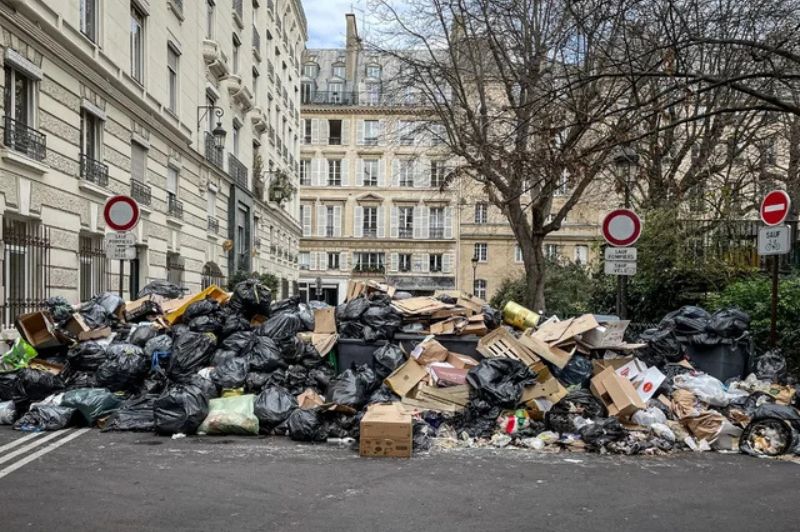
Paris Ranked the 5th Dirtiest City in the World
A recent ranking placed Paris as the 5th dirtiest city in the world, and it caught a lot of attention because few people expect the French capital to land so high on a list like this.
The study comes from Radical Storage, a luggage-storage company that also runs a travel-data blog.
They’re not an environmental authority, but they do publish large studies based on traveler behavior, and this one analyzed more than 70,000 Google reviews across major tourist attractions worldwide.
Their method is simple: scan all reviews mentioning cleanliness and count how often people use negative words like “dirty” or “filthy.”
For Paris, about 28% of those reviews included negative cleanliness terms. Only Budapest, Rome, Las Vegas, and Florence performed worse in the global ranking.
Cities such as Tokyo and Singapore were at the opposite end with barely more than 6% negative comments.
The complaints pulled from the Paris reviews follow recurring themes. Visitors point to litter around the biggest sights, sidewalks darkened by grime, trash spilling from bins in peak season, and inconsistent upkeep in crowded areas like the Champ-de-Mars, Montmartre, and major metro hubs.
These aren’t new claims. Anyone who walks around the city during busy periods sees how quickly the volume of tourists overwhelms cleaning teams.
But of course, a study like this should be taken with a grain of salt. It measures perception, not objective cleanliness. It focuses on tourist attractions, not residential neighborhoods.
It also treats every city the same, even though Paris handles far more visitors than most places on the list.
High tourist density generates a high number of critical reviews by sheer volume, which can push cities with heavy foot traffic up the “dirtiest” rankings even if their actual sanitation efforts are more robust.
It may be a useful snapshot of how travelers experience the city, but not a scientific verdict on how clean Paris truly is.
The ranking gives an idea of the frustrations visitors face in high-traffic zones, but it doesn’t capture the full picture of everyday life or the city’s wider maintenance efforts.