
What Parisians Buy at the Market (And Where to Find It)
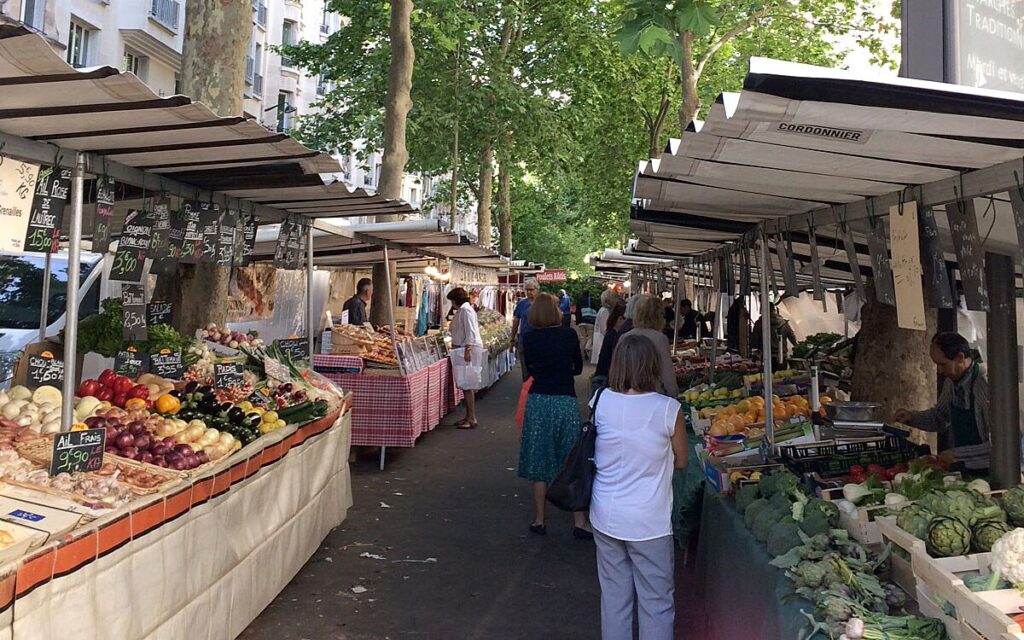
Paris has 82 food markets spread across all 20 arrondissements. Most tourists walk past them without stopping.
That’s a shame, because the marché is where Parisians eat in a way no café can replicate: at a stall selling raw milk Brie to someone who came back for the same vendor last Tuesday.
Most open-air markets run two or three mornings a week, from around 7am to 2:30pm. Covered markets keep longer hours.
Mondays are the one day most markets stay closed. If you’re in Paris on a Monday and wondering why everything feels quieter, that’s part of it.
The layout have a similar pattern: produce stalls take up the middle stretch, cheese and charcuterie vendors anchor both ends – since they pull the repeat customers who know where they’re going.
What Goes in the Basket
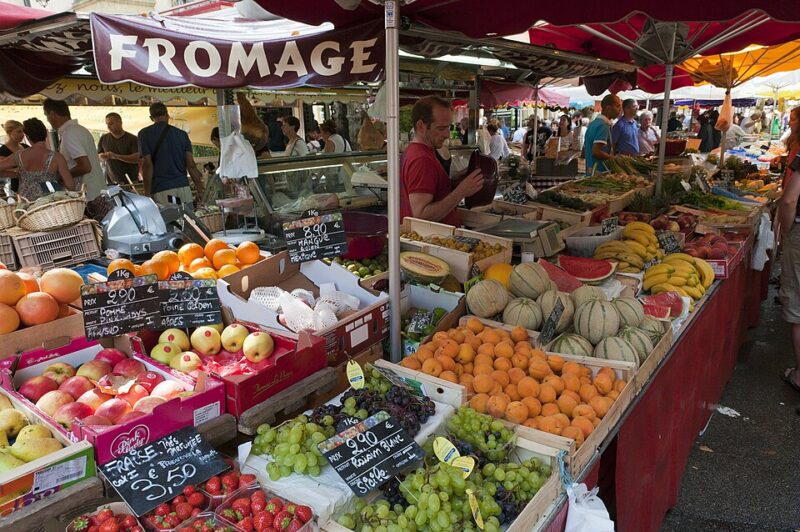
Cheese, charcuterie, and a baguette are the backbone of a French marché basket.
Parisians shop almost daily. With small refrigerators, a preference for freshness, and the social ritual of chatting with vendors, it’s a habit rather than a chore for many locals.
At the cheese stall, raw milk varieties are the point. Raw milk Brie de Meaux or an aged Saint-Félicien from a ripening specialist is a different thing entirely from what you’ll find vacuum-sealed at an airport shop.
The charcuterie stall covers jambon de Paris, terrines, rillettes, pâtés, and confits.
Get a wedge of each, add a baguette from the boulangerie two streets over, and you have a better lunch than most restaurants will give you.
Seasonal produce is another constant. Parisians sniff melons before buying them. They know what’s in season.
Arriving in late summer, you’ll find figs, stone fruit, and melons in volumes that feel almost embarrassing.
The Marché d’Aligre
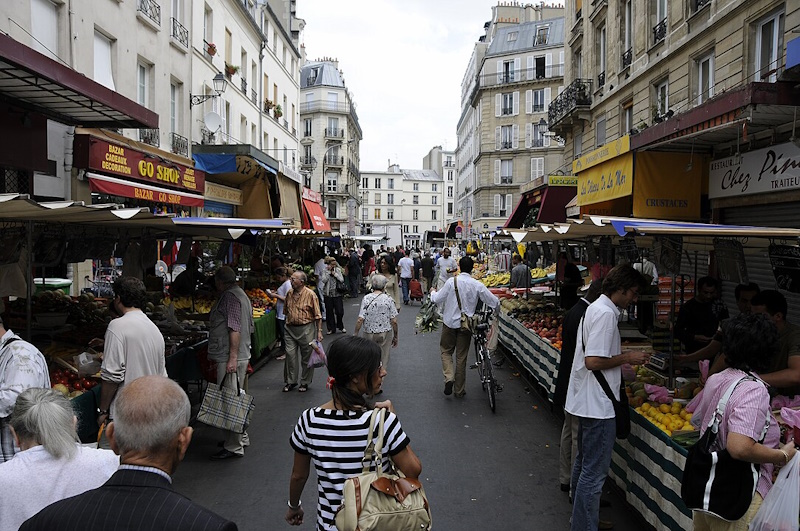
The most frequently recommended market for tourists who want to feel like they’re not at a tourist market is the Marché d’Aligre in the 12th arrondissement.
It splits into three zones: an open-air produce section on Place d’Aligre, a covered hall called Marché Beauvau with fish, cheese, and charcuterie, and a flea market spilling into the surrounding streets.
The covered hall is where the serious shopping happens. Wild boar charcuterie, raw milk cheeses, and fishmongers who’ve worked the same stall long enough to know regulars by name.
For a cool visit with insider tips on how to find the best stuff, check out this frequently mentioned 2-hour tour of the Marché d’Aligre.
One trick worth knowing: if you arrive about 30 minutes before closing, vendors start dropping prices on cheese, bread, and produce to clear stock.
A crate of figs that cost four times more at Marché Raspail goes for a euro a kilo here at 12:30 on a Sunday.
The market is open every day except Monday, from 7:30am on weekdays and until 2:30pm on weekends.
Marché Bastille
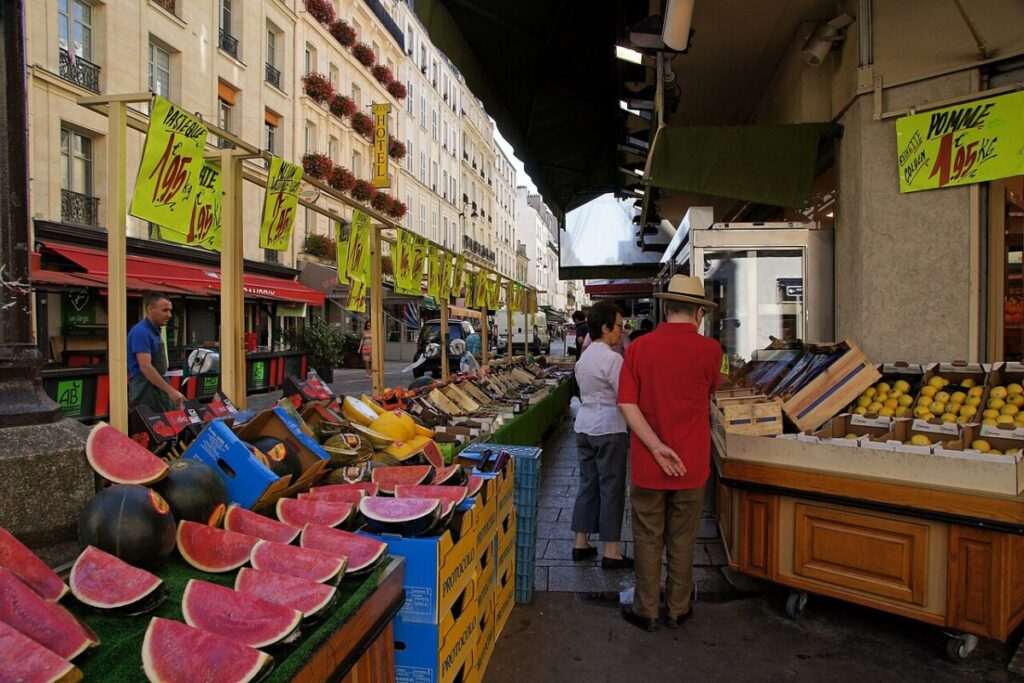
Marché Bastille on Boulevard Richard-Lenoir is one of the largest in the city. It runs Thursdays and Sundays, with Sunday being the bigger day.
More than a hundred stalls stretch under the tree-lined boulevard. You’ll find Moroccan dates alongside artisanal saucisson, Brie de Meaux next to locally harvested honey.
It’s louder and busier than d’Aligre. It’s also a better introduction if you want to see the full range of what a Parisian market can hold.
What to Bring
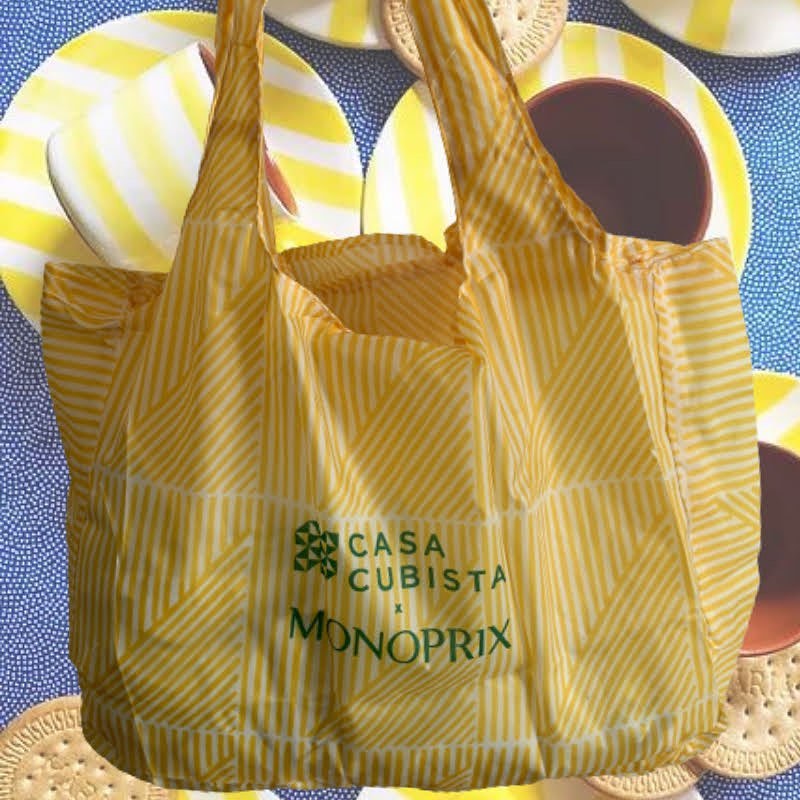
Bring a canvas tote or a wheeled caddie. Vendors don’t hand out bags, and plastic bags are rare.
Bring cash for anything under 10€. Small stalls often don’t take cards.
Say bonjour before asking anything. Skipping it is the surest way to get a shorter answer and a longer wait.
Don’t squeeze the fruit. Point at what you want and let the vendor pick it.
One Thing Worth Skipping
The Marché Mouffetard and Marché Président Wilson are beautiful. They’re also in the most expensive neighborhoods in Paris, and prices reflect that.
Neither is a bad choice, but if you want what locals pay and eat, the 12th arrondissement markets are closer to the real thing.
The further a market sits from a major tourist attraction, the better.