
The Grand Tour of Switzerland: A 1,000-Mile Road Trip, 13 UNESCO Sites
You’ve probably dreamed about driving through Switzerland. The Alps, the lakes, the mountain passes.
What you may not know is that the Swiss already mapped out the perfect route for you.
It’s called the Grand Tour of Switzerland, and it turned ten years old in 2025.
One Loop, Four Language Regions
The Grand Tour is a circular road trip of about 1,600 kilometers (roughly 1,000 miles).
It loops through the entire country, passing through all four of Switzerland’s language regions: German, French, Italian and Romansh.
Drive the full loop and you’ll hear all four spoken within days of each other.
The route connects 13 UNESCO World Heritage Sites and crosses 5 Alpine passes.
It also runs past 22 lakes, with over 650 road signs marking the way so you’re never guessing which turn to take.
Minimum time? Seven days, averaging around five hours of driving per day.
People who take it seriously give it ten days or more, leaving room to stop wherever something catches their eye.
Photo Frames Along the Road
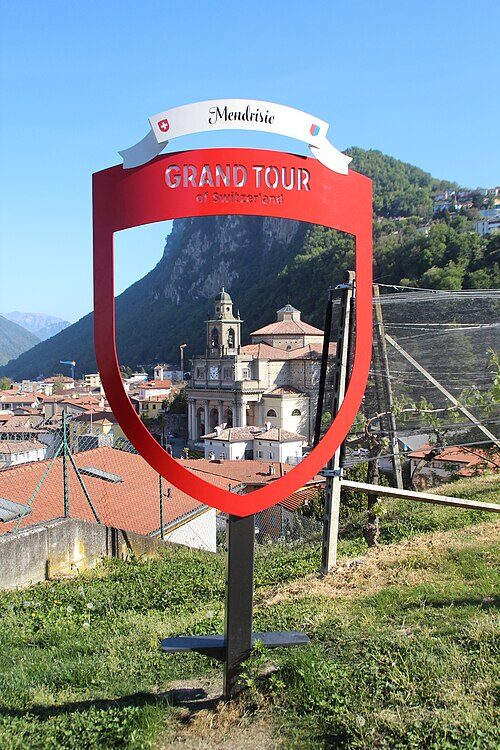
Every few kilometers, you’ll spot red and white rectangular frames mounted at striking viewpoints. There are almost 90 of them along the full route.
Each one lines up your photo perfectly with the landmark that sits behind it: the Matterhorn, the Jungfrau, the Rhine Falls.
The free Grand Tour app works offline and guides you between them. It also uses augmented reality to turn the drive into a kind of treasure hunt with virtual tokens to collect at each frame.
For families traveling with kids, that alone is worth downloading before you leave.
Dramatic Elevation Swings
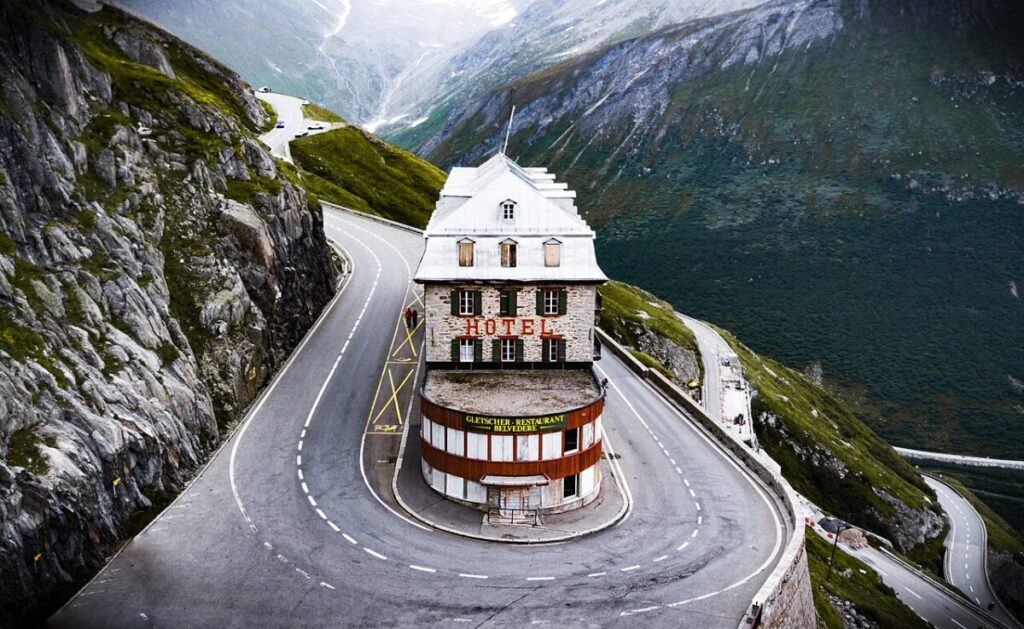
The highest point on the route is the Furka Pass at 2,429 meters – about 7,970 feet. The lowest is Lake Maggiore at 193 meters, or 633 feet.
You’ll cross both on the same trip, sometimes within the same day.
From the peak of Säntis at 2,502 meters in the Appenzell region, on a clear day you can see six countries from one spot. Switzerland, Germany, Austria, Liechtenstein, France and Italy, all visible at once from a single mountaintop.
Standout UNESCO Stops
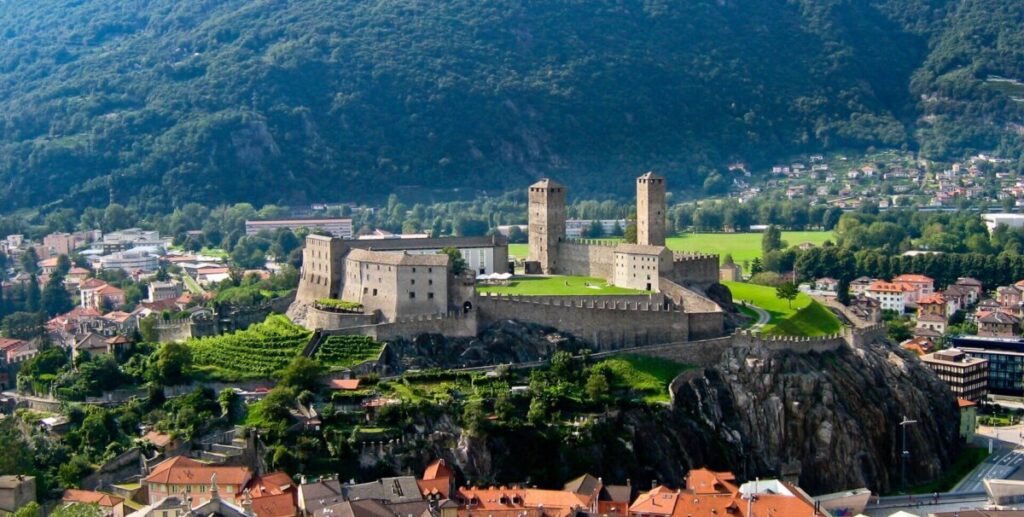
Thirteen sites sounds like a lot to take in. A handful genuinely deserve extra time.
The Bellinzona Castles in Ticino are three medieval fortresses standing in the same valley. They’re listed as one UNESCO site, and walking around them costs nothing.
In St. Gallen, the Abbey Library is one of the oldest libraries anywhere. It holds manuscripts going back to the 9th century, kept under careful climate control behind the original baroque shelving.
Near Neuchâtel, the Laténium Museum sits on a prehistoric pile dwelling site. The lake bed underneath still holds the remains of Bronze Age settlements.
The museum displays around 3,000 objects recovered from the water, and reconstructed dwellings stand outside in the Archaeological Park.
If you’re there on June 13 or 14, 2026, you’ll catch World Heritage Days. That’s when Swiss UNESCO sites open their doors for special programming you can’t get the rest of the year.
Laténium is running a hands-on Bronze Age day built for kids, with crafts and activities tied to the dig site itself.
No Cars Allowed in Zermatt
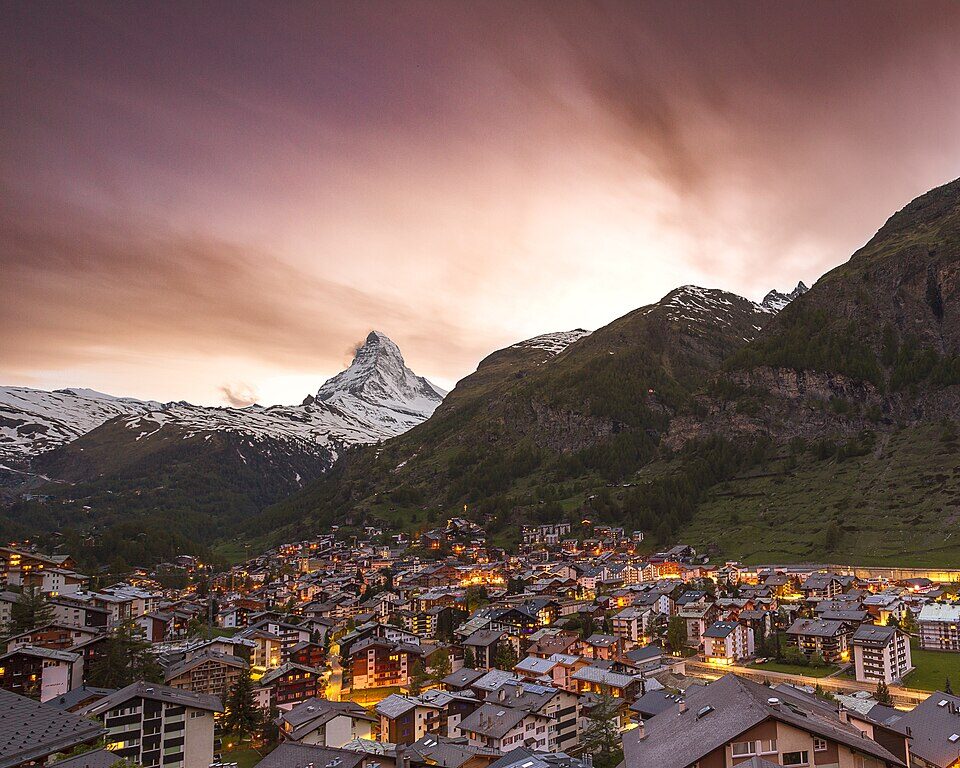
Zermatt doesn’t allow cars at all. The route takes you to Täsch, the nearest village, where you park and board a train for the final stretch.
The ride takes about 12 minutes and runs constantly throughout the day, so you’re never waiting long.
When you step off, the Matterhorn is right there.
The Fully Electric Version
The E-Grand Tour follows the same route but was built for electric vehicles.
It holds the title of the first tourist road trip marked for EV travel anywhere in the world.
Around 300 charging stations are spread along the way, marked with the same red and white Grand Tour logo as the photo frames.
Most hotels on the route offer overnight charging too, so you can plug in while you sleep and wake up with a full battery.
That setup removes the one thing that usually worries people about taking an electric car into the mountains.
Timing the Mountain Passes
The mountain passes decide when you can go. They typically open between late May and mid June depending on snowfall that year.
They close again in fall, sometimes earlier than planned if the weather turns fast. The official window is April through October.
If you want all five passes open at once, aim for June through September.
The Grand Tour app shows live pass conditions each morning before you set out.
That way, you’re never driving into a closed road by surprise, and you can swap routes on the fly if one pass is shut.
Take the Train Instead
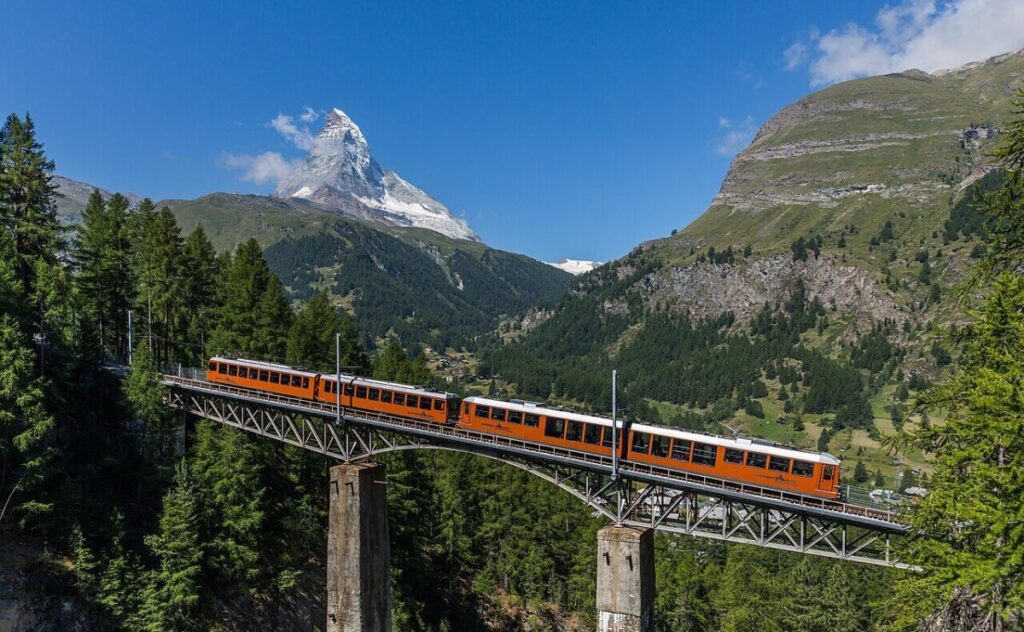
If you’d rather watch the scenery than steer through it, the Glacier Express runs right alongside part of this same route.
It connects St. Moritz to Zermatt, takes about 7.5 hours, and travels through the same Alpine terrain at a crawl of around 24 miles per hour on purpose.
Lunch is served at your seat while the Rhine Gorge slides past the window.