
This Paris Church Keeps a Real Piece of the Lourdes Grotto
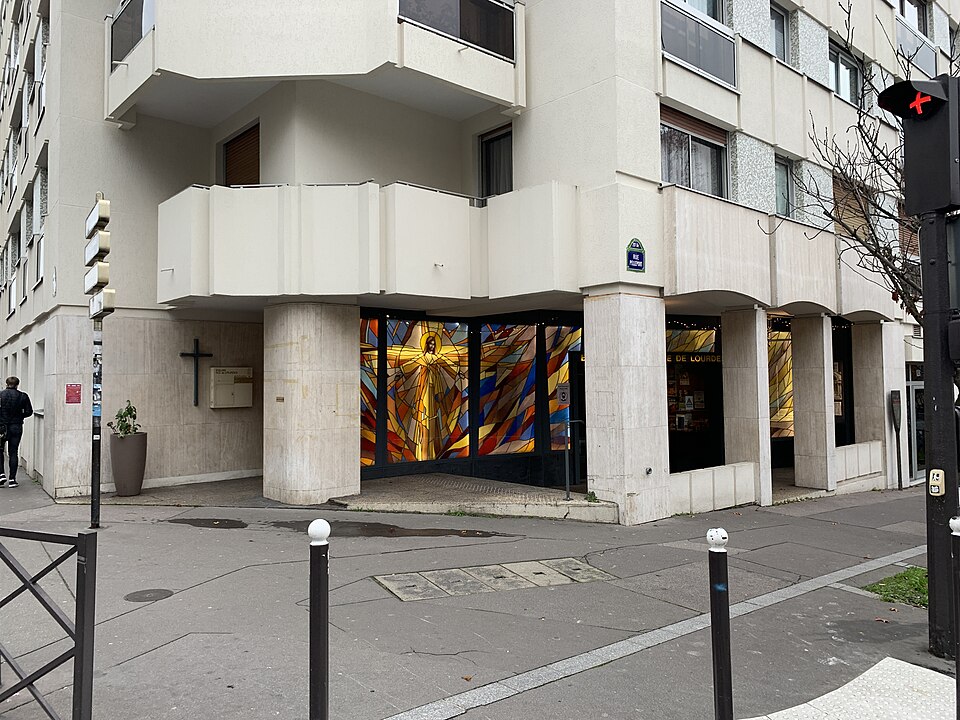
On rue Pelleport, in Paris’s 20th arrondissement, there is a church most people never notice. It has no façade, no bell tower, and no visible place in the streetscape. From the outside, it looks like part of an ordinary apartment building.
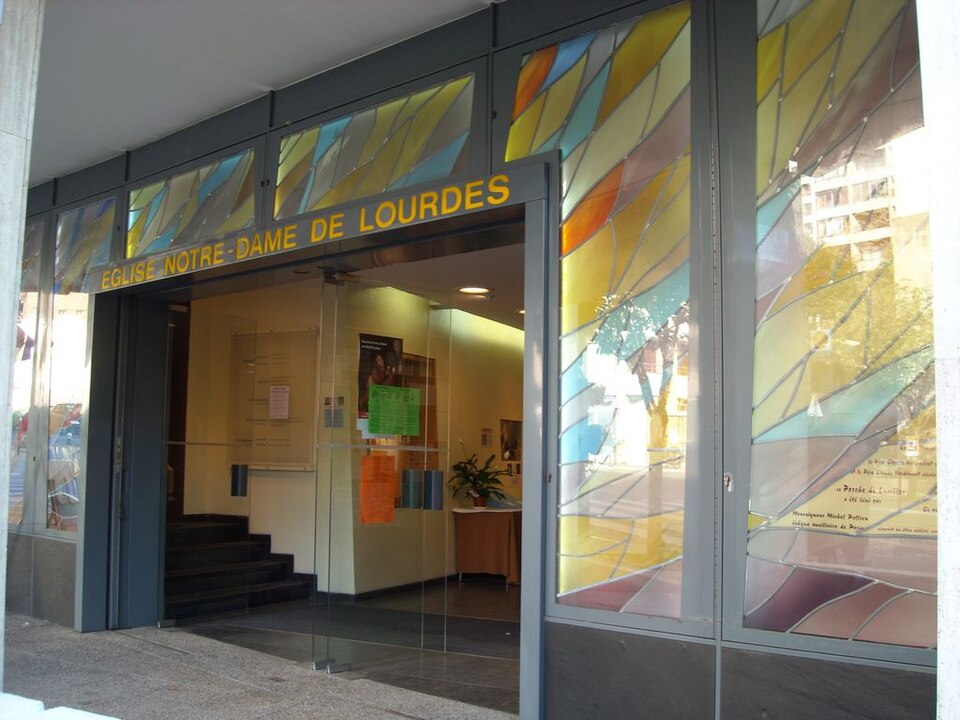
Step inside, and you realize this is not an ordinary parish.
Behind its discreet entrance, this church preserves something that normally requires a long journey to southern France.
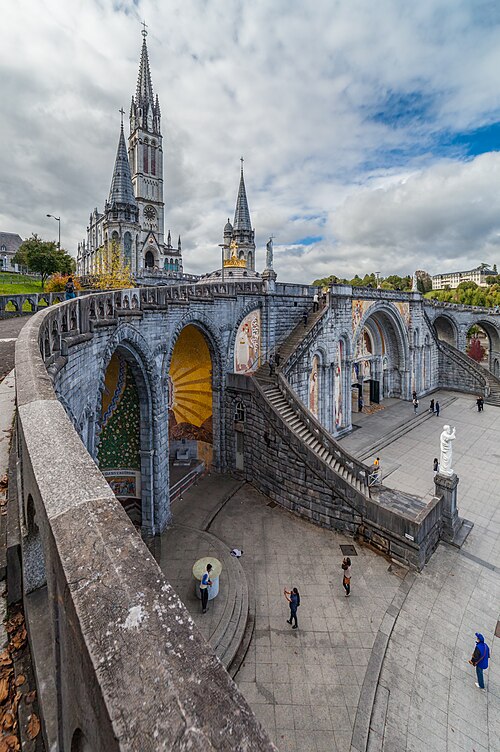
It is not a reproduction, not a symbolic reference, and not a decorative gesture. It is a physical element tied to one of the most important pilgrimage sites in the country.
Only once you are inside does the full story of Église Notre-Dame-de-Lourdes begin to reveal itself.
A physical link to Lourdes inside Paris
The church holds a real piece of rock taken from the Grotto of Massabielle, the site where the Lourdes apparitions took place.
This stone is not a symbolic reference or a decorative object. It is used during novenas and remains part of the parish’s religious practice.
The church also preserves Lourdes water brought from the spring. Parishioners can still use it during specific devotions.
For visitors, this often comes as a shock. Lourdes is usually understood as a distant pilgrimage destination. Here, part of it exists physically in Paris.
A church built into an apartment building
From the street, nothing signals a traditional place of worship. The church is entirely integrated into the ground floor of a residential building. There is no façade, no bell tower, and no architectural perspective announcing its presence.
Only small clues give it away: a discreet cross fixed to the wall and a Christ figure visible behind a glass window.
Without knowing what to look for, it is easy to assume this is just another apartment block in the neighborhood.
A reflection of the Lourdes grotto
Entering the church involves stepping slightly downward into the nave. The floor sits below street level. The space is compact and focused, with no side chapels and no painted decoration on the walls.
Three contemporary stained-glass windows structure the interior, they recount the Lourdes story in sequence, referring to the apparitions, the procession, and the spring.
A large bas-relief of Our Lady of Lourdes, created in 1988 by sculptor G. Candelier, occupies a central position and provides the main figurative presence in the church.
Why the parish ended up here
The parish was founded in 1898 to serve a rapidly growing working-class population in this part of Paris. A proper church building was completed in 1910 and stood on the site for several decades.
In the 1970s, the structure became unsafe and was demolished. The land was sold for redevelopment, and housing replaced the old church.
Rather than relocating elsewhere, the parish chose to remain on site. When the new building was constructed, space was reserved for a church within it.
In 1980, architect Jean Vidal designed the current worship space, fully integrated into the residential structure. The parish continued its activities without interruption, even though the original church building no longer existed.
A living parish
Today, the church remains closely tied to local life. It shares a courtyard with the nearby Notre-Dame-de-Lourdes school.
Major novenas take place each year, especially on December 8 and February 11. Volunteers also organize weekly food distributions for people in need.
This is not a museum or a preserved oddity, it’s an active parish that happens to hold one of the most unexpected religious objects in Paris.