
Paris Is Honoring The American Vogue Model Who Photographed Hitler’s Bathtub
In 2024, Kate Winslet starred in a film called “Lee” about an American woman most people had never heard of. The movie made $30 million worldwide and picked up Golden Globe and BAFTA nominations.
Now the real story is on the walls of the Musee d’Art Moderne de Paris. The museum partnered with the Tate Britain and the Art Institute of Chicago to put together the largest Lee Miller retrospective in France in 20 years – nearly 250 prints, some never shown before.
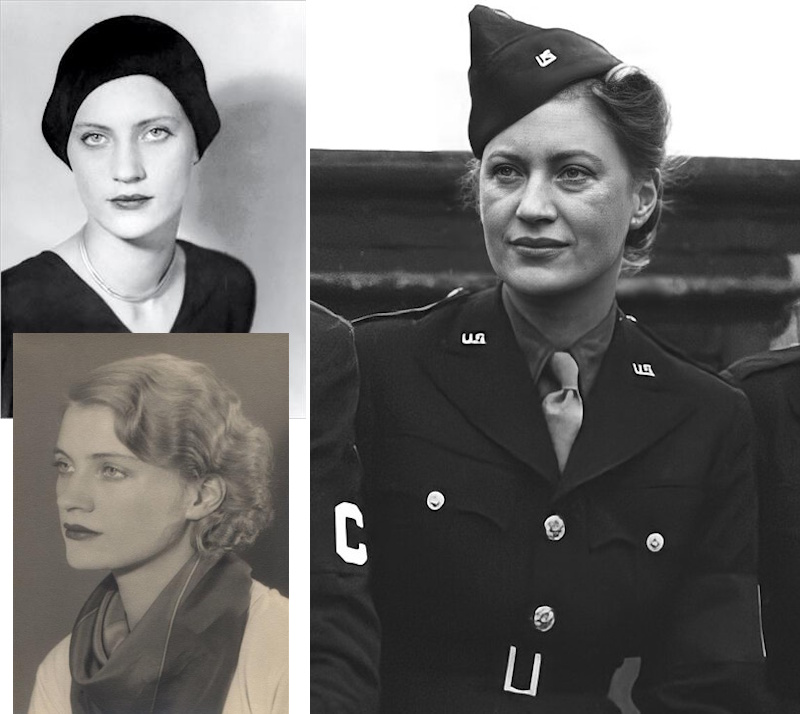
Her name was Lee Miller. She started as one of the most recognizable faces in American fashion. She ended up in Hitler’s bathtub on the day he killed himself, with concentration camp mud still on her boots.
In the late 1920s, Lee Miller was one of the most recognizable faces in American fashion. She appeared on the cover of Vogue in March 1927 after magazine publisher Conde Nast spotted her on a New York street and pulled her into the modeling world.
She was 20 years old. Within two years, she’d walked away from all of it.
Paris Changed Everything
Miller moved to Paris in 1929 and tracked down the artist Man Ray. She showed up at his door and told him she was going to be his student. He said he wasn’t taking students. She stayed anyway.
For three years she lived with him as his apprentice, collaborator, and lover. Together they developed a photographic technique called solarization – a process that partially reverses the tones in a photograph and creates a ghostly, dreamlike effect.
She wasn’t just his muse. She opened her own studio on Rue Victor-Considerant in Montparnasse, shot for Vogue, and exhibited alongside the best photographers in Paris.
She also appeared in Jean Cocteau’s first film, The Blood of a Poet.
By 1932, she was back in New York running her own studio. Vanity Fair named her one of America’s seven most distinguished photographers.
Then She Disappeared
In 1934, Miller married an Egyptian businessman named Aziz Eloui Bey and moved to Cairo. She stopped working commercially. For a few years, she was essentially invisible to the photography world.
A trip to Jerusalem in 1935 slowly brought her back behind the camera. But it was meeting British artist Roland Penrose in Paris in 1937 that pulled her back into things completely.
By 1939, she’d left Egypt for London. And then the war started.
Vogue’s Only Combat Photographer
In 1942, Miller became one of the very few women to receive war correspondent accreditation from the U.S. Army. She was shooting for Vogue – a fashion magazine – from actual battlefields.
She covered the London Blitz. She followed Allied troops across the Channel after D-Day. She was at the siege of Saint-Malo, where she showed up expecting to photograph the aftermath and instead found herself under active fire.
She was the only woman combat photographer in the European theater during the entire war.
In April 1945, Miller and Life magazine photographer David Scherman were among the first to enter the concentration camps at Buchenwald and Dachau. Her photographs of what she found there are almost impossible to look at.
She sent the images back to Vogue with a telegram that read: “I IMPLORE YOU TO BELIEVE THIS IS TRUE.“
That same evening – April 30, 1945 – Miller and Scherman entered Munich with the American 45th Division. They found an ordinary-looking apartment building on Prinzregentenplatz. It was Adolf Hitler’s private apartment.
Miller stripped off her boots, still caked with mud from Dachau, placed them on the bathmat, set a framed portrait of Hitler on the edge of the tub, and took a bath.
Scherman photographed her. That very same day, in a bunker in Berlin, Hitler shot himself.
It is one of the most famous photographs of the 20th century.
She Was Forgotten for Decades
After the war, Miller suffered from what her son later identified as severe PTSD. She struggled with depression and alcoholism. She stopped photographing professionally.
When she died in 1977, almost nobody remembered her as a photographer. She was just Roland Penrose’s wife.
Then her son Antony found the attic. Inside were over 60,000 negatives, prints, and documents from a career the world had basically forgotten. He spent the rest of his life making sure people knew who his mother really was.
Paris Is Bringing Her Back
The Musee d’Art Moderne de Paris just opened the biggest Lee Miller retrospective in France in 20 years. It runs from April 10 to August 2, 2026, and brings together nearly 250 prints – some never shown before.
The exhibition was organized with the Tate Britain and the Art Institute of Chicago. It traces her full arc, from New York model to Paris surrealist to war photographer.
Tickets are 17 euros. The museum is at in the 16th arrondissement, near the Alma-Marceau metro stop. It’s open every day except Monday, with late-night hours on Thursdays until 9:30 PM.
If you saw the Kate Winslet film “Lee” in 2024, this is your chance to see the real photographs in person.
If you didn’t see the film, the exhibition alone will tell you everything you need to know about why this American woman’s story belongs in a Paris museum.