
What to Eat in Lyon: France’s Real Culinary Capital
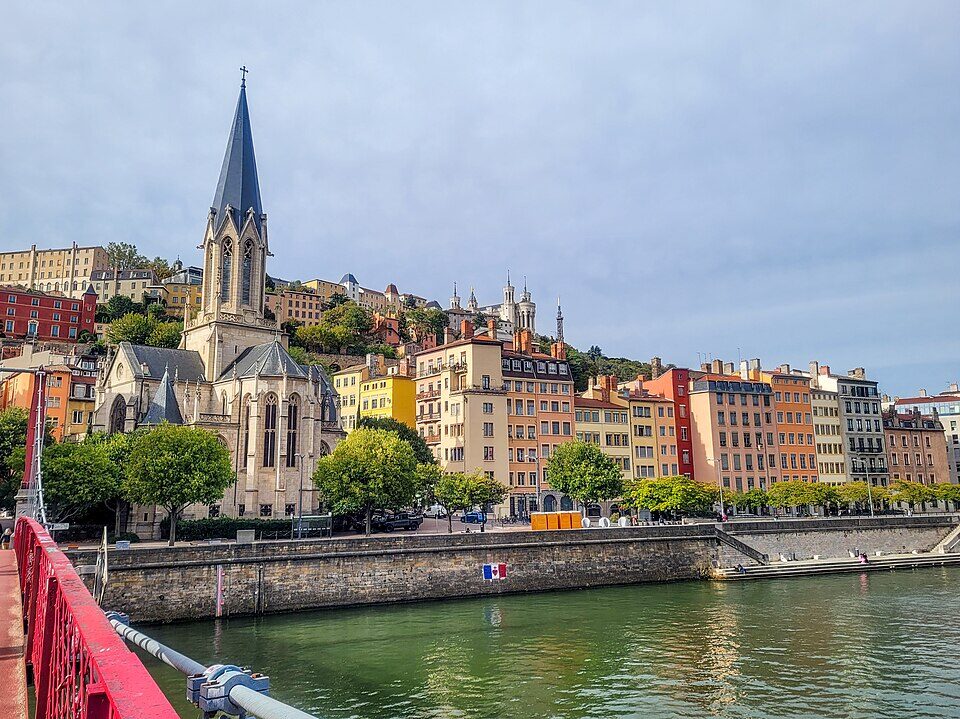
Paris gets all the credit. Lyon gets all the food.
Lyon has been called the gastronomic capital of France for a long time, not just because some travel magazine said so.
The city has over 4,000 restaurants for a population of roughly 500,000. If you eat in Paris and skip Lyon, you’ve done it backwards.
The Bouchon System
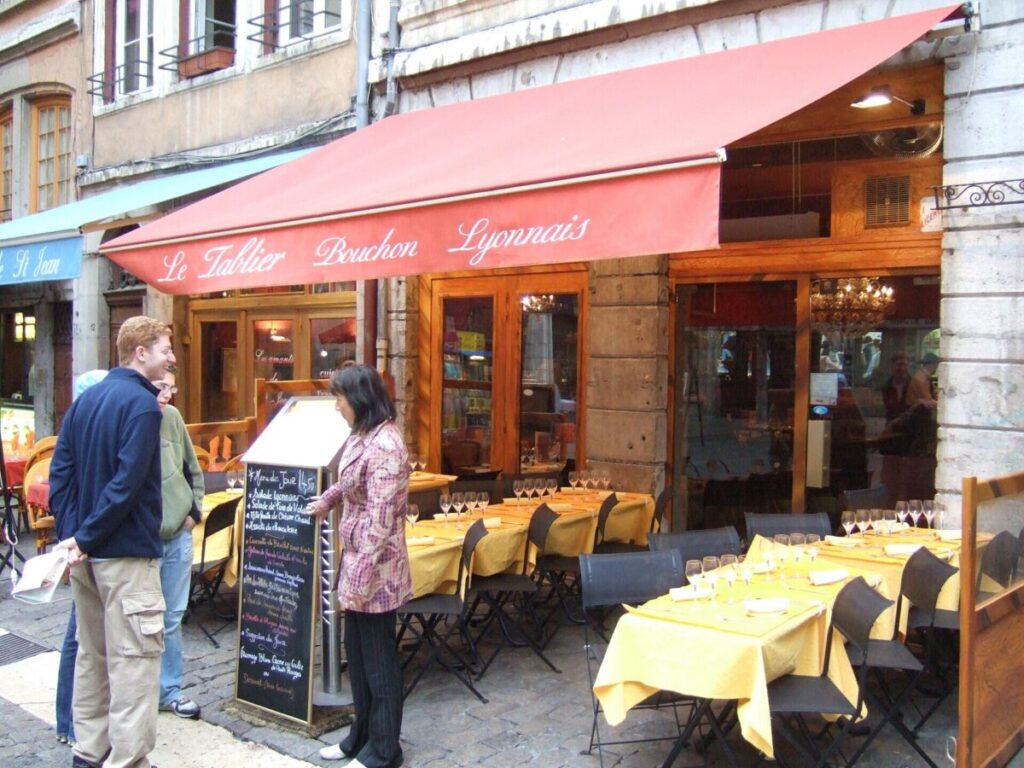
The most iconic part of Lyon’s food culture is the bouchon.
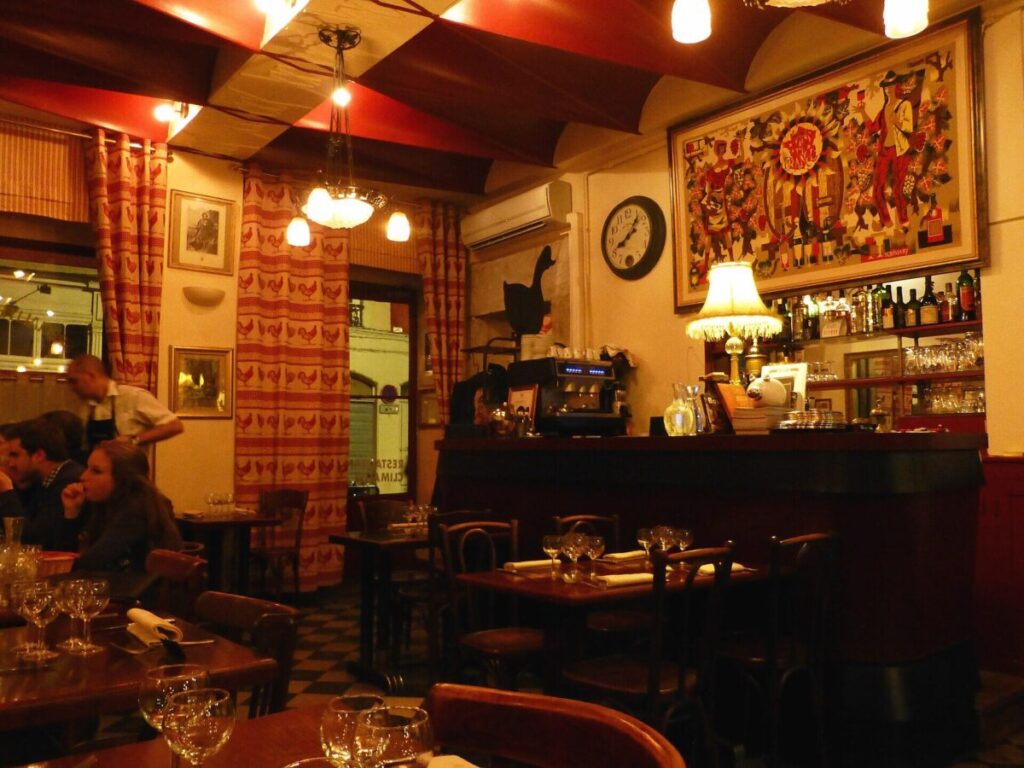
A bouchon is a traditional Lyonnaise restaurant. Cozy, a little cramped, and built around hearty local dishes and a 46-centiliter pot of Beaujolais on the table.
The tables are close together and the portions are generous. The bill won’t make you cry.
The whole system traces back to the Canuts, Lyon’s silk workers, who needed a cheap, filling meal before a long shift.
The women who ran these early restaurants became known as the Mères Lyonnaises, and they turned humble ingredients into the foundations of French cuisine. Paul Bocuse learned from one of them.
Not every restaurant calling itself a bouchon is the real thing. Look for the official “Authentic Lyonnais Bouchons” sticker featuring the puppet Gnafron.
That’s how you know you’re not walking into a tourist trap.
Quenelles de Brochet
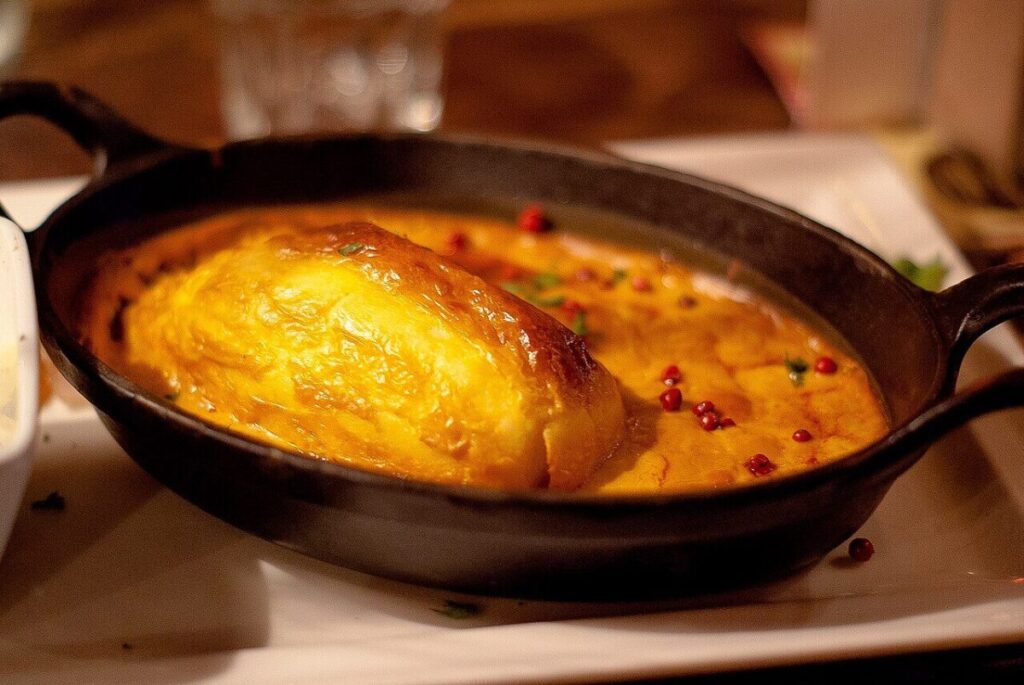
The quenelle is Lyon’s signature dish. It looks a little strange until you taste it.
It’s a large, oval dumpling made from pike fish, butter, eggs, and flour, poached until it puffs up like a soufflé, then baked in a rich crayfish cream sauce called sauce Nantua.
The texture is light and almost mousse-like. It’s not what you’d expect from something that technically started as a way to use up a bony river fish.
The pike came from the Rhône and the Saône. Crayfish went into the sauce. Lyon sat at the intersection of both, which is why this dish exists here and not anywhere else.
Order it in any bouchon. It’s on every menu for a reason.
Salade Lyonnaise
This one looks simple but it isn’t.
A proper salade lyonnaise is frisée lettuce dressed with a warm bacon vinaigrette, topped with a soft-poached egg and lardons.
The egg breaks over the salad and becomes the dressing. Done right, it’s one of those dishes that’s hard to stop eating.
You’ll see variations everywhere, but the fundamentals stay the same. It’s a starter, not a side dish.
Andouillette: Confidence or Caution
Andouillette is not for everyone, and Lyon doesn’t pretend otherwise.
It’s a coarse sausage made from pork intestines, grilled and served with mustard. The smell is pungent. The flavor is even more so.
Locals love it. Visitors are often surprised by how much they do not love it.
If you’re the kind of person who eats everything, order it. If you’re not, the menu has other options. There’s no shame in sticking with the quenelle.
Cervelle de Canut
The name translates to “silk worker’s brain,” which is a strange way to advertise a dish.
It’s not brains. It’s a fresh, tangy spread made from fromage blanc mixed with herbs, shallots, vinegar, and olive oil.
You’ll find it on every bouchon menu as a starter, usually with bread. It’s mild and light – a good way to ease into the meal before the heavier courses arrive.
Les Halles de Lyon Paul Bocuse
If you only go to one place in Lyon, make it Les Halles.
It’s an indoor covered market at 102 Cours Lafayette, open Tuesday through Saturday from 7am to 7pm, and Sunday until 1pm.
About 50 vendors sell cheese, charcuterie, quenelles, pastries, seafood, and more. Several small restaurants inside serve full meals.
Stop at Fromagerie Richard for Saint-Marcellin, a small, creamy raw-milk cheese with protected geographical status since 2013. At the pastry counters, look for the tarte aux pralines.
Tarte aux Pralines
Lyon’s signature dessert is shockingly pink and unapologetically sweet.
It’s a simple pastry shell filled with crushed pink pralines and cream, baked until the filling sets into something between crunchy and gooey.
A slice at Pâtisserie Sève inside the Halles costs around 6€.
The pink comes from almonds coated in caramelized sugar dyed red. It is not subtle. Neither is the sugar rush.
Lyon also produces the Coussin de Lyon, a small green marzipan pillow filled with chocolate ganache flavored with Curaçao liqueur.
Created by Richard Sève, these are sold at his shop inside Les Halles and are worth buying before you leave.