
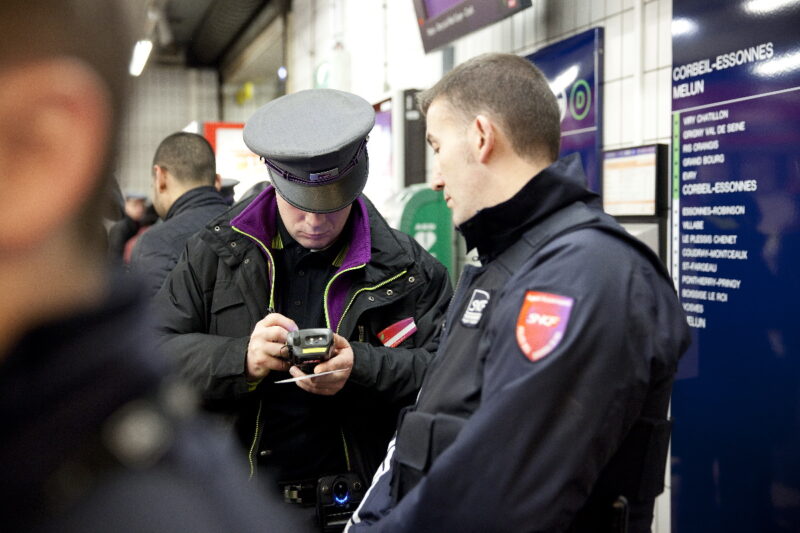
The Paris Metro “Controller” Scam
Getting around Paris should be a highlight of your trip, but for many, the underground turns into a site of predatory extortion. Travelers are increasingly reporting encounters with official RATP ticket inspectors, known as contrôleurs, who use aggressive, high-pressure tactics to extract cash from unsuspecting tourists.
These staff members often target major transit hubs like Gare du Nord and Magenta, looking for anyone who appears rushed or unfamiliar with the system.
While these agents wear official uniforms and carry scanners, their behavior is frequently described as a “legalized scam” designed to exploit good-faith errors.
Whether you are an EU citizen or visiting from abroad, understanding how this “shakedown” works is the only way to protect your wallet and your sanity.
The Bait: Broken Scanners and Open Gates
The trap often begins at the station entrance. Tourists frequently find the entry gates wide open and, attempting to be honest, tap their tickets or Navigo cards anyway.
However, if the machine is malfunctioning or “not working properly,” it may not register the validation.
When you reach your destination, you are intercepted by a team of inspectors. Even if you bought your ticket from a kiosk moments ago, the inspector’s scanner will claim the ticket is “not validated”.
In many cases, these staff members refuse to check security cameras to verify that you actually attempted to tap in.
They rely on the fact that tourists are often in a hurry to catch a train like the Eurostar. By hounding you near the station exit, they use your own schedule against you, knowing you’ll likely pay just to avoid missing your connection.
Fake Police Threats, Bonus Hunting
Once they have cornered a victim, the contrôleurs act like “parrots,” repeating demands for money without listening to any explanation.
They often demand immediate payment of 100€, claiming that if you wait for the police to arrive, the fine will jump to 200€ or 400€ per person.
This is a classic intimidation tactic. Several travelers reported waiting 30 minutes for the “cops” to arrive, only for no one to show up.
These agents are not “real police”, they are RATP employees who reportedly receive bonuses or commissions for every fine paid on the spot.
Because they profit directly from your fine, they have zero incentive to be reasonable. They have been known to “reduce” the fine to 50€ if you pay in cash immediately, a move that is highly irregular for a government entity and suggests they are simply trying to close the deal.
Real Stories from the Metro
One family traveling to Versailles shared how they had 4 valid tickets, all of which were tapped. An inspector claimed one was invalid and demanded a fine.
Despite the father calmly explaining that it was impossible to enter the gates without a valid ticket, the staff only backed down when he refused to pay and insisted on seeing a supervisor.
Another traveler faced a “complete shakedown” when their phone died on the train. Even though they had a valid Navigo pass on the device, the agent demanded 100€ and tried to prevent them from charging the phone.
When the phone finally flickered on and showed the validation history, the agents “quietly shut up” and slinked away to find a “new target” without offering an apology.
Even locals despise these agents, describing them as “heartless” and “bitter” people who failed to become actual police officers and now enjoy power-tripping on the public.
One local described them as “biological robots” who do not care what language you speak; they will simply point at their credit card machine and scream in French until you pay.
Know Your Rights
The most important thing to remember is that you are not legally obligated to pay on the spot. If you pay immediately, you are essentially admitting guilt, which makes it impossible to contest the fine later.
Instead, you can provide your identification and ask them to send the fine to your home address. For foreigners, the RATP has very few ways to actually collect this money once you leave France.
While they may threaten to call the police to verify your ID, many experienced travelers say they rarely actually do so because it involves too much paperwork and “police have better things to do”.
If you feel you are being targeted unfairly, you can:
- Ask for their official ID and the name of their supervisor.
- State loudly that you have no cash and no credit cards.
- Offer to wait for the police yourself.
- Take photos or videos of the broken validation machines as evidence.
Avoiding the Underground Altogether
Many frequent visitors to Paris now recommend avoiding the Metro entirely for high-stakes trips. While the Metro stations are often cleaner than those in other cities, the “frustrating queue-and-fumble” of the ticket system and the threat of aggressive inspectors make it a headache.
Uber is widely considered the most trustworthy alternative. Unlike traditional Parisian taxis – which have been caught driving in circles around the Eiffel Tower to inflate the meter – Uber offers fixed rates. This ensures you won’t be scammed by a driver or cornered by a transit official.
Finally, be aware of “phone snatchers” in the Metro stations. Thieves often target young women or distracted tourists, grabbing phones and purses right as the train doors close.
Keep your valuables in front pockets or zipped bags, and never leave your phone sticking out of a back pocket.